Ethiopia Launches A National Dialogue, But Divisions Run Deep.
-
 Loading...
 - Christian Manu
- 19 Apr 2022
- 322 Views
- 0 Like
- 0 Comment
As an 18-month civil war grinds on, Ethiopia is gearing up for a national dialogue aimed at bridging the country’s many fault lines. But key rebel groups have not been invited, and opposition figures are accusing the government of trying to orchestrate the process.
The commission tasked with overseeing the three-year national dialogue process was established in late December, shortly after government soldiers and allied militia repulsed a southward advance from forces aligned to the Tigray People’s Liberation Front (TPLF) that came within roughly 200 kilometres of the capital, Addis Ababa.
So far, officials have been vague about the aims of the dialogue and what structure it will take, referring to it as a process to heal the divisions in a nation of more than 80 ethnolinguistic groups, tackling fundamental questions over Ethiopia’s future as a federal or unitary state.
Last month, Prime Minister Abiy Ahmed urged all Ethiopians to participate in the initiative, which he described as a “golden opportunity” that “will allow us to address the political challenges we have been facing for centuries and lay the groundwork for our future”.
Ethiopia's federal states

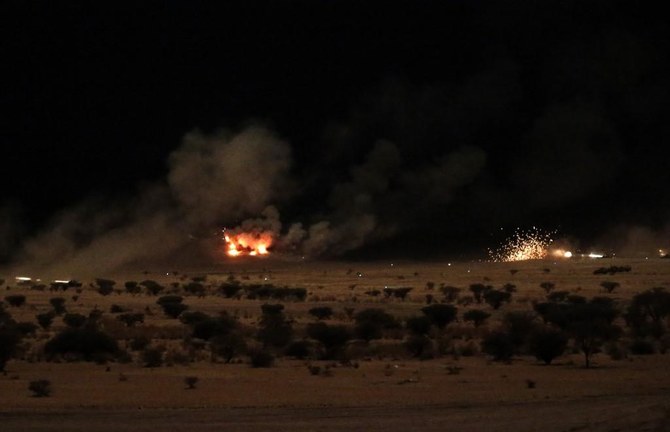
Abiy’s push for a national dialogue comes as the federal government has been locked in a gruelling conflict with Tigrayan forces since November 2020. The fighting has devastated northern Ethiopia and been marked by atrocities from all sides, including rapes, torture, and mass killings.
These violations have sharpened divisions between ordinary Tigrayans – who make up six million of Ethiopia’s 110 million population – and other groups including the Amhara, Ethiopia’s second-biggest ethnicity.
They have also fuelled secessionist sentiment in Tigray, which has been cut off from the rest of Ethiopia since June 2021 – with deliveries of aid mostly blocked and all communications links and banking services down.
The United Nations has called it a “de facto blockade” and estimates that 90 percent of the region’s 5.5 million people are in need of urgent humanitarian assistance.
Last year, thousands of Tigrayans were rounded up in a wave of what human rights experts have described as ethnically motivated arrests under a state of emergency imposed as the TPLF-aligned Tigray Defence Forces (TDF) advanced towards Addis Ababa. Many remain in detention. Meanwhile, both Tigrayan and Amhara activists claim their groups are the victim of “genocide”.
TPLF and OLA excluded
Yet the TPLF, which is the ruling party in Tigray and has been outlawed as a terrorist group, is currently excluded from the national dialogue. So is its main ally, the Oromo Liberation Army (OLA), which operates in Oromia, the largest region of Ethiopia.
Critics say this renders the process meaningless. “This is supposed to be an all-inclusive dialogue and the government has no mandate to dictate who takes part and who doesn’t,” said Mussa Adem, head of the opposition Afar People’s Party. “If the TPLF doesn’t take part, who are we going to talk to? It doesn’t make sense.”
Like others, Mussa also objects to the timing of the dialogue process, which was initiated as the Tigray rebels launched a January incursion into the Afar region that has since forced up to 300,000 people from their homes.
“I really think this is not the right time for the national dialogue to take place," said Mussa. "The purpose of any dialogue should be stopping people going to the battlefront and healing the wounds of war. But before that happens, first we need a ceasefire, humanitarian access [to conflict areas] and the withdrawal of forces.”
The government unilaterally declared an immediate “humanitarian truce” on 24 March, fuelling hopes for peace. The TPLF responded by saying it would observe a “cessation of hostilities” if aid was allowed into Tigray.
But since then only two aid convoys totalling 67 food trucks and four fuel tankers have reached the region. The UN says 100 trucks need to enter every day to feed millions of people facing extreme levels of hunger.
“We need a discussion of our problems, which are long-running and need to be solved as soon as possible.”
Professor Mesfin Araya, the chairman of the national dialogue commission, would not confirm whether the TPLF would be eventually allowed to participate. “The commission is inclusive,” he said. “Any group, I believe, is welcome, as long as they are peaceful and come for dialogue.”
Mesfin told The New Humanitarian the dialogue would involve the commission travelling the length of Ethiopia and holding open consultations with communities. He added that its agenda would be based on these discussions.
“There are so many problems in Ethiopia,” he said. “From poor governance to identity, you name it. This is all about democracy. People can say anything they like.”
Aside from the Tigray war and the threat from the OLA, Ethiopia is grappling with a long-running insurgency in the western Benishangul-Gumuz region, as well as sometimes violent tensions over land between Oromo and Amhara communities and a boundary dispute involving the Somali and Afar states
Accountability for crimes committed in Ethiopia's internal conflicts is a major point of contention. The constitution – which currently divides Ethiopia into 11 federal states based on language and ethnicity – is another. Then there is the deep-rooted sense of dissatisfaction felt by many young people in Oromia. They were the main participants in the protests that propelled Abiy to power in 2018.
Government’s commitment questioned
But opposition parties have questioned whether the ruling Prosperity Party's stated commitment to a national dialogue is genuine. Abiy has already dismissed as "unconstitutional" the prospect of a transitional government – a key demand from opposition figures in Oromia
Rahel Bafe, chairwoman of the Ethiopian Political Parties Joint Council (EPPJC), a coalition of more than 50 opposition groups, said the Prosperity Party is approaching the dialogue as the arbiter of the process, rather than as another equal stakeholder against whom accusations will eventually be levelled.
She is critical of the selection process that appointed the national dialogue’s 11 commissioners. They were chosen on 21 February from a 42-person short-list issued by parliament, which was itself based on a longer list of 623 candidates.
Rahel says the selection process for the commissions was “not clear” and claims that opposition parties were not consulted. Others see the final 11 commissioners as mostly sympathetic to Abiy’s government, a perception that prompted one observer to describe the national dialogue as “an intra-party negotiation within the ruling Prosperity Party that will not resolve the country’s intractable political debates.”
Mesfin, the chief commissioner, whose day job is teaching psychiatry at Addis Ababa University, rejects these claims. “I am absolutely independent, I don’t belong to any political party,” he said. “Every one of us is neutral and we are here to serve our nation.”
Nonetheless, dissatisfaction with the process is widespread among opposition groups. The Balderas for True Democracy Party has described the commission as having “failed before its formation" while Mussa Adem from the Afar People’s Party says the dialogue is “a once in a lifetime opportunity for Ethiopia” that has already been missed. Read More...