To Protect Rainforests’ Biodiversity, Listen Closely

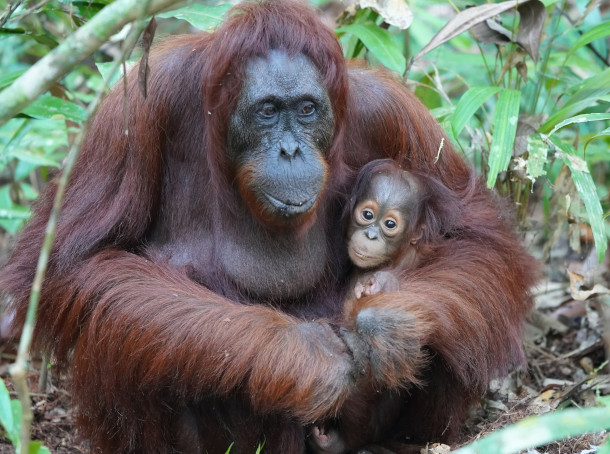
It is early morning on the island of Borneo in east Malaysia, and the ancient rainforest is coming to life after the relative quiet of the night. It’s a veritable orchestra: the melodious music of a pair of gibbons, a warning trumpet from a solitary pygmy elephant, the rhythmic hooting of a helmeted hornbill, the rustling of dry leaves from an orangutan swinging high up in the trees.
In the midst of these routine, reassuring sounds, other sounds filter through. There is an unfamiliar chirp — a new species of bird? Occasionally, there comes a noise that does not belong in this ecosystem — perhaps the insistent buzz of a chainsaw? There may even be moments of silence, a sign of disruption in the usually bustling habitat.
The tropical rainforests of Malaysia are among the world’s oldest and richest in biodiversity. They are home to thousands of species of plants, insects, birds, mammals, and reptiles, many of which have still not been studied adequately, or even discovered. And many of them are hurtling toward “threatened” or “endangered” status on the International Union for Conservation of Nature’s red list.
Scientists and researchers continuously monitor the flora and fauna in these jungles in order to ensure that the ecosystem remains healthy — in the face of threats from both natural disturbances and anthropogenic pressures (including climate change).
Now, they’ve added a new and effective tool to their arsenal: listening. Through bioacoustics research, researchers are tuning in to the sounds of the rainforests in Borneo and peninsular Malaysia to better understand and protect their biodiversity.
While traditional monitoring systems involve identifying and documenting species mainly by sight, bioacoustics uses technology to collate, identify, and analyze sounds from all the living organisms within the ecosystem. Recording devices collect and convey real-time soundscapes from both primary forests (which have never been deforested and replanted) as well as areas where there is a lot of human activity in the form of logging and palm oil production. Taken together, these soundscapes are a reliable indicator of the health of the ecosystem.
Bioacoustics research may still be in its nascent stages (especially in Malaysia), but it has caught on across the world because it manages to capture data about birds and animals that are camouflage experts or near impossible to spot in the wild. And this method has another advantage: sounds are unique to species.
“Most animal species emit species-specific sounds, and so bioacoustics research can help to detect the presence and abundance of such species in the survey area,” says Dr. Nadine Ruppert, senior researcher and professor at the Universiti Sains Malaysia in Penang. “Even two bird species that look near-identical will have unique song patterns, which makes it easier to identify them by sound rather than sight,” she adds.
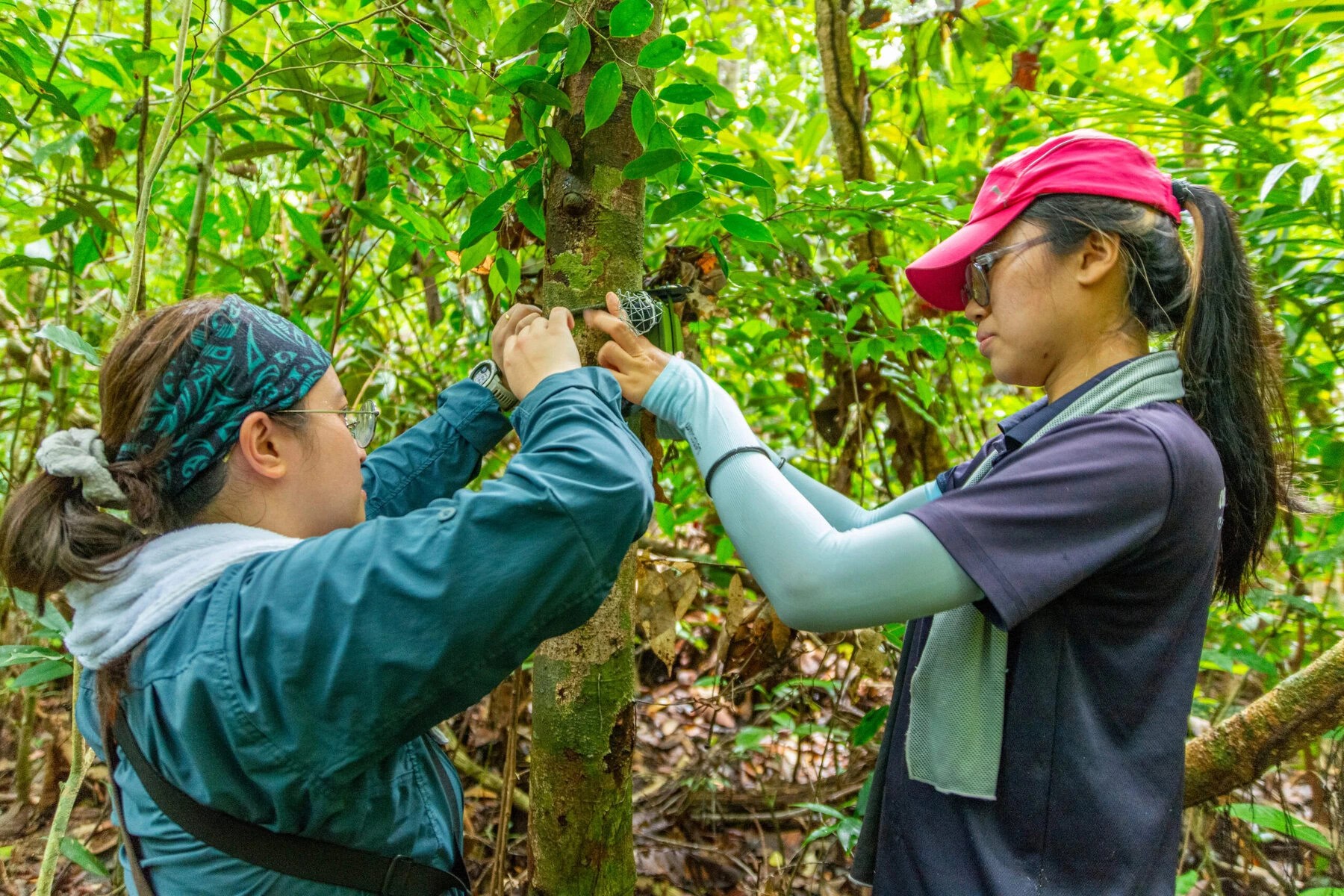
Scientists also say that bioacoustics — often used in conjunction with other traditional research methods such as camera traps, transect walks, and satellite imaging — allows them to capture long-term data without having to check on the equipment or process frequently (or indeed, at all, given that these devices are solar-powered and can be left on and monitored remotely for a long time, in some cases even the entire length of the study). “The recorders can be put out in an area over several weeks, allowing wide coverage, reduced man-power, high efficiency and comparatively low cost as compared to human observations,” Dr. Ruppert says.
Listening to the animals rather than trying to see them minimizes intrusion into the ecosystem, and works particularly well with species that shy away from even the lightest human presence. Dr. Ruppert cites the example of Malaysian gibbons: these small apes are shy and elusive, and quick to scamper into the thickets, making them tough to study. “With gibbons, bioacoustic surveys can help us to estimate group numbers in a given area or even distinguish the distinct calls of different individuals,” she explains.
Scientists are also using bioacoustics with nocturnal animals such as bats or Sunda colugos (known more fancifully as flying lemurs) that are difficult to detect visually, but can be studied through their ultrasound emissions.
Ornithologist Dr. Loo Yen Yi and conservation biologist Lee Mei Yi, who have been working together on the Penang Hill project, point out that unlike visual surveys or camera traps, 360-degree audio recordings can be obtained from various levels of the landscape, from the forest floor to the tree canopies.
And beyond gathering information about the animals themselves, bioacoustic information can reveal threats to their habitats. “The device doesn’t record only animal sounds, but all sounds, like chainsaws, traffic, human voices and even wind and rain,” Dr. Loo says. This data is then used to train the AI model to pick up specific sounds like chainsaw noises or irregular vehicular activity, along with the location and time. “You can then send rangers with the information of where and when it happened, so they can check on the ground,” she says.
Audio data is also valuable in capturing abnormal silences, which could indicate that the subjects are under stress or moving away from their usual habitats. This methodology also helps to locate animals in places where they are not supposed to be. Talking about the increase in human-elephant conflicts, Dr. Loo explains that when elephants move into the edges of palm plantations (where there is a larger human presence), the sound data helps warn the people working there. “It will not stop the elephant from coming in, but at least you know that there are elephants in the area and you need to be alert and careful, so that it doesn’t take you by surprise,” she says.
In Malaysia, where pristine rainforests have steadily been giving way to palm plantations, data from bioacoustics research could provide the much-needed impetus for better conservation and controls. For the first time, the endangered species will be able to speak for themselves.