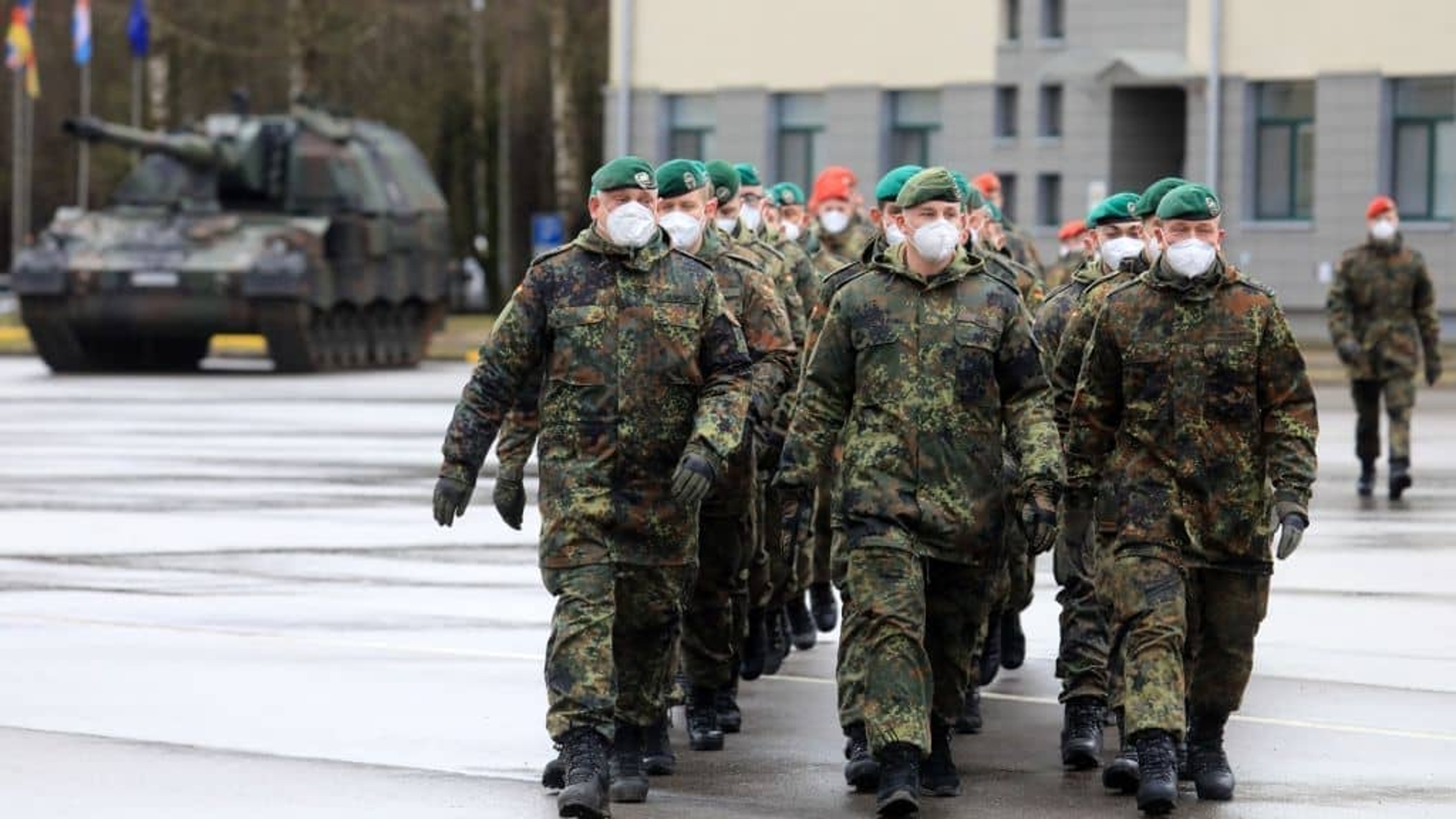
The German army has far bigger problems than funding.
-
 Loading...
 - Johann Bauer
- 21 Mar 2022
- 375 Views
- 0 Like
- 0 Comment
The Bundeswehr was established in November 1955. Less than ten years after the second world war, and with the West fearing a Soviet attack on western Europe, Germany rearmed. The Federal Republic of Germany was integrated into Nato and the sole task of the Bundeswehr was the territorial defence of west Germany alongside US, British, Canadian, Dutch and Belgian forces.
To do so the Bundeswehr would field an army of 500,000 men with 12 divisions. By the end of the Cold War, Germany had an impressive arsenal of thousands of modern Leopard tanks, Marder infantry fighting vehicles and one of the best ground-based mobile air defences in western Europe with the Gepard anti-aircraft tank, plus hundreds of Luftwaffe fighters and fighter bombers. The Bundeswehr was regarded as the conventional backbone of Nato and one of its most capable armies.
At the same time, the Bundeswehr was unlike any German military that had come before, in particular the Wehrmacht. German soldiers were ‘citizens in uniform’ and a concept known as ‘inner guidance’ was introduced to make sure that Bundeswehr officers, NCOs and enlisted soldiers would be committed to the values of free and democratic Germany. Never again would German soldiers put their orders above human rights.
The Bundeswehr does not see itself as the official successor of any previous German military. Only the 19th-century Prussian military reformers; the military resistance against Adolf Hitler; and the plotters around von Stauffenberg are officially accepted historical lines of tradition for the armed forces.
With the end of the Cold War, the Bundeswehr lost both its enemy and a lot of its funding, with the defence budget raided to fund the costs of reunification. The Bundeswehr shrunk dramatically from 500,000 soldiers in the 1980s to just 178,000 on the payroll by 2010. The loss of combat power was even more severe. Germany reduced the equipment of its heavy army divisions geared for territorial defence by as much as 80 to 90 per cent. For example the army only had 220 Leopard 2 battle tanks in 2010, down from 2,225. The Bundeswehr was re-oriented toward limited expeditionary operations like peace-keeping missions in the Balkans in the 1990s and the International Security Assistance Force (ISAF) mission in Afghanistan. In Afghanistan, Germany fielded only relatively small contingents of light infantry and initially sought to avoid offensive combat operations. It was not until the so-called ‘Good Friday battle’ in April 2010 – when German paratroopers were killed in action in a Taliban ambush – that Angela Merkel’s government and the German public reluctantly accepted the fact that the Bundeswehr was fighting a war in Afghanistan. Troops were reinforced, yet a severe shortage of helicopters for transport and medical evacuation of wounded soldiers meant German offensive operations in northern Afghanistan were not possible without US support. Still, defence budgets remained relatively low until the Russian annexation of Crimea in 2014.
The Bundeswehr then began to move towards territorial and alliance defence. But underfunding remained a structural problem that hindered efforts at strategic reorientation for years. Important military capabilities had either been cut completely, such as with the Navy’s Tornado fighter bombers, or made more or less useless. By 2010, for example, the Bundeswehr leadership had retired both the Roland and Gepard air defence systems to save money. The strategic assumption was that the Bundeswehr would only operate where there was western air superiority – leaving it now basically defenceless against the threat of armed drones. Read More...


