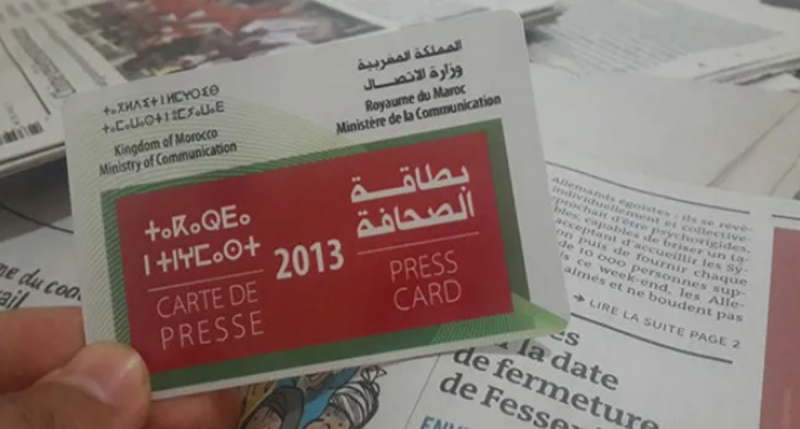
Morocco Ranked 135th Worldwide for Press Freedom
-
 Loading...
 - Benci Kiraly
- 04 May 2022
- 317 Views
- 0 Like
- 0 Comment
The NGO Reporters Without Borders (RSF) has ranked Morocco 135th out of 180 countries in its 2022 world press freedom report.
Compared to RSF’s freedom 2021 report, Morocco has moved up one spot from its previous ranking in the index (136th).
Tunisia is the best-ranked country in the Maghreb (94th), followed by Mauritania (97th), and Algeria (134th).
Worldwide, Norway is regarded as having the freest press, followed by Denmark and Sweden.
In line with its declared goal to protect the right to information and ensure that no violation of freedom of information is unreported, RSF’s World Press Freedom Index essentially evaluates the condition under which news and investigation are made in 180 nations and territories.
In addition to highlighting the global decline of freedom of expression, this year’s index emphasizes the devastating consequences of news and information disorder. According to RSF, there is ample evidence that a globalized and unregulated internet information landscape favors fake news and propaganda.
The release of RFS’s 2022 report coincides with the International Press Freedom Day, which is celebrated on May 3 each year and has been branded as an occasion to celebrate the importance of the media's role in tough times and crises for the global community.
RSF’s latest evaluation of Morocco’s freedom of expression performance comes as the North African country appears to be taking a number of steps -- albeit still not enough -- to improve the conditions and status of journalists.
Media’s role in Morocco
With the media having played a significant role in raising public awareness in the past two years as Morocco navigated the uncertainty of the COVID crisis, King Mohammed VI has repeatedly advocated for the growth and development of the press sector.
Even long before the COVID crisis’ revelation of the media’s significance, the King had pointed to this commitment to improving the conditions of journalists.
In a speech on July 30, 2004, King Mohammed VI encouraged the government to support the growth of professional media companies. This led to the establishment of a joint commission for print media.
Seven years later, Morocco’s 2011 constitution granted the press sector a “privileged status”, allowing the country to ratify numerous international charters and treaties to provide the press with a position of choice in a democratic society.
Moroccan journalism critics
While Morocco has indubitably implemented a host of liberal reforms in the past two decades, critics still maintain that Moroccan journalism -- and public space in general -- continues to be beset by self-censorship and a noticeable sense of avoidance to cover some crucial social or political themes.
Increasingly, however, some voices have dismissed the notion of Moroccan journalists’ supposed fear of arousing the fury of the country’s power brokers as unfounded or exaggerated in many regards.
Regarding the case of jailed journalist Omar Radi, whom NGOs such as RSF consider a prisoner of conscience, Podcaster, and political analyst Rachid Achachi has argued, for instance, that undermining Morocco’s national interests should be punishable with jail time.
The idea being, as Achachi and other conservative-leaning Moroccan intellectuals and analysts, have long argued, that while Moroccan media outlets are free to -- and do in fact -- routinely criticize or reveal scandals involving ministers and senior politicians of all stripes, some topics -- like challenging Morocco’s sovereignty over Western Sahara -- should be beyond the pale. Read More...