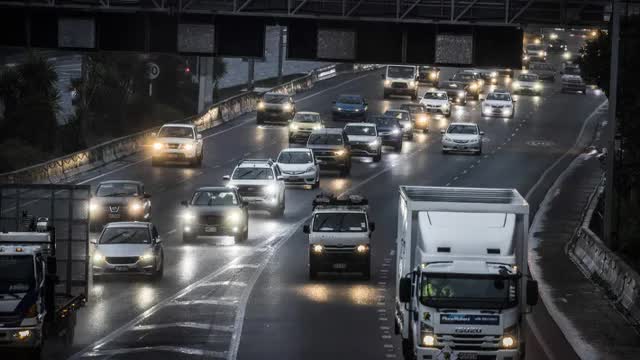
Kiwis must get over obsession with big cars and go smaller or electric to cut emissions
-
 Loading...
 - Chloe Lavoie
- 31 May 2022
- 279 Views
- 0 Like
- 0 Comment
If your next car is not electric, then it must be much smaller than your last one.
Scientists have warned that the world needs to halve emissions every decade to keep global warming less than 1.5 degrees above pre-industrial levels.
The government of Aotearoa New Zealand aims to reduce greenhouse gas emissions to net zero by 2050.
Last year, the Climate Change Commission (CCC) laid out the path to net zero in its advice to the government. In recent weeks, the government has released its plan to achieve these climate targets.
The goal is not insignificant, especially considering New Zealanders have been buying bigger vehicles for nearly two decades.
To achieve net zero by 2050, New Zealand must reduce total CO2 emissions by a third before 2030, and another third by 2040.
How to target a third of emissions
How can we reduce New Zealand's emissions by a third every decade?
Around 20% of New Zealand's emissions come from the transport sector.
Both the government and commission see removing carbon from transport as the low-hanging fruit in the emissions reduction journey (in part because the government and farmers are still working on a plan to reduce the 50% of emissions that come from agriculture).
As part of its plan, the government intends to help low-income households reduce their transport emissions and make 30% of the light vehicle fleet electric by 2035.
But the government's road map to achieve this seems light on details.
To reduce transport emissions, the commission proposed New Zealanders should walk, cycle, use electric bikes and scooters more, and drive less.
The good news is electric bike and scooter sales are booming in New Zealand and are predicted to overtake new car sales in the next couple of years.
Town planners are also starting to take these modes of transport into account when planning new ways for us to get around our cities.
The commission recommends that public transport and motive transport (using our own energy to get around by walking and biking), which currently make up just 6% of all travel, should increase to 14% by 2035 to achieve the emission reduction goals.
The government has promised to invest in public transport, and will introduce a zero-emissions public bus mandate by 2025. But it has resisted calls to permanently extend the three month half-fare initiative currently in place.
New cars need to be smaller
To reduce emissions by a third every decade, New Zealand needs fewer cars on the road. But we also need to decarbonise the cars and trucks we do have, and we need to do it fast.
Barriers to achieve this include New Zealand's ageing vehicle fleet, which is one of the oldest in the developed world. The average car is 14 years old, and the average age of cars when scrapped is 20 years old.
Approximately 150,000 cars are scrapped each year, out of a vehicle fleet of 4.4 million. This means it will take 30 years to turn over the entire fleet. That's too slow if we want to reach net zero emissions by 2050.
People replace their vehicles on average every six to 11 years. In real terms, this means every time you replace your car it needs to produce 30% less emission than the one being replaced to meet reductions targets.
The problem is, the average engine size of our cars grew steadily between 2000 and 2010, and stayed steady between 2010 and 2020. This decade has to be the one where engines get smaller.
But our obsession with large cars continues to grow. The Ford Ranger has been the most popular new car in New Zealand for the past couple of years.
Globally, sport utility vehicles (SUVs) grew from 16% of new car sales in 2010 to 45% of new car sales in 2021.
SUVs were the second largest contributor to the increase in global carbon emissions from 2010 to 2018 – bigger than either heavy industry or aviation. If SUVs were a country, they would be the seventh biggest emitter in the world.
There is no need for massive SUVs in an urban setting and they are too often used as a status symbol rather than a workhorse.
Lucky for SUV owners, vehicle manufacturers will soon be mass producing large electric utes. Electric vehicle (EV) charging infrastructure is well on it's way to being universal, and the energy industry is gearing up to supply the resulting large increase in electricity demand.
Battery technology is coming on apace, finding ways around using rare earth metals such as cobalt, which have a high environmental and social cost.
Initial cost is still a barrier
EVs cost more upfront but have lower running costs, so the lifetime purchase and running costs of a new EV is already lower than an internal combustion engine (ICE). The up-front purchase price of a new EV is projected to be cheaper than ICEs by 2031.
But for many who usually drive cheap used cars, the up-front cost will remain prohibitive for some time unless the government comes up with more incentives than the the existing discount scheme. Supply chains to source the number of second hand EVs we need are not guaranteed either.
To achieve net zero, your next car will need to be electric or, at least, be two-thirds the size of your current car. Our obsession with driving cars, and with big vehicles in particular, must change. Read More...