Is This Elementary School Near Pittsburgh the Future of Education?
-
 Loading...
 - Khepri Yousef
- 24 Feb 2023
- 70 Views
- 0 Like
- 0 Comment
Ehrman Crest Elementary and Middle School is an innovative blend of children’s museum and classroom
It’s inevitable: Every year, kindergarteners arriving to school for the first time erupt into tears from the separation anxiety.
But at one new Pittsburgh-area school, it wasn’t nearly as scary for first-time students entering the building this year. Tracy Vitale, superintendent of the suburban Seneca Valley School District, only saw one crier, and the girl instantly cheered up when Vitale led her to the colorful, winding ramp that curls up the center of the school.
“She looked up at me and said, ‘I love this ramp!’” Vitale says. “That was the end of the crying.”
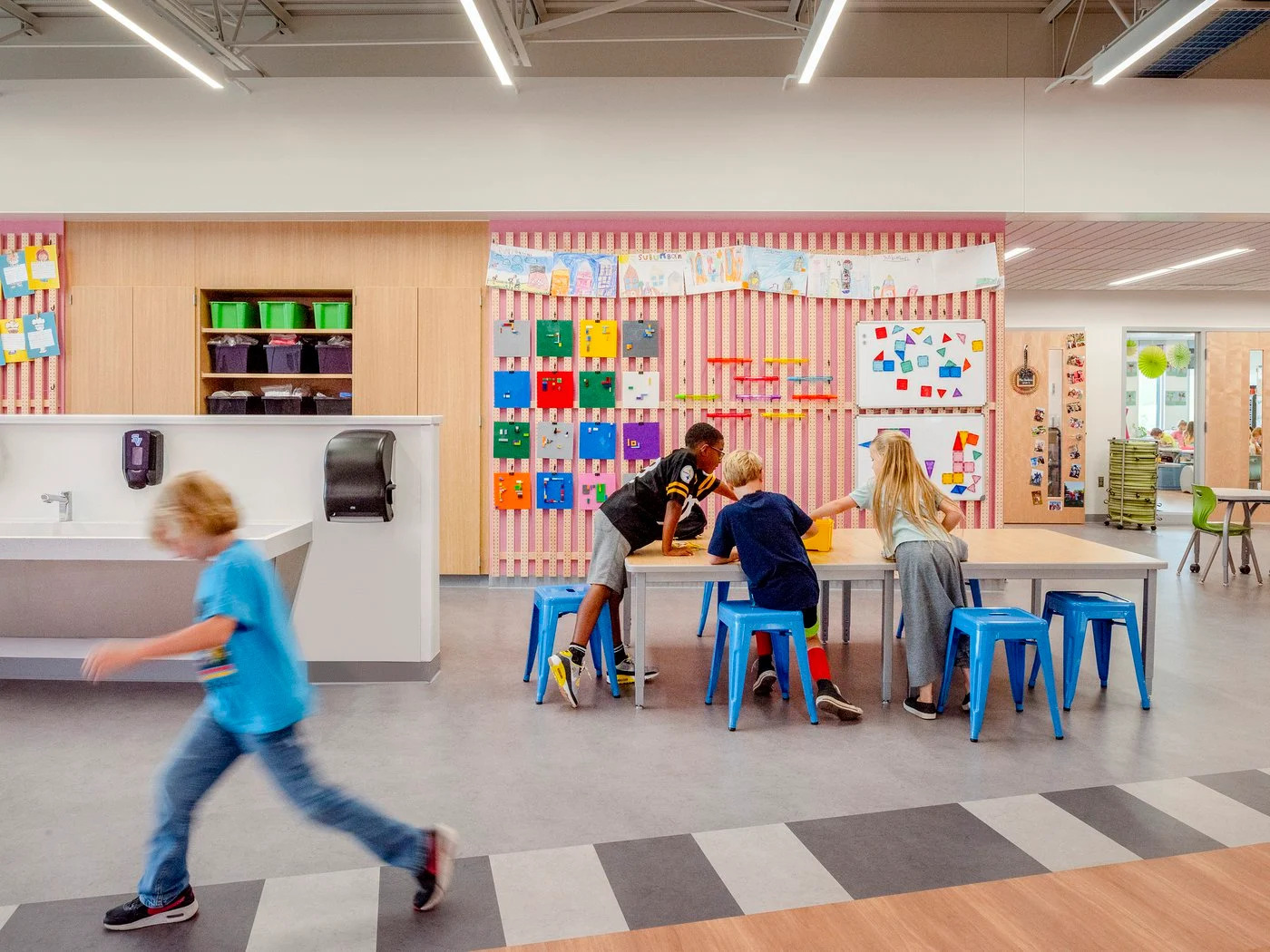
At Seneca Valley’s Ehrman Crest Elementary and Middle School, K-6 students are benefiting from an unusual collaboration. School leaders, architects and the Children’s Museum of Pittsburgh teamed up on the $63 million project, which opened in August 2022 after 790 construction days. With a student capacity of 1,400, the 200,000-square-foot facility takes a novel approach, forgoing the traditional school design for the playful, interactive, colorful elements of a children’s museum. Time magazine declared it one of the “Best Inventions of 2022.”
/https://tf-cmsv2-smithsonianmag-media.s3.amazonaws.com/filer_public/ff/0a/ff0ab675-3f44-4aa2-a640-244523296c6b/005557_00_n24_letter.jpg)
“Public schools and the Children’s Museum had the same goal, which was to educate children, but the way they were doing it and the paths they were taking were wildly different,” says Michael Corb, an architect with CannonDesign, the firm behind the project. He thought, “Why aren’t public schools going about it the way the Children’s Museum does?”
The Children’s Museum of Pittsburgh opened in 1983 on the city’s North Side and welcomes more than 300,000 visitors a year. It is known for its innovative, interactive and multilayered play features. Popular areas of the museum include the Makeshop, where kids create, play and design using processes like woodworking; Waterplay, where kids can get a little wet while doing activities involving rain, spray and ice; and the Limb Bender, a stacked maze where kids climb and crawl.
The history of children’s museums in the United States stretches back to 1899, when the Brooklyn Children’s Museum opened its doors. The next three earliest museums established for youngsters were the Boston Children’s Museum in 1913, the Detroit Children’s Museum in 1917 and the Children’s Museum of Indianapolis in 1925. All of these museums saw themselves as partners with public schools, because they fostered learning, according to the Association of Children’s Museums. Today, the U.S. has more than 300 children’s museums, which are known for hands-on and imaginative play elements. Read More…