German museums hold 40,000 objects from former colony Cameroon
-
 Loading...
 - Manger Bard
- 06 Jun 2023
- 85 Views
- 0 Like
- 0 Comment
A recent study conducted by Bénédicte Savoy from the Technische Universität Berlin and Albert Gouaffo from the University of Dschang in Cameroon has shed light on the extensive collection of Cameroonian artifacts in German museums. The findings reveal that these museums possess around 40,000 Cameroonian artifacts, surpassing the entire African collection of the British Museum. The study, known as the "Atlas der Abwesenheit" (Atlas of Absence), took two years to complete and involved 45 German museum curators. It is now accessible to the public through open-access channels.
In the capital city of Cameroon, Yaoundé, the state collections house approximately 6,000 artifacts. However, the majority of the 40,000 pieces in German museums remain stored away and are not put on display. It's important to note that this vast number excludes artifacts present in natural history museums, archaeological discoveries in prehistory museums, and those held in private collections.
Germany declared Cameroon a colony in 1884 to enhance its commercial prospects. During the period of German control, which lasted for over 30 years, significant local resistance was met with increasingly violent measures. Colonial troops conducted numerous "punitive expeditions," destroying communities, farms, and cultural landmarks. After World War I, the region was divided between France and Britain.
Bénédicte Savoy points out that the focus on returning the Benin bronzes to Nigeria might have been prioritized by Germany because the brutal looting during that time was carried out by British troops rather than German troops. She emphasizes that confronting one's acts of brutality requires both political and psychological efforts.
During a panel discussion held in Berlin to unveil the report, officials from the Cameroonian embassy highlighted the significance of restitution. Maryse Nsangou Njikam, a cultural advisor at the Cameroonian embassy in Germany, stressed the urgency of returning the objects, stating that "Germany is full," while "Cameroon is empty." Njikam expressed the belief that restitution is vital for building the future and referred to it as the ultimate goal.
The Cameroonian government has established a commission for reparation, comprising members from various ministries such as foreign affairs, education, and culture, as well as traditional royal rulers, civil society, and academia. The commission has initiated its work and maintains regular communication with museum directors in Germany. However, Njikam acknowledges that there is still a long way to go before restitution can be achieved, as several steps need to be taken.
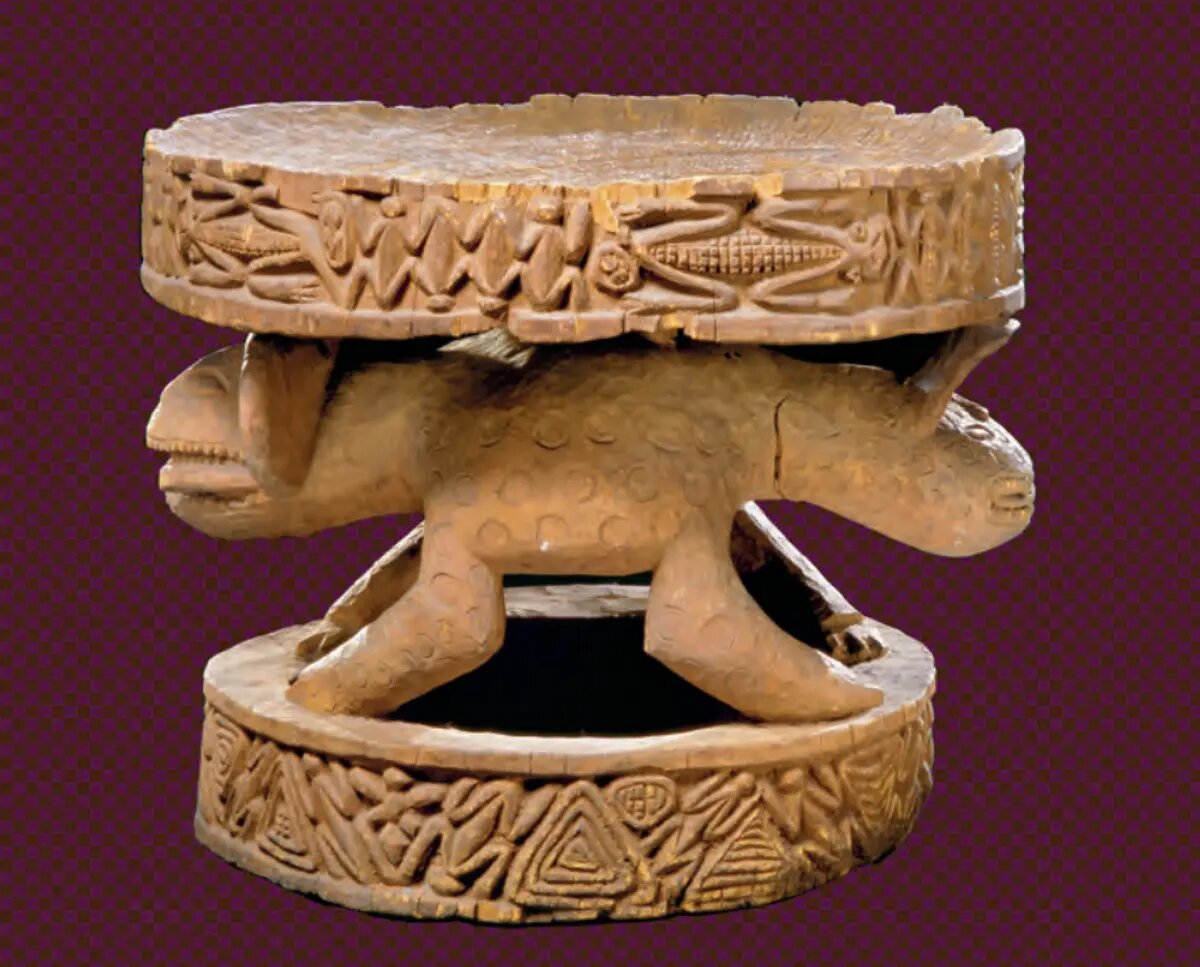
The collection of Cameroonian artifacts in German museums encompasses various items such as textiles, musical instruments, ceremonial masks, royal treasures like stools and thrones, texts, tools, and weapons. Savoy asserts that these objects were not intended for display in vitrines but held deep cultural significance.
The study specifically mentions a beaded stool from Bagam, which was stolen during a punitive exhibition but later returned by an army officer. It is currently housed in the Linden Museum in Stuttgart. Another item mentioned is a beaded cap belonging to a Cameroonian leader, which was one of 237 objects looted over 2.5 years by a German officer and is now located in the Linden Museum as well.
Among the German museums, the Linden Museum possesses over 8,000 Cameroonian artifacts, while the Ethnological Museum in Berlin and the Grassi Museum in Leipzig each have more than 5,000. Léontine Meijer-van Mensch, the director of the Grassi Museum, remarked during the panel discussion that German museums have significant work to do in addressing this issue.