Extinct Creatures Fill Puzzling Gap in the Fossil Record
-
 Loading...
 - Jose Santos
- 19 Jul 2022
- 104 Views
- 0 Like
- 0 Comment
Research reveals yunnanozoans as the oldest known stem vertebrates.
New findings answer questions in the fossil record.
The puzzling gap in the fossil record that would explain the evolution of invertebrates to vertebrates has long perplexed scientists. Vertebrates share unique features, such as a backbone and a skull, and include fishes, amphibians, reptiles, birds, mammals, and humans. Invertebrates, on the other hand, are animals without backbones.
The evolutionary process that moved invertebrates toward becoming vertebrates — and what those earliest vertebrates looked like — has been a mystery to scientists for centuries.
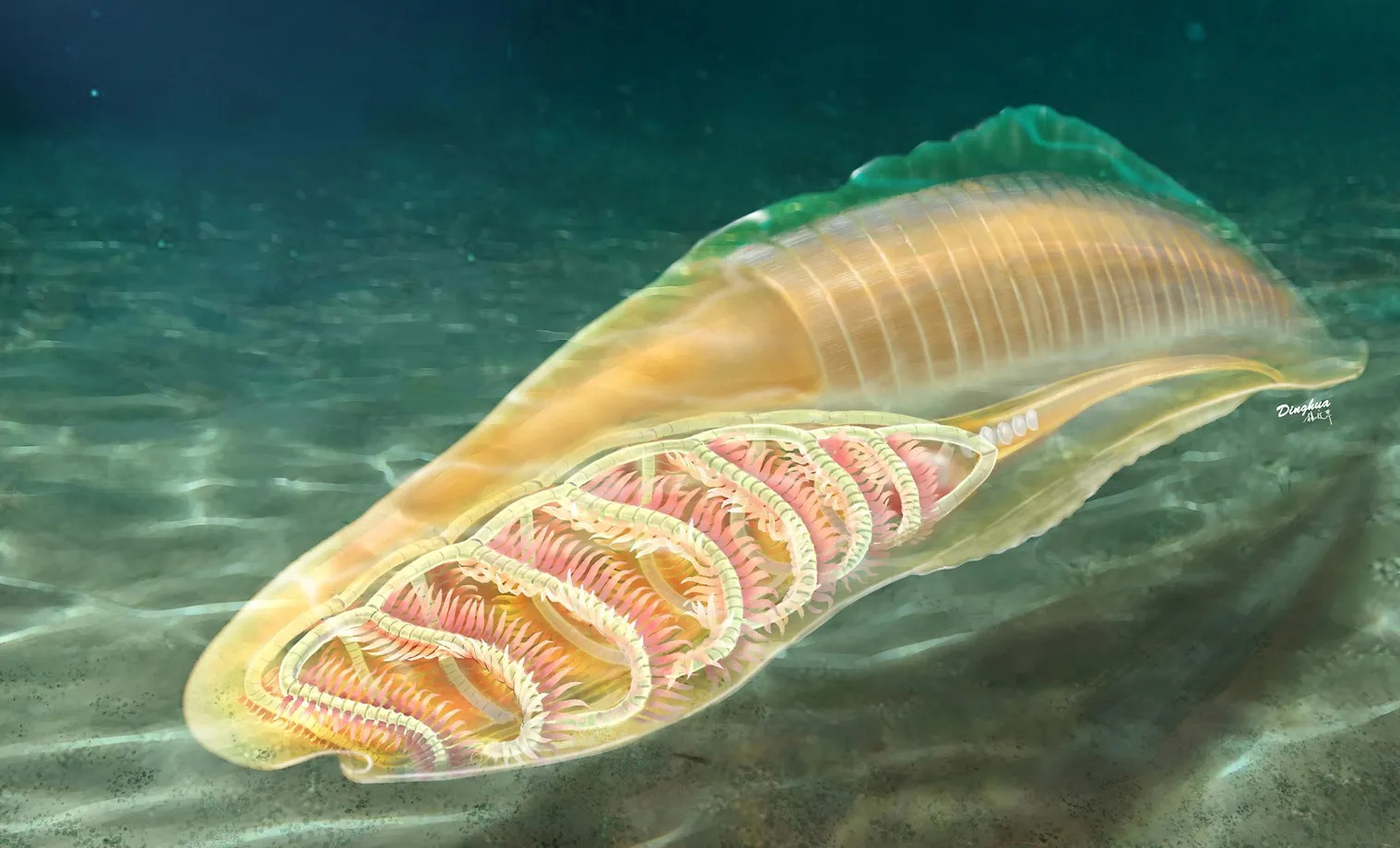
A team of scientists has now conducted a study of yunnanozoans, extinct creatures from the early Cambrian period (518 million years ago), and discovered evidence that they are the oldest known stem vertebrates. Stem vertebrate is a term that refers to those vertebrates that are extinct, but very closely related to living vertebrates.
The scientists, from Nanjing Institute of Geology and Paleontology, published their findings on July 7, 2022, in the journal Science.
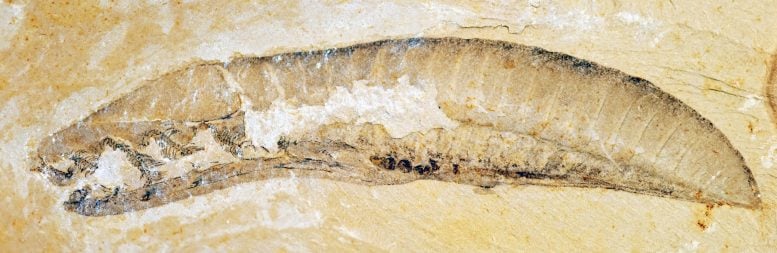
Over the years, as researchers have studied how vertebrates evolved, a key focus of research has been the pharyngeal arches. These are structures that produce parts of the face and neck, such as the muscles, bone, and connective tissue. Scientists have hypothesized that the pharyngeal arch evolved from an unjointed cartilage rod in vertebrate ancestors, such as the chordate amphioxus, a close invertebrate relative of the vertebrates. However, whether such anatomy actually existed in the ancient ancestors has not been known for certain.
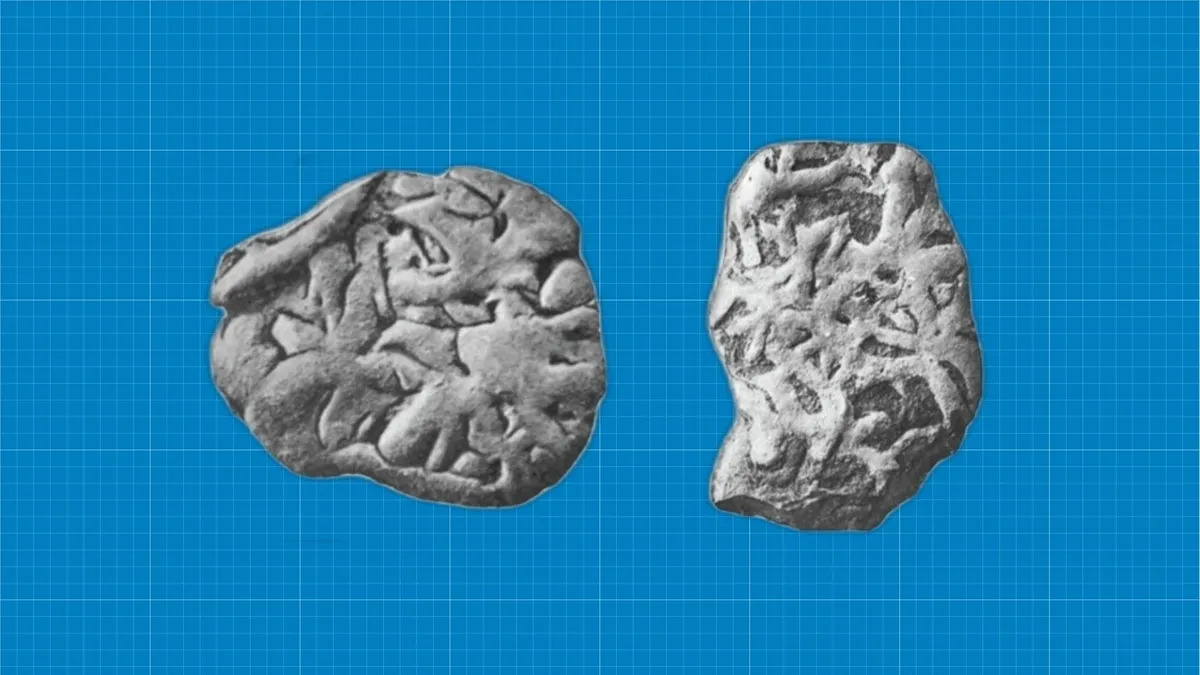
In an effort to better understand the role of the pharyngeal arch in ancient vertebrates, the research team studied the fossils of the soft-bodied yunnanozoans found in the Province. For years, researchers have studied the yunnanozoans, with differing conclusions on how to interpret the creature’s anatomy. The affinity of yunnanozoans has been debated for around three decades, with multiple papers published supporting varying opinions, including four in Nature and Science.
The research team set out to examine newly collected yunnanozoan fossil specimens in previously unexplored ways, conducting a high-resolution anatomical and ultrastructural study. The 127 specimens they studied have well-preserved carbonaceous residues that allowed the team to conduct ultrastructural observations and detailed geochemical analyses. Read More...