EU may give Tunisia more than €1bn in aid to help finances and stem migration
-
 Loading...
 - Odden Olger
- 12 Jun 2023
- 58 Views
- 0 Like
- 0 Comment
The European Union is contemplating the provision of over €1 billion (£850 million) in assistance to Tunisia to rescue their state finances and address a migration crisis, as announced by Ursula von der Leyen, the President of the EU Commission, on Sunday.
During her visit to Tunisia, Von der Leyen stated that €900 million would be allocated as macro-financial assistance, while an immediate €150 million would support the reform agenda outlined by the International Monetary Fund (IMF).
She mentioned that this aid package could be made available "once the necessary agreement is reached," without providing further details.
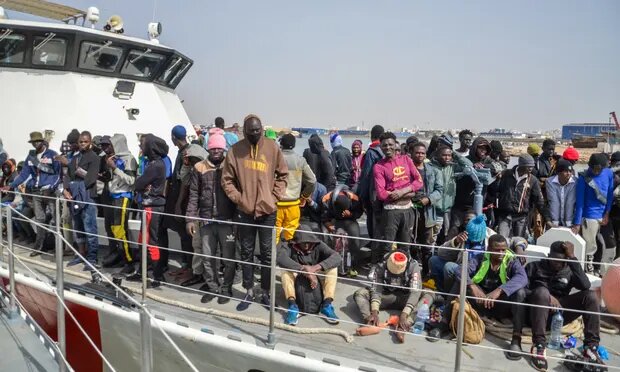
As part of the €1 billion package, an additional €105 million will be directed towards a new partnership with Tunisia aimed at combating people smuggling, human trafficking, and the ongoing tragedies at sea.
Accompanying the EU Chief during the visit were the Italian and Dutch Prime Ministers, Giorgia Meloni and Mark Rutte, respectively, who expressed a strong interest in establishing a partnership agreement with Tunisia to curb migration and people smuggling to Europe.
This marks Meloni's second visit to the country within a week.
Similar to other major donors to Tunisia, the EU has conditioned its support on the country finalizing a loan program with the IMF. However, President Kais Saied has rejected key reforms required by the IMF's plan.
Furthermore, on Saturday, he voiced his opposition to a refugee partnership similar to that of Turkey, stating that Tunisia would not serve as Europe's border guard.
The EU is concerned that if the economic crisis in Tunisia worsens, Europe will experience a significant surge in irregular migrants attempting to cross the Mediterranean this summer.
Saied has expressed concerns that the proposed cuts to subsidies and restructuring of state-owned companies, which were suggested by his government to reassure lenders of their repayment, could trigger a social upheaval. Negotiating a new agreement based on alternative proposed reforms could take several more months.
Meloni has been advocating for the IMF to ease the loan conditions. She announced on Sunday that the EU and Tunisia had already signed a joint declaration, which she hailed as a crucial step "toward the establishment of a genuine partnership."
She emphasized that there was "a significant window of opportunity" to finalize the aid agreement before the European Council meeting at the end of June. It remains unclear whether Tunisia would still need to finalize its IMF program to qualify.
The EU unveiled the details of a partnership program on Sunday, aiming to strengthen economic and trade ties with Tunisia. This includes a comprehensive air transport agreement that could benefit the tourism industry, as well as a €150 million "Medusa" digital cable connection to Europe, which could support research and education in the country.
Additionally, a memorandum of understanding on renewable energy was signed.
Von der Leyen stated that the EU would also expand opportunities for young Tunisians to study, work, and receive training in the EU, to help them develop skills that could contribute to boosting the Tunisian economy.
The Tunisian pact comes just three days after EU member states reached an agreement on radical reforms to their proposed migration laws, allowing Italy to repatriate economic migrants to countries such as Tunisia if a deal with the country enables such returns.