Can AI stop rare eagles flying into wind turbines in Germany?
-
 Loading...
 - Alban Dupont
- 13 Oct 2022
- 83 Views
- 0 Like
- 0 Comment
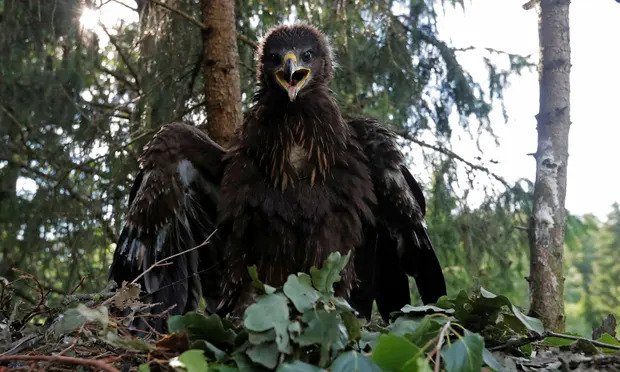
Small in size, sensitive of constitution and with only 130 breeding pairs surviving locally in the wild, the lesser spotted eagle of the Oder delta lives up to its name. In Germany, key questions over the country’s energy future hang on the question of whether artificial intelligence systems can do a better job of spotting the reclusive animal than birdwatchers do.
Lesser spotted eagles (named after the drop-shaped spots on their feathers) are fond of riding thermals over many of the flatlands earmarked for a mass expansion of onshore windfarms by a German government under pressure to compensate for a pending loss of nuclear power, coal plants and Russian gas.
Because lesser spotted eagles in mid-flight are unused to vertical obstacles, and keep their eyes focused on mice, lizard or frog-shaped prey below, conservationists say, they are known to occasionally collide with the rotor blades of wind turbines. German researchers list eight dead specimens found in the vicinity of windfarms since 2002, a small but not insignificant number given the species’ endangered status in the country.
A controversial reform of the federal nature conservation act, pushed through by Olaf Scholz’s coalition government earlier this summer, slashes red tape around building windfarms near nesting sites, but banks on AI-driven “anti-collision systems” as one way to minimise such accidents.
Software engineers in Colorado are feeding hundreds of thousands of images of the airborne clanga pomarina into an algorithm. Linked to a camera system perched atop a 10-metre tower, the trained-up neural networks of the US company IdentiFlight are expected to detect eagles approaching from a distance of up to 750 metres and electronically alert the turbine.
The turbine will then take 20-40 seconds to wind down into “trundle mode” of no more than two rotations each minute, ideally giving the eagle plenty of time to navigate safe passage between its slowly moving blades. Read More...