Best light meters for 2022
-
 Loading...
 - Olivia Taylor
- 24 May 2022
- 343 Views
- 0 Like
- 0 Comment
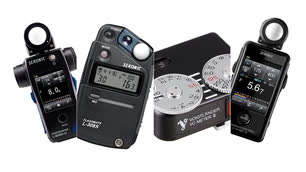
Even in a world full of AI-powered smartphone cameras and increasingly impressive mirrorless cameras from every major camera manufacturer, dedicated light meters still occupy a well-earned place in both still photography and cinema shooting. Sure, any modern camera will most certainly have a self-contained light meter of its own–and that’s good enough for most people in most situations. But what if you needed to make absolutely sure that the fill light is exactly 2 stops below the key light? Or perhaps you need to make sure that you’re not accidentally overexposing and losing color information on a product shoot. And of course, there are those of us (myself included) that own vintage film cameras that don’t have a light meter at all. Every model on this list of the best light meters can help you dial in your settings to get the best possible photos and videos.
- Best overall: Sekonic Speedmaster L-858D-U
- Best budget: Sekonic L-308X-U Flashmate
- Best for film: Voigtlander VC Speed Meter II (Black)
- Best for portraits: Sekonic LiteMaster Pro L-478D-U
- Best analog: Sekonic L-398A Studio Deluxe III
Things to consider when choosing a light meter
Before we dive into our specific picks for the best light meters, there are some basic concepts and specifications you should understand. This used to be basic knowledge for photographers before built-in meters dominated the scene. We’ll define some important terms and outline a few crucial functions.
Reflected vs. incident
Point your camera at a subject and it will measure the light bouncing off of your subject and entering through the camera lens. It’s measuring reflected light. Many dedicated light meters also offer this functionality. Unlike built-in meters, however, handheld units also often measure incidental light. This type of meter measures the light that’s falling on the subject. That means you have to put the incident meter very close to your subject.
Reflected light meters work fine for most situations, but incident light meters can be very helpful in a studio setting when you’re trying to dial in ratios with strobes or compare the amount of light falling on different parts of your subject.
Most of the models on this list offer both kinds of measurements, which makes them very versatile.
Spot meters
Some advanced or specialized models will offer spot metering, which allows you to get a precise reading of the light in a very small and specific part of the scene. This kind of meter can come in very handy if you’re trying to expose one part of a frame that’s surrounded by challenging light. Think of a portrait with heavy backlight in which a typical meter would cause the person to come out seriously underexposed.
Manufacturers usually indicate the angle a reading will cover when measuring reflected light. A typical reflected meter may sample a 40-degree angle while a spot meter will offer a much more narrow view of 5 degrees or even 1 degree.
Strobe triggering
Strobes are essential for studio work and some meters come with built-in wired or wireless triggers to fire them. If you’re buying a flash meter for wireless use, make sure it’s compatible with your chosen brand of strobes. Some higher-end models offer built-in ports that can accept wireless transmitters from various systems.
If you don’t mind a wired connection, some models still employ older PC ports, which can come in handy for working with older gear.
Analog vs. digital
While digital light meters generally rule the market, there are still a few analog options out there. The Sekonic L-398A, for instance, relies on an amorphous silicon photocell that measures light without the need for a battery, so it’s always ready to go. Analog isn’t necessarily the most practical choice, but it provides a different experience that you may appreciate.
Our picks for the best light meters
With the jargon sorted out, it’s time to get to our list of the best light meters. While we offer these picks organized by category, there’s a lot of overlap here and any of these options may fit your needs.
Best overall: Sekonic Speedmaster L-858D-U
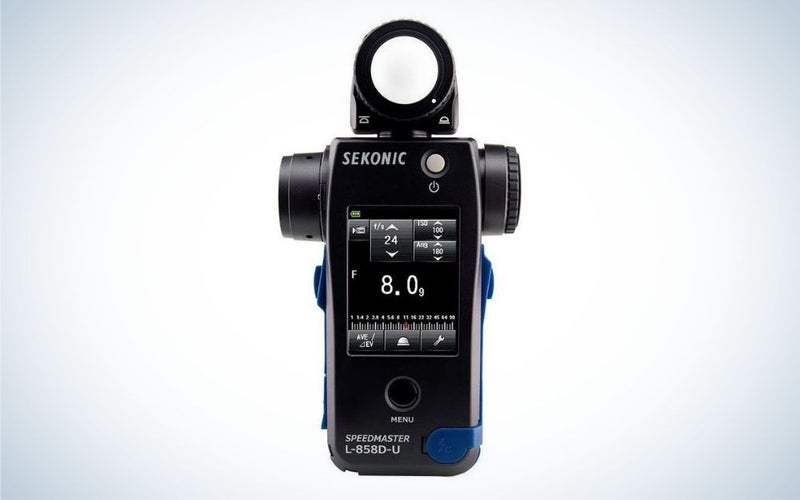
Why it made the cut: This meter has everything you could want and probably a little bit more.
Specs:
- Weight: 8.5 oz
- Spot meter: Yes, 1 degree
- Type: Incident and reflected
- Digital or analog: Digital
Pros:
- Incident and Spot meter modes
- Cine and still modes with flash
- Radio control of strobes (optional)
- 2.7-inch, easy to read backlit touchscreen
- Runs on two AAA batteries
Cons:
- Most expensive option
- Potentially too complicated for some users
- Wireless radio modules sold separately
If you’re looking for a light meter that covers your needs in every possible situation, the Speedmaster L-858D-U by Sekonic is the one to beat. It can measure a range of nearly 28 stops from -5EV all the way up to 22.9EV at ISO 100. It boasts an extensive range of still and cine settings, incident metering and a 1° spot meter with a viewfinder. It can take readings in both ambient and flash modes, you won’t find yourself wanting for features with this in your bag. You can also get optional radio modules that work wirelessly with systems like broncolor, Elinchrom, and Pocket Wizard.
Sekonic has been the biggest name in light meters for decades and this is the flagship, which makes it extremely capable. This glut of features may be a bit much for beginners or someone who is just starting. But, it’s built tough and will likely survive years in a camera bag.
Best budget: Sekonic L-308X-U Flashmate Light Meter
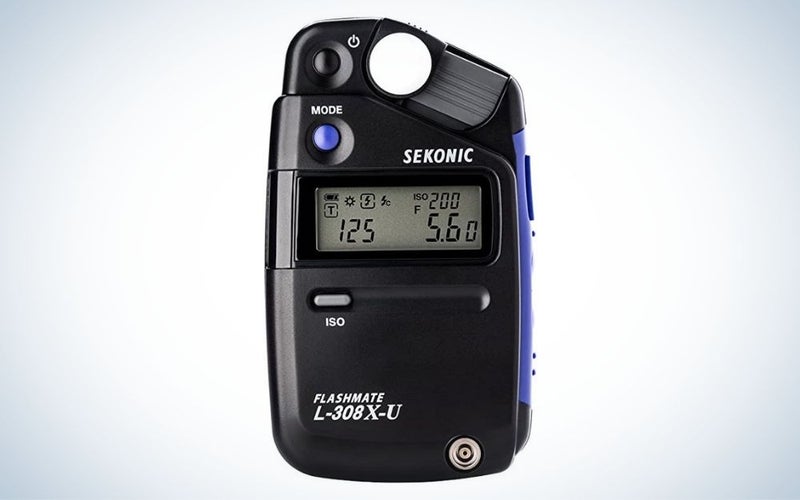
Why it made the cut: It’s small and relatively inexpensive, which makes it a great companion for any camera.
Specs:
- Weight: 3.5 ounces
- Spot meter: No
- Type: Incident and reflected
- Digital or analog: Digital
Pros:
- Easy to use
- Photo, cine, and HD Cine metering modes
- Backlit LCD
- Runs on one AA battery
Cons:
- No wireless radio modules
- No spot meter
From beginner to professional, if you’re on a budget this is likely a clear winner. While it doesn’t have the wireless module capabilities of its more advanced siblings, it does have a host of other features that will cover the needs of most users, such as photo, cine, and HD cine metering modes, flash metering, almost 20 stops of range, and a backlit, easy-to-read LCD screen. It’s also a great model if you want to pack light, as it is relatively light and small. At this price range, don’t expect a spot meter in addition to the incident meter, though. This has become the standard pick for many analog photographers as it’s small, reliable, and easy to use. Read More...