5 Foods You Need to Try in Chile to Eat Like a Local — Plus Where to Find Them
-
 Loading...
 - Jerome Makris
- 07 Jun 2023
- 95 Views
- 0 Like
- 0 Comment
When I relocated to Chile, I vividly recall hearing about the country's renowned three Ws - wine, women, and weather. While I cannot vouch for the second W, I can certainly attest to why Chile is famous for its wine and weather.
What is often overlooked in Chile's fame is its cuisine. Prior to my move, I had no preconceived list of culinary delights I wanted to savor upon arrival. I couldn't even identify a specific type or style of food that Chile was known for.
However, it turns out that Chile does possess a distinctive cuisine. In this article, I will highlight five delectable foods and drinks that are a must-try to experience authentic Chilean flavors, along with recommendations on where to find them.
The Completo

The completo, Chile's take on the hotdog, may not be a culinary masterpiece, but it holds its own charm. Translating to "complete," the completo is adorned with Chilean staples such as mayonnaise, diced tomatoes, and palta (smashed avocado) - an even more popular ingredient than mayo itself. Sometimes, sauerkraut, influenced by the German immigrants who sought refuge in Chile during the 19th century, is added. Combine all these ingredients inside a bun, and you have the famous completo.
Where to Enjoy the Completo
The completo is the epitome of Chilean street food. It is incredibly affordable and perfect for on-the-go snacking. You can find it at almost any street vendor, although my personal favorite spot to purchase and savor a completo is downtown at Plaza De Armas. With numerous park benches to sit on, you can relish this quintessential Chilean hotdog while indulging in people-watching.
Empanada De Pino

Almost every country boasts its own version of the empanada - whether it's a dumpling, pierogi, or egg roll. The concept of delicious fillings encased in pastry transcends borders. Chile, along with many Latin American cultures, has its own rendition of the empanada. The empanada de pino is a well-known and distinctive variant in Chile.
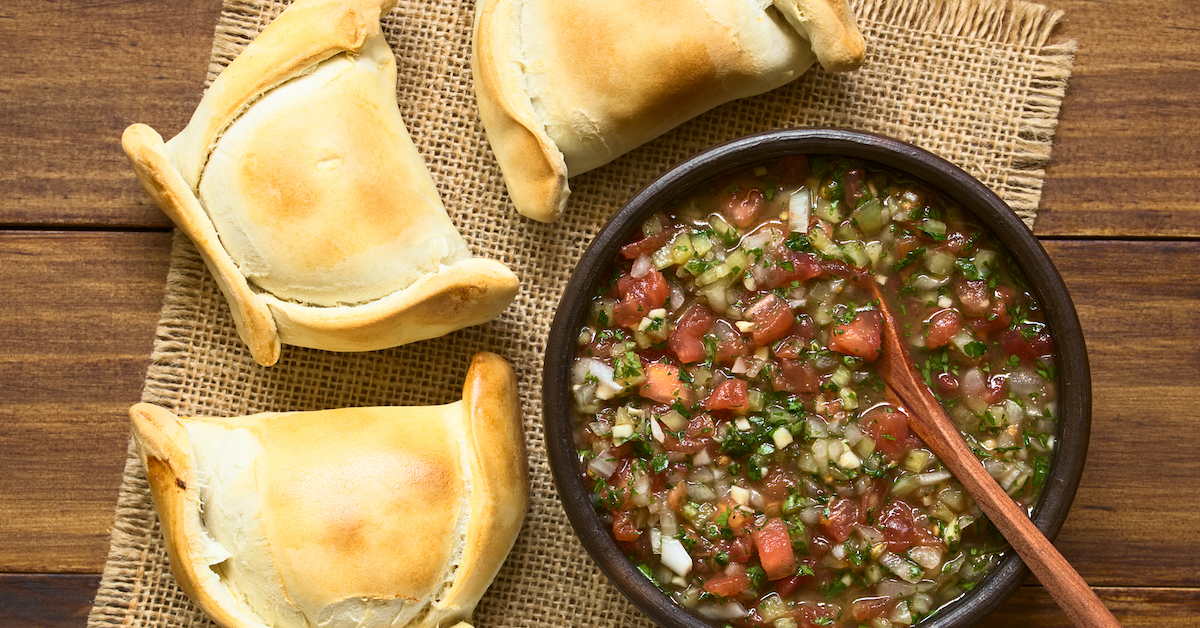
Baked to perfection, this handheld delight is filled with ground beef, onions, a hard-boiled egg, raisins, and black olives. Although these ingredients may seem like an odd combination, the raisins contribute an unexpected sweetness that beautifully complements the savory pino filling. What I particularly love is the element of surprise with every bite, as everything is concealed within the baked dough.
Where to Find Empanada De Pino
While you can enjoy empanada de pino from street vendors as convenient street food, you can also find it in many sit-down restaurants. My personal recommendation for indulging in various types of empanadas is Todo Empanada in Valparaiso, Chile.
Pebre

I firmly believe that condiments have the power to elevate any dish. Dipping an empanada de pino into a zesty and delicate pebre sauce is sheer bliss. Pebre can be best described as Chile's version of salsa.
Comprising tomatoes, cilantro, onions, aji peppers for a hint of spice, and a unique blend of oil and vinegar, pebre distinguishes itself from typical salsas. It is commonly served with bread and often graces dinner tables as a starter. Additionally, it pairs exceptionally well with meats like choripan. Instead of recommending a specific restaurant to try this delight, I encourage you to sample the diverse range of pebres you encounter during your travels in Chile.
Pebre remains one of my fondest takeaways from living in Chile. I frequently prepare it at home, and on September 18, Chile's Independence Day, I always make empanadas de pino and pebre to celebrate and reminisce about my time there.
Terremoto

Yes, "terremoto" typically refers to a natural disaster known as an earthquake, infamous in Chile. However, it is also the name of a signature cocktail in the country. Unsurprisingly, this sweet beverage emerged after the 1985 earthquake in Chile. It enjoys immense popularity during the week-long Independence Day celebrations.
Terremoto combines a young, sweet wine made from apples or grapes (known as "chicha") with pineapple ice cream and grenadine. Imagine an adult version of a root beer float, minus the root beer but with an added touch of sweetness.
Where to Savor Terremoto For an authentic terremoto experience, the best place to go is La Piojera. This famous dive bar is situated near the Mercado Central in Santiago, Chile. Despite its name, which translates to "the flea house," the bar itself is far from that description. During my first visit to La Piojera, I relished several terremotos and even found myself dancing la cuaca (a traditional Chilean courting dance involving a handkerchief) with local men. Approach La Piojera with an adventurous spirit and embrace the true essence of Santiago.
Pisco Sour

Finally, I couldn't possibly overlook Chile's most famous and delightful cocktail. In fact, I named my cat after this exquisite liquor derived from grapes (often brandy or grappa). That should give you an idea of how much I adore it.
While I usually lean towards the simpler and less extravagant piscola (pisco mixed with cola, similar to a rum and coke), a pisco sour is an essential beverage to try during your visit to Chile. It blends Chilean pisco (note that there is an ongoing debate between Chile and Peru regarding the origin of pisco), the juice of a pica lime (a highly acidic lime found in the Atacama Desert in Chile), and powdered sugar.
You might be familiar with another variation of the pisco sour that includes egg whites. This, along with the pica lime, is the primary distinction between Chilean and Peruvian pisco sours. However, I have encountered pisco sours in Chile with or without egg whites, as well as in Peru. It ultimately depends on the establishment's preference.
To offer a comparison, the taste of a pisco sour is reminiscent of a margarita. It strikes a harmonious balance between sweetness and sourness, thanks to the unique essence of pisco. If you're uncertain about trying a terremoto, the pisco sour at La Piojera is an excellent alternative and serves as Chile's national drink.