20 Traditional Dishes to Look For in Sofia
-
 Loading...
 - Jarmila Beranek
- 16 Jun 2022
- 255 Views
- 0 Like
- 0 Comment
There are a few things that first come to mind about Bulgaria—drunken holiday parties at Black Sea resorts, roses, and hot springs. But there is one little tidbit that perhaps most folks do not know: Bulgaria is the oldest country in Europe, making it all the more fascinating.
Countries in Eastern Europe are awfully underrated both for foodies and travelers alike. But when it is the oldest country on the continent, it’s most definitely worth a visit. Tons of history has turned Bulgaria into a destination every Traveleater would want to experience.
Yes, Bulgaria is old. In fact, it’s so old that it has gone through Thracian, Persian, Celtic, and Roman rule even before hitting the Dark Ages. It’s so old that it has been that the country hasn’t changed its name since the 7th century when it was first discovered by Khan Asparuh. It is so old that it is the birthplace of the bacteria responsible for creating delicious and tangy yogurt.
All these, combined with a host of other elements, form a massive influence on what Bulgarian food is all about.
If you’re planning a trip to Sofia and want to really learn about Bulgarian dishes, then you may be interested in joining a Bulgarian food or wine tour.
WHAT IS TRADITIONAL BULGARIAN FOOD?
With a long and rich history to back it up, Bulgarian cuisine is diverse. Having the most experience compared to its neighbors in the Balkan region, traditional Bulgarian food is recognized as a representation of Southeast European cuisine, with geography playing an important role in the country’s dishes.
Popular Bulgarian food is mostly made up of cheese, yogurt, and vegetables. And while Bulgarian cuisine is quite similar to Greek and Turkish food, it has its own unique take on the dishes. They are customarily fresh and hearty with a variety of mild spices. Commonly used proteins are chicken, lamb, and pork, although seafood and veal are also popular depending on the region.
A tasty amalgamation of Balkan, Mediterranean, and Middle Eastern cuisines, traditional Bulgarian cuisine is perfect for Traveleaters who are planning to go on a food adventure in Southeastern Europe.
THE BEST OF TRADITIONAL BULGARIAN CUISINE
This Bulgarian food guide has been organized by category to make it easier to digest.
- Starters / Salads / Sides
- Soups / Stews
- Meat / Mains
- Desserts
- Bulgarian Food Tours
STARTERS / SIDES
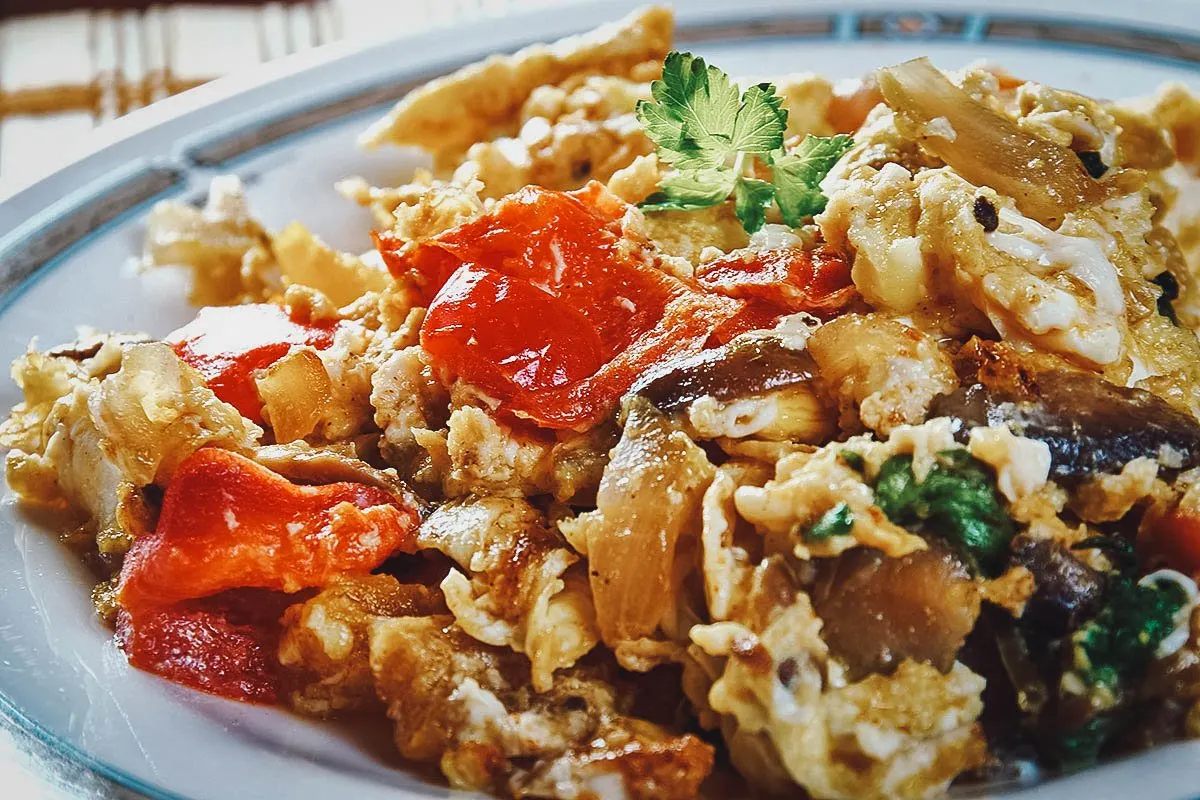
1. Mish-Mash
Mish-mash is a Bulgarian salad made with fresh cut vegetables, eggs, and sirene cheese, a type of Balkan brined cheese similar to feta. It’s typically made with tomatoes, onions, and peppers though it can be made with other vegetables as well like eggplant, okra, carrots, scallions, and garlic. It’s seasoned simply with black pepper and salt and often garnished with freshly cut parsley.
Mish-mash is typically a spring dish and commonly served warm as an appetizer or main dish, usually with freshly baked bread.
2. Shopska Salad
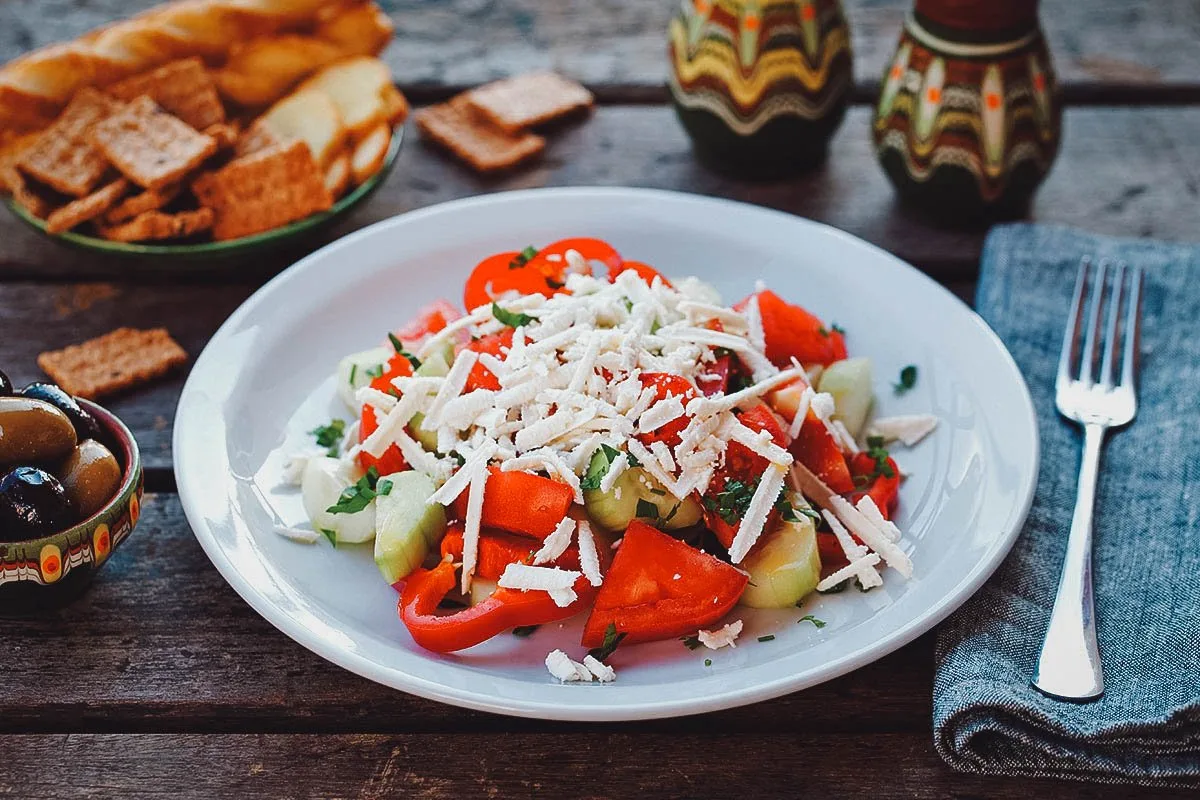
Nothing starts Bulgarian meals better than a fresh salad, and Bulgarians know this for a fact. Hailing from the Shopluk region, the shopska salad is a cold salad also popular throughout Southeastern Europe. It is believed to have been invented in the 1950s as a way of promoting tourism by the then socialist party to showcase fresh local ingredients in Bulgarian cuisine.
Considered a national dish, the most traditional recipe you’ll find in a Bulgarian cookbook makes use of cucumbers, tomatoes, onions or scallions, raw or roasted peppers, parsley, and sirene cheese. The ingredients are refrigerated, so the dish is served cold before being sliced, salted, and tossed with a light dressing of sunflower oil and an occasional splash of vinegar.
Shopska salad is best paired with a meat dish or enjoyed as a light meal during warm summer days.
3. Snezhanka
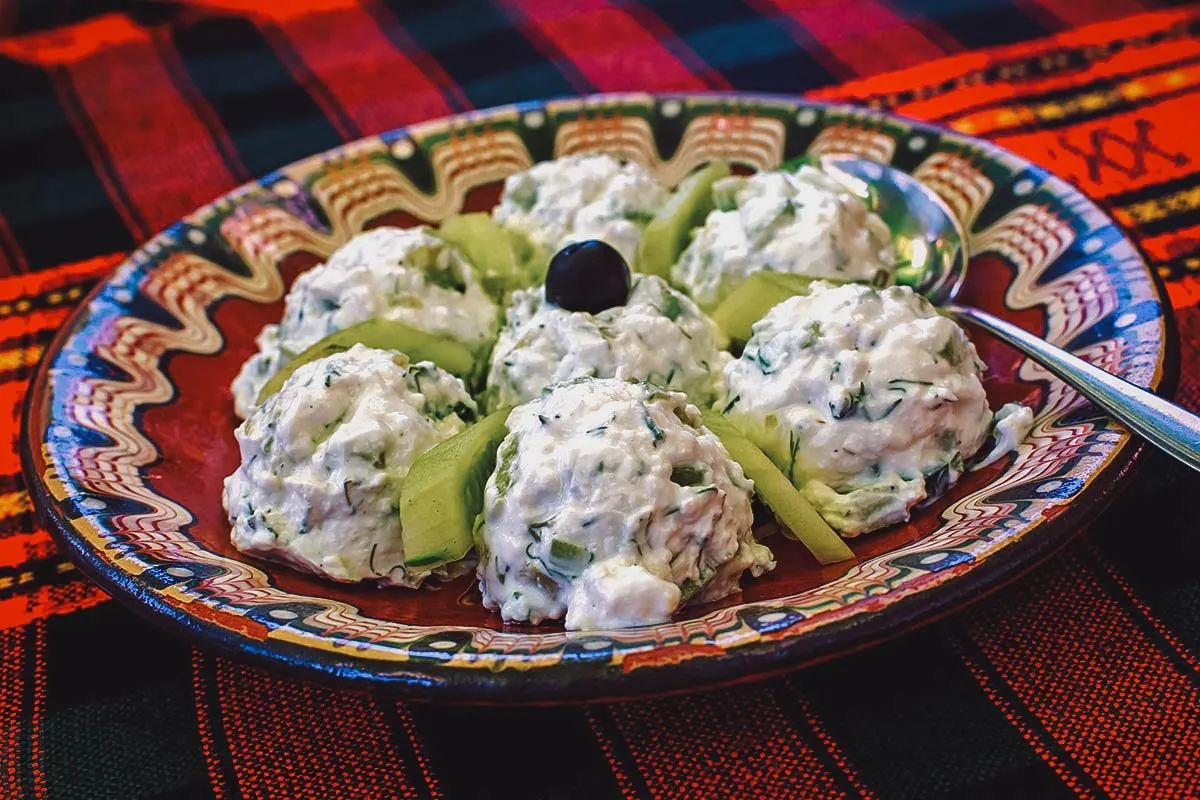
Snezhanka literally translates to “Snow White” of the Disney animated film fame. It’s a cold salad named as such due to its mostly white color from its main ingredient: strained yogurt. Other ingredients include chopped cucumber, garlic, olive oil, salt, and dill. It’s basically a salad version of Greek tzatziki.
For a more personalized approach, walnuts, roasted peppers, and chopped parsley can be added as toppings. It can be served as an appetizer, side dish, or a pita bread dip. It can also be eaten as part of a meze platter and traditionally complemented with alcoholic drinks.
4. Kiselo Mlyako
Bulgaria’s culinary pride and joy comes in the form of sour milk, or what the world knows as yogurt. This fermented dairy product is a staple in many countries, adding pizzazz to various dishes or as a standalone side dish. To fully understand how this traditional Bulgarian food makes Bulgarians proud to be Bulgarians, one must know its origins.
Kiselo mlyako, a.k.a Bulgarian yogurt, is recognized as the progenitor of this sour and creamy dish that people enjoy today. While it is believed to have originated from Turkey, a closer look has proven that this isn’t the case.
A young Bulgarian microbiologist named Stamen Grigorov discovered the bacteria responsible for fermenting milk and turning it into the tasty yogurt people love eating today. A rod-shaped bacterium called Lactobacillus bulgaricus is one of its kind that only comes from Bulgaria, giving kiselo mlyako the Bulgarian food title it deserves: the OG yogurt.

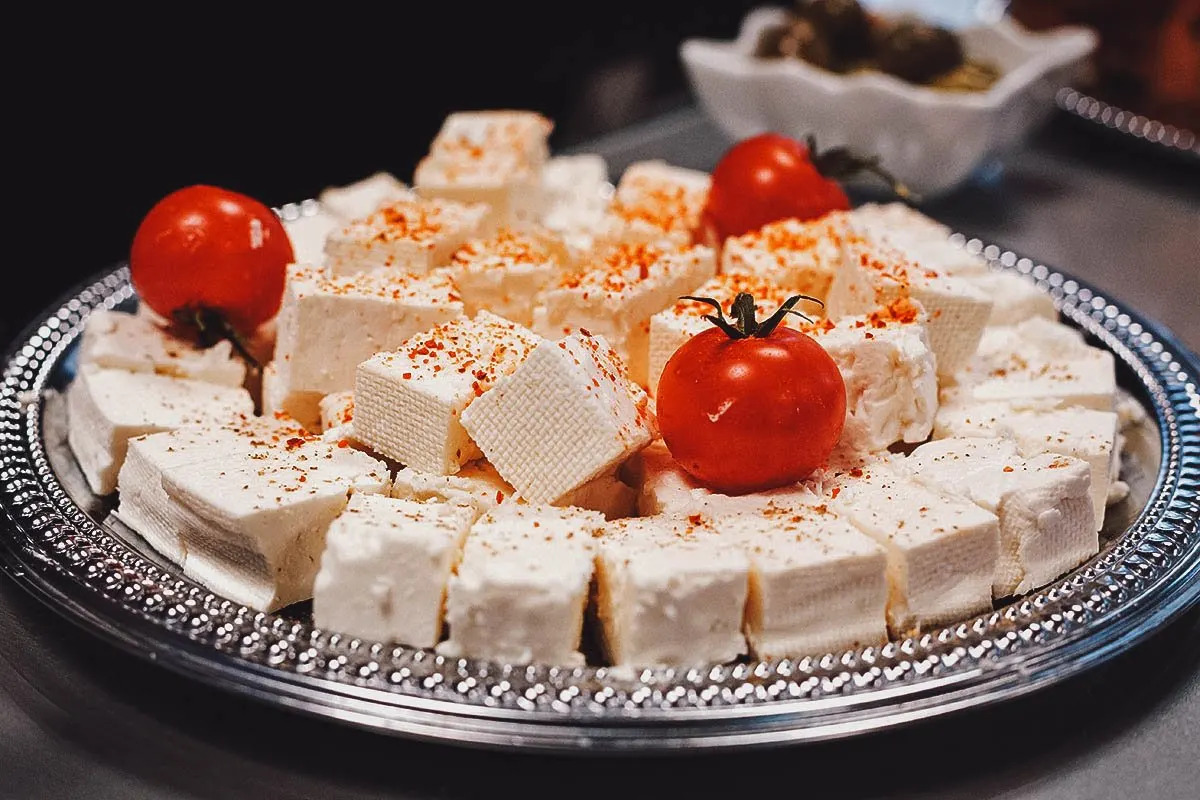
5. Sirene
In a country rich in dairy products, Bulgaria does have its own cheese. And while feta cheese is considered as one of the most popular, the country also has its very own version. Called sirene, this Bulgarian white cheese is made with cow, sheep, or goat milk—or a mixture of all three—brined and served as table cheese.
Sirene is a tad softer, wetter, and generally creamier with a grainier texture than feta cheese. But this white cheese is still as crumbly with a slightly citrusy flavor. This traditional Bulgarian cheese is served at almost every Bulgarian meal either in salads, with bread, or in pastries. Read More...