10 Tips for Flower Macro Photography
-
 Loading...
 - Louie Powell
- 14 Jan 2022
- 570 Views
- 0 Like
- 0 Comment
Many photographers believe there is nothing to do when you don’t have the luxury of an extraordinary subject. And they choose to search for exotic flowers to photograph. Yet, this isn’t the answer. Flower macro photography provides an intimate insight into the world of flowers and reveals aspects most people never see or notice. The most ordinary flowers have the most extraordinary stories, curves, and features. Here is how you can capture them in your pictures.
This post extends our general flower photography article by focusing more on the macro aspect of flower photography.
Fall in Love with Your Subject
Whether you choose to photograph rare wildflowers or houseplants, you have to start by loving them. Flower macro photography requires a strong connection between photographer and subject. If you consider flowers lifeless objects, your photographs will show it, and your viewers will feel it.
Flowers are the essence of life. Although they look fragile and sensitive, they are what keep this planet going. If you look closely, you’ll see life pulsing through their petals. Each color and shape has a precise role, and they are continuously changing. Follow their lifecycle and capture their fascinating features without harming them.
Compose the Story You Want to Tell
The biggest mistake you can make is thinking flower photographs are just decorative. Don’t ignore storytelling; flowers have so many stories to tell. Before pressing the shutter release, find out which specific feature of the flower you want to emphasize. A good photograph starts with the photographer’s decision to convey a message.
For example, flowers can announce the beginning of a new season, speak about a location, document an event, or convey a feeling. Flowers have the versatility to carry both happy and sad messages. Furthermore, you can focus on the delicacy, or try to convey how it would feel to touch the flower by enhancing finer details like rugged texture.
Choose a Powerful Focal Point
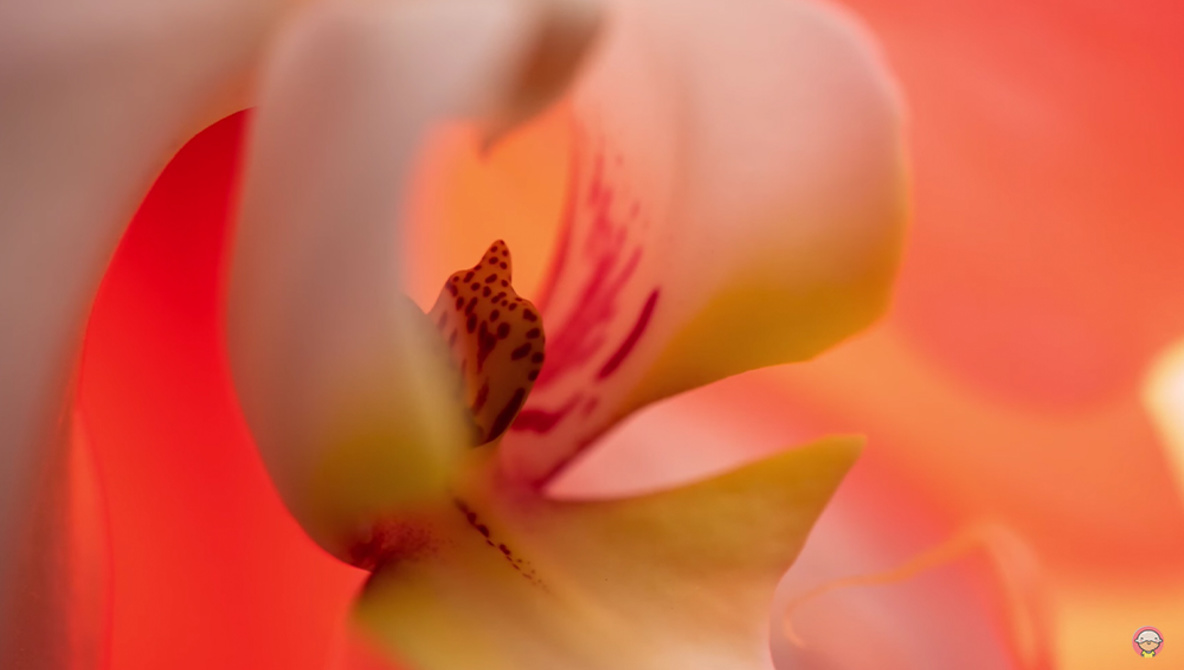
Flower macro photography allows you to get really close to a flower and frame only a part of it. You don’t have to frame the entire flower to have a focal point. You can focus on petals, the pistil, pollen, or the stem. Each line, shade of color, or shape may be the star of your composition. However, you need a focal point to create an appealing and meaningful picture.
Decompose the scene into basic elements such as leading lines, splashes of color, shadows, and highlights. See which one captures your attention and focus on that. Macro photography needs a strong focal point, something to catch the viewer’s eye and invite them to enter the world of tiny subjects.
Don’t forget to use the rules of composition when you frame your photos. A common mistake is to place the subject always in the center of the frame. Actually, a singular subject needs negative space and perspective to really shine, not a central position.
Use the Rule of Odds for Flower Macro Photography
The rule of odds says that photographs with an odd number of similar elements are more engaging than those with an even number. In other words, a photograph with 3 or 5 similar elements will be catchier than one with 2 or 4. Therefore, if you include a few repetitive objects in your composition (i.e., petals, leaves), make sure you use an odd number.

Using one element may seem the best option for flower macro photography. It is an odd number, is catchy, and tells the viewer exactly where to look and what the image is about. However, using more elements enhances the visual story, leads the viewer from one element to another, making them spend more time with your photograph, and delivers a stronger and more dynamic image. The natural world is a world of collaboration and symbiosis. No one is alone in nature.
Work with Symmetries and Repetitions
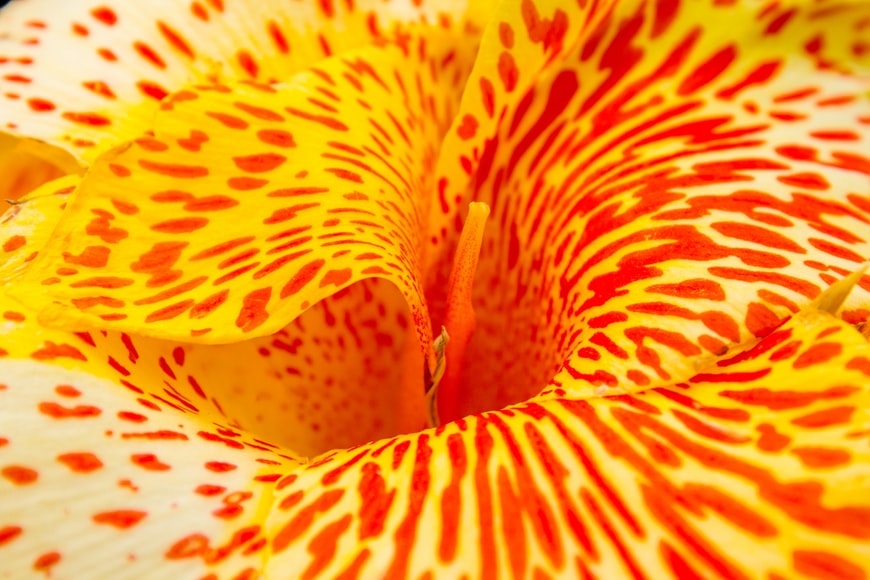
Flowers are masters of symmetry and repetition. At the same time, their geometry is imperfect and unique. No two flowers are identical. Emerge in patterns and textures and fill the frame with lines and shapes.
Make sure your compositions are well-balanced and harmonious. Vertical patterns look better in a portrait-oriented frame, while horizontal ones look better in a landscape-oriented frame. Strong lines capture the viewer’s attention whether you planned it or not. Don’t leave anything at random. The direction, hardness, and color of lines influence the message more than you imagine.