Painter Cassi Namoda Emerged Amid a Black Figuration Renaissance. Now, She’s Going Abstract
-
 Loading...
 - Beatrice Darko
- 13 Sep 2024
- 37 Views
- 0 Like
- 0 Comment
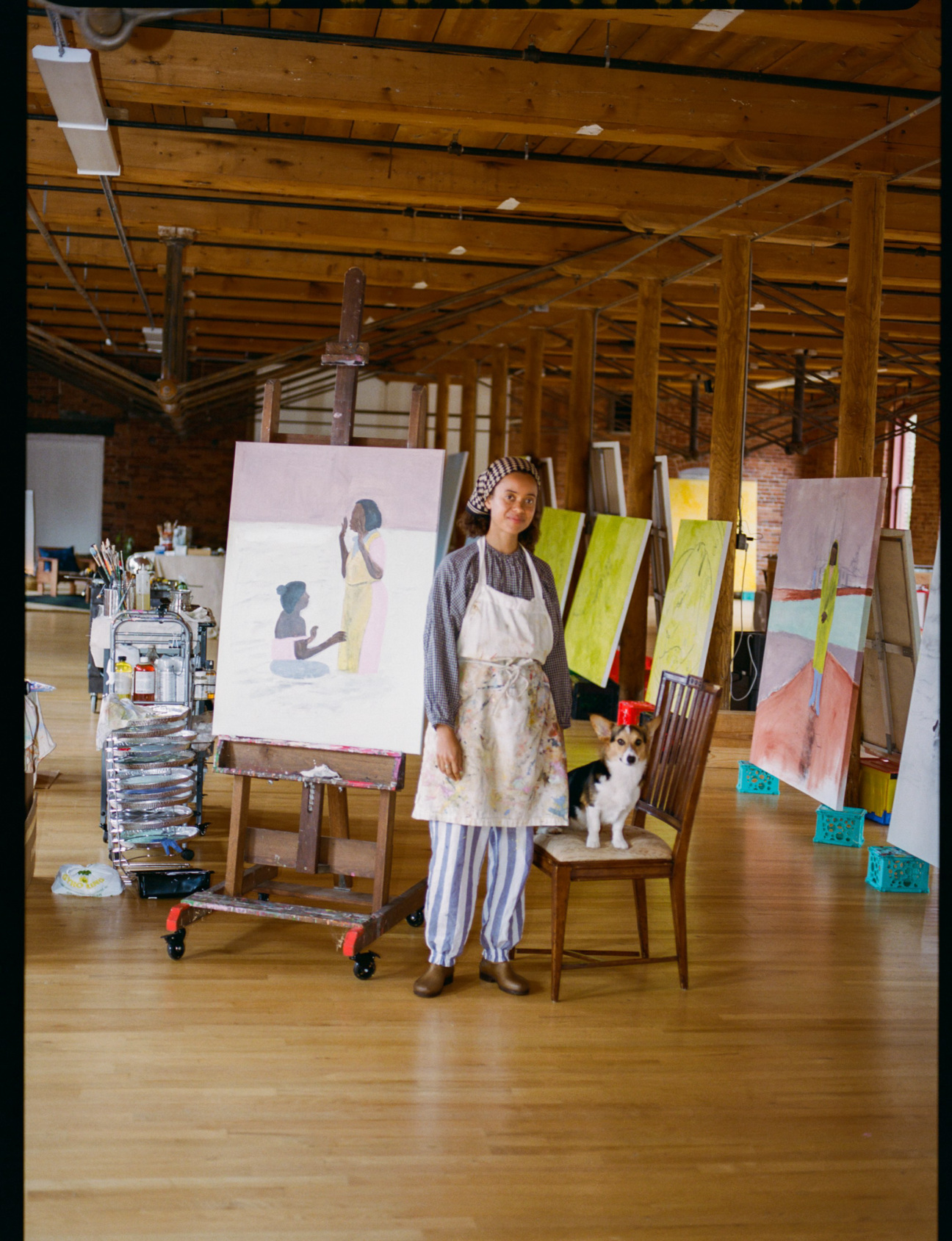
Cassi Namoda, a Mozambican-American painter, has been making waves in the art world with her vibrant and emotive works. Emerging during the Black Figuration Renaissance, Namoda's early paintings focused on figurative representations of African and African-American experiences. However, she has recently shifted her style towards abstract expressionism, exploring new ways to convey the complexities of identity, culture, and emotion.
Namoda's decision to transition from figurative to abstract art marks a significant turning point in her career. This shift allows her to experiment with new techniques, colors, and textures, creating a more nuanced and introspective body of work. By abandoning representational forms, Namoda is able to tap into the subconscious, exploring the emotional and psychological depths of her subjects.
Namoda's work is deeply rooted in African and African-American artistic traditions. Her use of bold colors, patterns, and textures pays homage to the rich cultural heritage of these communities. However, her abstract style also reflects a desire to break free from the constraints of representation, embracing a more fluid and expressive approach to art-making.
Namoda's abstract paintings are characterized by their emotional intensity and complexity. Her use of color, gesture, and texture creates a sense of dynamic energy, drawing the viewer into a world of feeling and experience. By exploring the intersections of identity, culture, and emotion, Namoda's work offers a powerful and deeply personal vision of the human experience.
As Cassi Namoda continues to evolve as an artist, her abstract paintings signal a new era in her career. With her unique blend of African and African-American influences, Namoda is poised to make a significant contribution to the world of contemporary art. Her work challenges and inspires, inviting viewers to engage with the complexities of identity, culture, and emotion in new and innovative ways.