Why Your Bike's Gear Ratio Is Less Important than You Think
-
 Loading...
 - Senja Hautala
- 26 Jul 2022
- 101 Views
- 0 Like
- 0 Comment
Human existence is a process of constant refinement. Ten thousand years ago we gnawed at charred meat while squatting around a campfire; today you eat your prime rib amid luxury appointments in a keto-friendly restaurant. The first TVs were grainy black-and-white affairs, whereas now you can buy a stunning full-color display the size of your living room wall for a few hundred bucks at your favorite big-box store. Underpants are generally more comfortable. And so forth.
Bicycles also undergo constant refinement, especially when it comes to their drivetrains and gearing systems. The first bikes were penny farthings–they had no gears at all, just a direct drive with a ratio determined by the wheel’s diameter, hence their zany appearance. Then came chain drives that let you use equal-sized wheels, and freewheels that allowed you to coast, and derailleurs that allowed you to change gears. Today, you can shift seamlessly and effortlessly across a whole range of gear ratios with the push of a button. Unless, of course, your battery runs out, in which case your bike will revert to a singlespeed and send you back in time by 85 years.
Electronic shifting notwithstanding, over the last several decades the biggest refinement in performance-oriented bikes hasn’t been in the mechanics of shifting gears; rather, it’s in the gearing range itself. A derailleur drivetrain from the mid–to-late 20th century functions more or less the same way it does today. Sure, the shifters are usually integrated into your brake levers rather than on your downtube, but regardless of where the actuator is located, the system is doing the same thing.
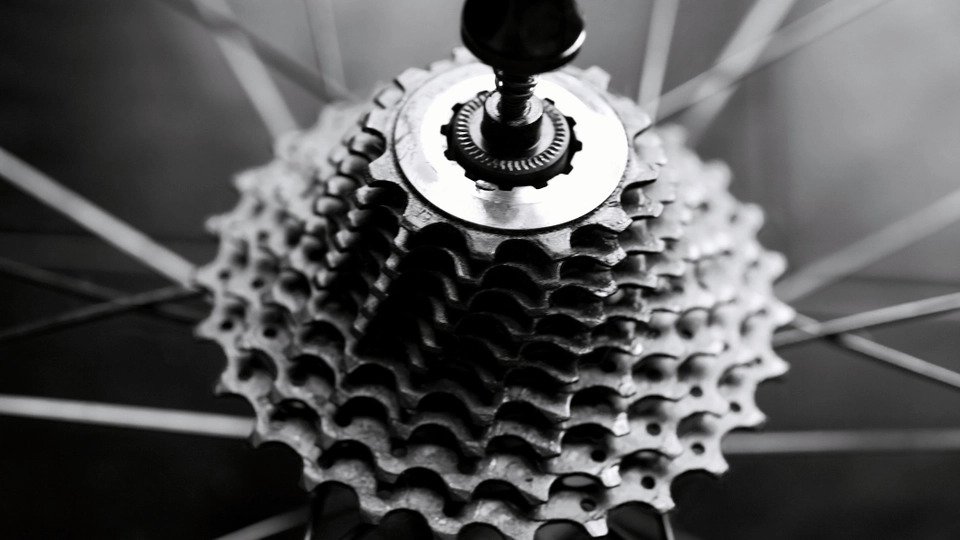
Much more significant is that, say, a mid-range Trek road bike from the late ’80s (I know because I have one) offered a 52/42 chainring with a 7-speed 13-24 rear cluster, which was fairly low and “novice-friendly” road gearing at the time. Meanwhile, its modern equivalent, a Trek Emonda ALR 5, comes with a 50/34 chainring and an 11-speed, 11-30 cassette. That’s a slight four percent decrease on the high end, and a whopping 35 percent decrease on the low end–plus four more cogs in between, of course. Read More...