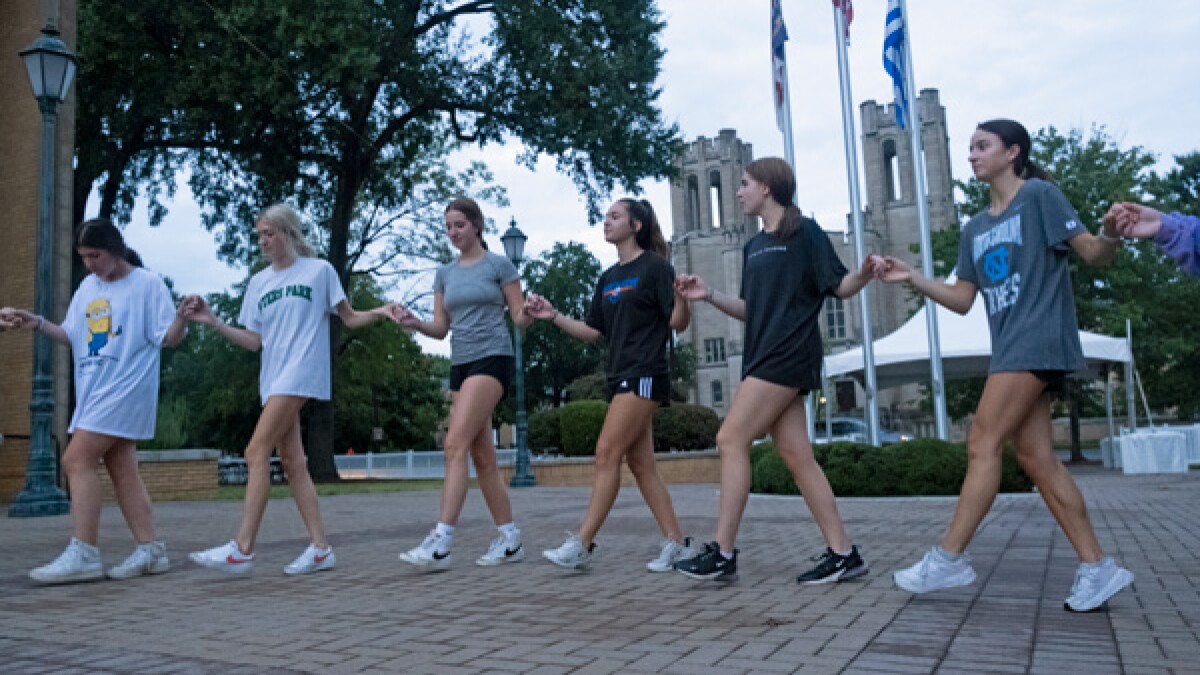
What Greek Festival Dancers Can Teach Faith Communities
-
 Loading...
 - Vicente Montoya
- 16 Sep 2022
- 73 Views
- 0 Like
- 0 Comment
People love Charlotte’s Greek Festival for the baklava and gyros. But the way the Holy Trinity Greek Orthodox Cathedral teaches folk dancing could show a few new moves to congregations nationwide, that are facing historic declines in attendance.
The festival helped make Holy Trinity the fourth largest Greek Orthodox parish in the United States. The church is now starting centennial celebrations. And experts in the evolution and health of faith groups say events like this — which create bonds and build community — are a key tactic to maintain engagement.
Stacie Peroulas runs Holy Trinity’s dance program, the largest church-affiliated Greek folk dance program in the United States.
“Greek culture is for the world,” Peroulas said recently. “It’s not just for Greeks. There’s so much rooted in Greek history and Greek culture that translates — it’s all about hospitality and community and bringing people together. And that’s sort of what a lot of us are missing right now.”
Polls show participation in most faith groups has dropped by about 20% in the last 20 years, while engagement at Holy Trinity has remained consistent. Cultural activities like folk dancing, sports, and language programs are all factors in that success, said the director of an organization focused on congregational health. But not for obvious reasons.
“It’s not so much about the activities so much as it is an expression of identity and community,” said the Rev. Chris Gambill, director of the Center for Congregational Health in Winston-Salem, a ministry of the Atrium Health Wake Forest Baptist medical system. “The fact that they’re still having Greek festivals, dance classes and language classes — it’s a reflection of what’s already there.” Read More...


