Wax worm saliva rapidly breaks down plastic bags, scientists discover
-
 Loading...
 - jake olivia
- 31 Oct 2022
- 60 Views
- 0 Like
- 0 Comment
Enzymes that rapidly break down plastic bags have been discovered in the saliva of wax worms, which are moth larvae that infest beehives.
The enzymes are the first reported to break down polyethylene within hours at room temperature and could lead to cost-effective ways of recycling the plastic.
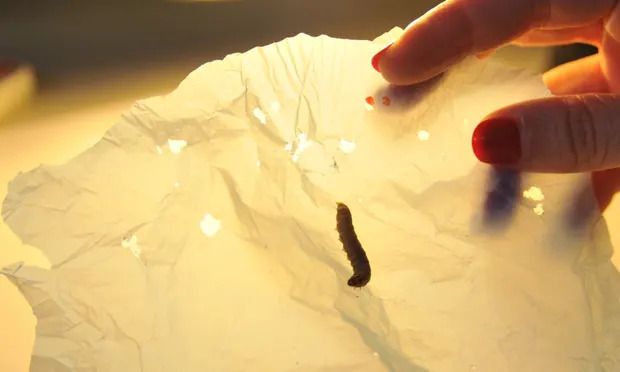
The discovery came after one scientist, an amateur beekeeper, cleaned out an infested hive and found the larvae started eating holes in a plastic refuse bag. The researchers said the study showed insect saliva may be “a depository of degrading enzymes which could revolutionise [the cleanup of polluting waste]”.
Polyethylene makes up 30% of all plastic production and is used in bags and other packaging that make up a significant part of worldwide plastic pollution. The only recycling at scale today uses mechanical processes and creates lower-value products.
Chemical breakdown could create valuable chemicals or, with some further processing, new plastic, thereby avoiding the need for new virgin plastic made from oil. The enzymes can be easily synthesised and overcome a bottleneck in plastic degradation, the researchers said, which is the initial breaking of the polymer chains. That usually requires a lot of heating, but the enzymes work at normal temperatures, in water and at neutral pH.
“My beehives were plagued with wax worms, so I started cleaning them, putting the worms in a plastic bag,” said Dr Federica Bertocchini, at the Biological Research Centre in Madrid. “After a while, I noticed lots of holes and we found it wasn’t only chewing, it was [chemical breakdown], so that was the beginning of the story.”
In terms of commercial application, it is early days, the researchers say. “We need to do a lot of research and think about how to develop this new strategy to deal with plastic waste,” said Dr Clemente Arias, also at the Spanish research centre. As well as large recycling plants, the scientists said it might one day be possible to have kits in homes to recycle plastic bags into useful products. Other scientists are currently investigating beetles and butterfly larvae for their plastic-eating potential. Read More…