Two New Comets Discovered by Hungarian Astronomer
-
 Loading...
 - Freya Hahn
- 31 Jul 2024
- 53 Views
- 0 Like
- 0 Comment
In July, senior astronomer Krisztián Sárneczky made a significant discovery at the Piszkéstető Station of the HUN-REN Center for Astronomy and Earth Sciences (CSFK), uncovering two new comets. The first comet, discovered on July 8, was officially named C/2024 N3 (Sárneczky) on July 18 after receiving international confirmation. Shortly after, on July 14, Sárneczky identified another tiny celestial body in the telescope’s search images, located less than 6 degrees from the initial comet. Further investigations confirmed this second discovery, and it was officially named C/2024 N4 (Sárneczky) on July 24.
Both comets are visible in the northern constellation of Camelopardalis (The Giraffe), marking a significant achievement for Hungarian astronomy. This discovery increases the total number of comets discovered in Hungary from seven to nine, setting a unique record with two new discoveries in one week.
The comets will remain observable from Hungary until 2026. However, due to their faintness, they can only be captured using larger telescopes and photographic recordings, rather than being visible to the naked eye.
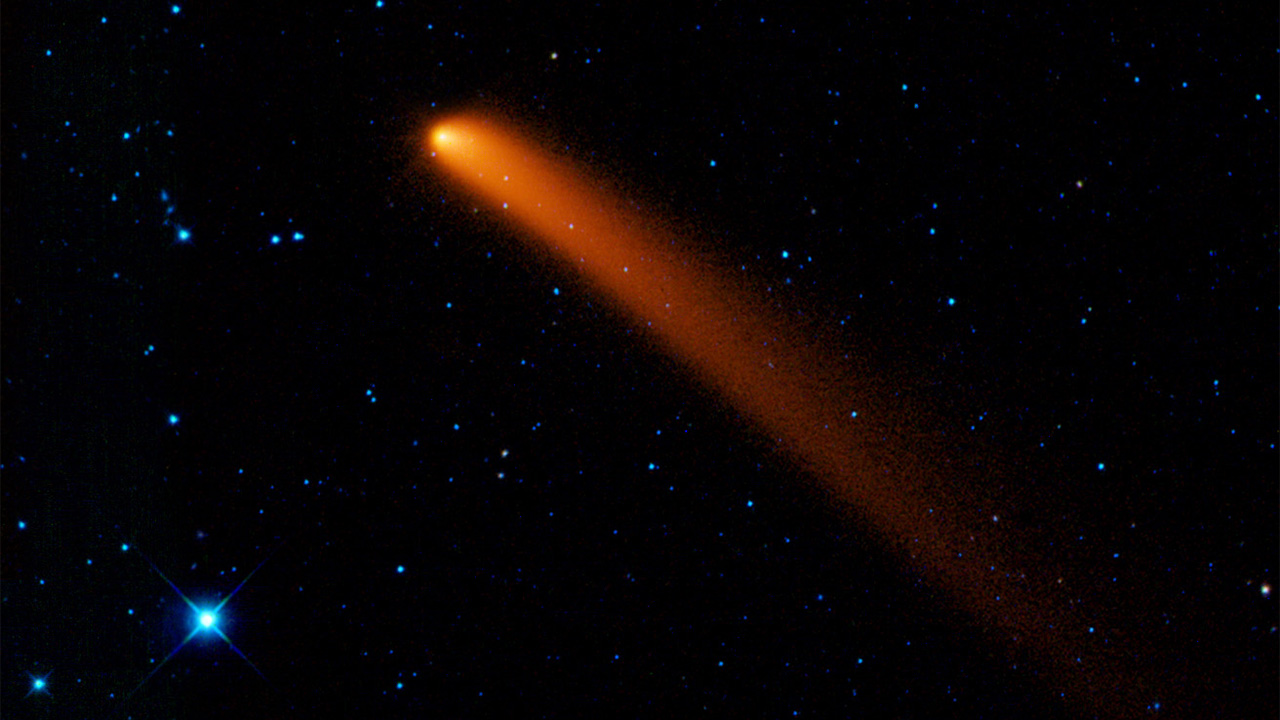
László Kiss, Director General of the CSFK, explained the significance of the discovery: “Comets move in very elongated orbits within the solar system. We cannot determine their period; they might not return for a million years. They originate from an outer region of the solar system known as the Oort cloud. This region, nearly a light-year in diameter, contains icy celestial bodies that exist far from the Sun in a frozen state, invisible to the naked eye. When they approach the Sun, they begin to evaporate under the influence of solar radiation. If they are large enough and close enough, they can display a magnificent tail.”
These findings highlight the ongoing advancements in astronomical research and the important contributions of Hungarian astronomers to our understanding of the cosmos.