Tteokbokki (Spicy Korean Rice Cakes)

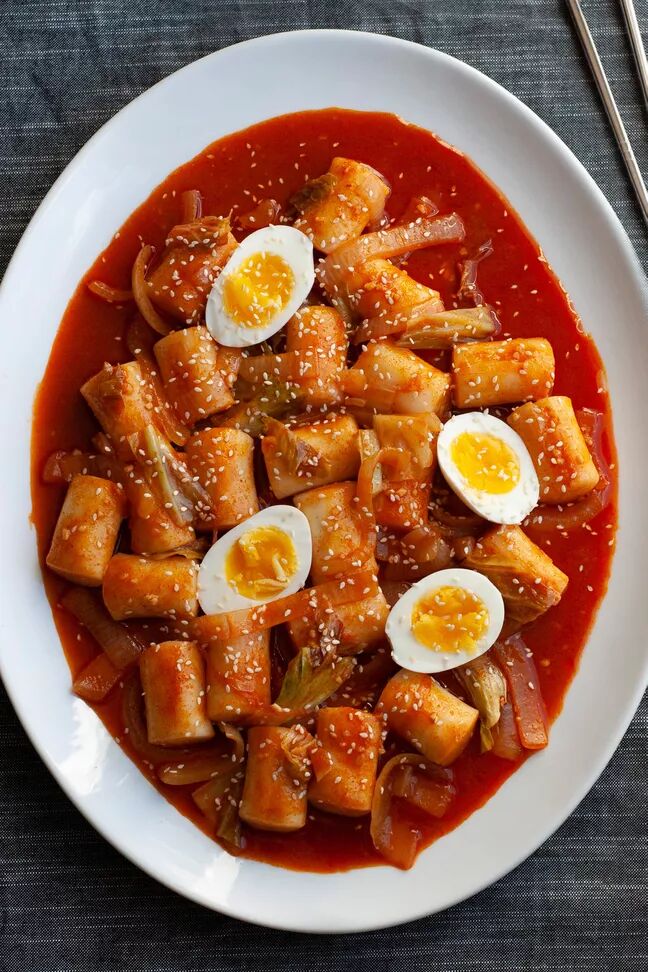
Tteokbokki are rice cakes simmered in a garlicky, sweet, and spicy gochujang sauce until velvety and tender. Tteok means “rice cake” and bokki means “to stir fry.” It’s a popular Korean stove-top dish I learned to cook as an always-ravenous kid.
I was maybe 11 or 12? After school, I beelined into the kitchen and tossed tteok, sliced onions, a heaping tablespoon of minced garlic (we kept it by the jar in the fridge), gochujang, sugar, soy sauce, and a little water into a small pan to simmer while I loitered around the snack drawer.
In just 15 minutes, I had fiery-red chewy rice cakes to hold me over until dinner. A comfort of my childhood, tteokbokki is all I want to eat at the end of a long day. It’s the perfect snack or main meal served on its own.
This recipe is a slightly more grown-up version—I added more vegetables, like cabbage and scallions, and a couple of hardboiled eggs. It is still simple and quick.
:max_bytes(150000):strip_icc():format(webp)/Simply-Recipes-Tteokbokki-LEAD-2-ff73814d0319465e8b16723c7d35bc06.jpg)
What is Tteok?
Tteok refers to a broad subsection of food with seemingly endless varieties, just like bread for example. Generally, it’s made by steaming dough made with rice flour and forming it into all sorts of shapes for eating as-is, braising, pan frying, or adding to soups.
You’ll find tteok in two sections of most Asian markets:
· The tteok for this recipe can be found frozen or vacuum-packed in the cold foods aisle. There you will find two common shapes: A thin 2- to 2 1/2-inch cylinder called garaetteok (which I used for this recipe) or a flat oval disc used in soups. Both are milky white in color. It’s rare to use a whole bag of tteok at once unless you’re cooking for a large group, so leftovers are expected. Tightly tie the bag or transfer the tteok into a zip top bag and store it in the freezer.
· The ready-to-eat prepared food section has tteok that are soft, chewy, and combined with other sweet or savory ingredients like brown sugar, steamed black beans, sesame seeds, or dried persimmon. They are often sold on small styrofoam trays wrapped with plastic wrap. Some stores won’t keep these fresh tteok on hand since they’re considered celebratory treats worthy of pre-ordering for special days like birthdays, Lunar New Year, or Autumn Harvest Festival.
What is Gochujang?
Gochujang is a chili paste made with Korean red chili peppers that have been ripened on the plant until glossy and cardinal red. The peppers are sundried, crushed, and fermented with sugar, salt, soybeans, and glutinous rice (a sticky sweet rice).
Gochujang is a linchpin ingredient in a well-stocked Korean pantry. It tastes spicy (some brands more than others), sweet, salty, and a little funky. It is the backbone to many dishes—the paste is seldom used on its own and often mixed into sauces, dips, and marinades.
:max_bytes(150000):strip_icc():format(webp)/Simply-Recipes-Tteokbokki-LEAD-10-d4bfc5fe8e1740888abee07c0870f0c1.jpg)
Buying and Storing Gochujang
At my local H Mart, a supermarket chain that specializes in Asian food, there are a dizzying variety of gochujang brands in the condiments aisle. Flip a few different brands over to reveal the nutrition facts and buy the one with the least amount of sodium. This will give you some wiggle room to control the salt to your liking in the final dish.
If you’re buying it online, I often use this brand. You’re looking for the paste, not gochujang sauce, which is thinned out with water, vinegar, soy sauce, and other seasonings.
Gochujang paste is almost always sold in a red rectangular plastic tub with a flip-top lid. Pop the lid open and peel back the foil seal to uncover the dark, glossy, almost tar-like gochujang.
I can hear my grandma’s voice in my head, so I will pass her message along to you: Do not peel off and discard the foil seal. Leave it partially attached and cover the leftover gochujang with it before flipping the plastic lid back on.
Gochujang is a fermented product that will last up to one year in the fridge, but air will oxidize it. Covering it with the layer of foil will keep it fresher for longer.
Make Your Family’s Version of Tteokbokki
Tteokbokki always has rice cakes and gochujang, but every family makes it slightly differently. Here are some variations:
· Although you could substitute gochujang with gochugaru, Korean red chili pepper flakes, it becomes an altogether different recipe. There are no other proper substitutes for gochujang. If you prefer it less spicy, add less and adjust the seasoning with soy sauce.
· Garlic is a must, but use equal amounts of carrots, leeks, shiitake mushrooms, napa cabbage, or bok choy as vegetable substitutes. Cut them to about the same size as the garaetteok.
· If you can’t find garaetteok, use the rice cakes that looks like flat oval discs. They are thinner and will cook much faster—reduce the cook time to 5 minutes.
Can I Make Tteokbokki Ahead?
I wouldn’t recommend it. Just like you wouldn’t pour yourself a bowl of cereal and milk for later, the tteok will become waterlogged and mushy the longer it sits in the sauce.
If you’d like to plan ahead, cut the vegetables, make the sauce, and store each in separate containers in the fridge until you’re ready to cook and serve the tteokbokki.
PREP TIME: 5 mins
COOK TIME: 25 mins
TOTAL TIME: 30 mins
SERVINGS: 2 to 4 servings
The garaetteok (cylindrical Korean rice cakes) may be stuck to each other in the packaging. Use your hands to break them apart before cooking. If frozen, add 2 minutes to the cook time.
Classic garaetteok is about 1/4 inch thick and 2 inches long, but you may find stubbier ones that are about 1/2 inch thick and 1 inch long like in the photos on this page. Cook the thicker ones for about 2 minutes longer.
Ingredients
· 2 large eggs
· 1 tablespoon vegetable oil
· 1 small yellow onion, cut into 1/2-inch halfmoons
· 3 green cabbage leaves, cut into 2-inch squares
· 2 cloves garlic, minced
· 1 1/2 cups water
· 1 pound (about 3 cups) garaetteok (cylindrical Korean rice cakes)
· 2 scallions, ends trimmed and cut into 2-inch pieces
· 3 tablespoons gochujang
· 1 tablespoon soy sauce, plus more to taste
· 2 teaspoons sugar, plus more to taste
· 1 teaspoon toasted sesame oil
· 1 teaspoon toasted sesame seeds
Method
Hard-boil the eggs:
Fill a medium bowl with ice water and set it aside. Fill a small saucepan with 3 inches of water, enough to fully submerge the eggs. Do not add the eggs yet. Bring it up to a boil over medium-high heat.
As soon as the water boils, carefully add the eggs. Mine are cold straight from the fridge. Cook them for 8 minutes. Using a large spoon, transfer the eggs into the prepared ice water to stop them from cooking. When the eggs feel cold to the touch, peel and cut them in half lengthwise. Set them aside.
Cook the vegetables:
In a 12-inch skillet over medium-high heat, add the oil and heat it until hot (rippling, but not smoking). Add the onions, cabbage, and garlic and cook, stirring frequently with a large spoon, for about 3 minutes. The vegetables should be translucent and a little browned.
Add the tteok and seasonings:
Add the water, tteok, scallions, gochujang, soy sauce, and sugar. Stir until the gochujang is fully dissolved into the sauce.
:max_bytes(150000):strip_icc():format(webp)/Simply-Recipes-Tteokbokki-METHOD-2-e43e54a30a294fe7a4ca2d9da96aadf3.jpg)