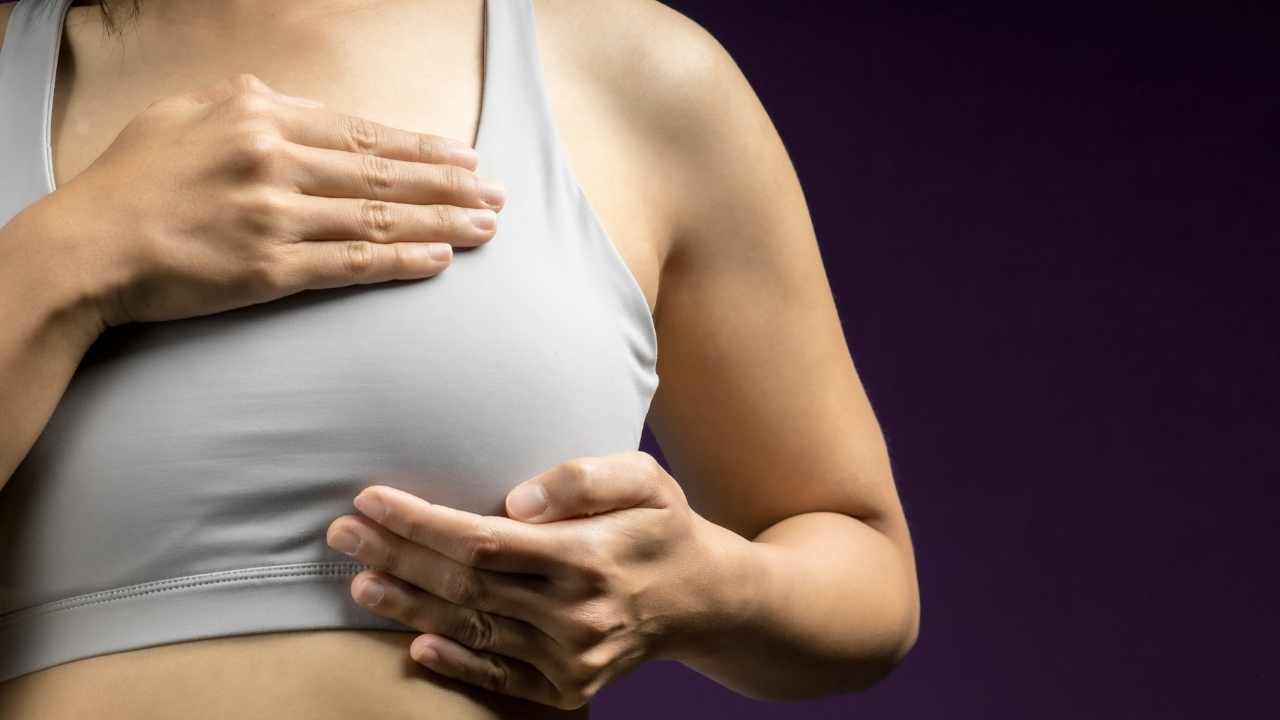
Three Steps To Self-Exam The Breast
-
 Loading...
 - Ducha Tanui
- 28 Sep 2022
- 76 Views
- 0 Like
- 0 Comment
Most women discover breast lumps by themselves, but you don’t need to wait for a lump to develop before you learn how to self-examine your breast at home. Most lumps are benign, and detecting them early would help you better manage them.
Self-examination of the breast enables you to monitor your breast health and detect any changes that could prove costly. It is recommended for women above 18 years, and should be done every month, preferably anytime after menses, but not a few days before menses when the breasts might be tender.
If you are a postmenopausal woman who has stopped menses, the ideal step is to pick a date of the month for breast self-examination. It is paramount for you to be regular with your examination because you are at a greater risk of developing breast diseases than women who are still menstruating.
As a pregnant woman, you are expected to see changes in your breasts such as having full, heavy, and tender breasts as the pregnancy matures. It’s okay to see some discharge in the latter part of your pregnancy too; this might be colostrum. But these changes should not exclude you from breast self-examination. If anything, a self-examination offers you a chance to detect any changes that could interfere with your breastfeeding and discuss such findings with your caregivers during antenatal sessions.
Women who are breastfeeding can pair their self-examination sessions with breastfeeding. For instance, after emptying your breasts, you can examine them one after the other. Examining yourself after breastfeeding will reduce the possibility of feeling milk pockets and getting anxious that it could be an abnormal lump.
Whatever category you belong to, a routine examination of your breast will help you track every change as they appear.
First things first…
Before you go on to learn how to do breast self-examination, note that although breast self-examination helps you to detect benign lumps, it doesn’t hurt to complement it with a clinical breast examination.
A more comprehensive examination is best done by your physician, who could recommend further breast imaging (mammography) or ultrasound scanning. The goal of the breast self-exam is to keep you updated with your breast health, and not to replace clinical assessment.
Furthermore, breast self-examination is not a shopping exercise for signs of trouble. You are only checking to make sure everything is good. Therefore, you don’t need to get anxious about anything and everything you find out from the examination.
Now that you know the ground rules, here are three basic steps to a breast self-exam. Read More…


