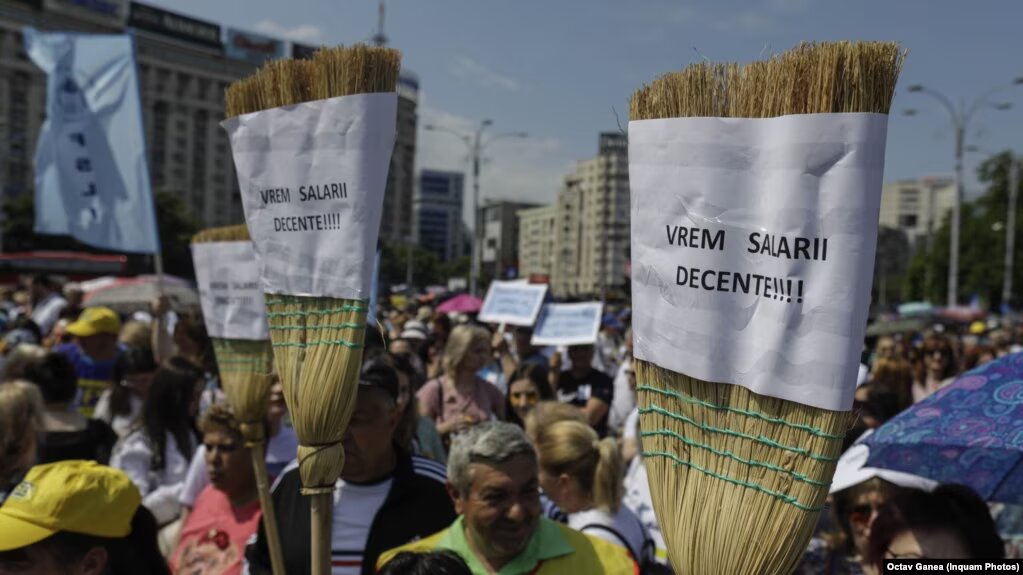
Thousands Of Striking Romanian Teachers March To Protest Low Salaries, Underfunded Education System
-
 Loading...
 - Okland Ragnar
- 02 Jun 2023
- 61 Views
- 0 Like
- 0 Comment
Around 15,000 teachers in Romania marched through the streets of Bucharest on May 25th, marking the fourth day of their strike in protest against inadequate funding for education and low salaries. Despite the ongoing strike, there seems to be no sign of a resolution with the coalition government.
The strike began on May 22nd when over 150,000 primary and secondary school teachers, along with auxiliary staff, declared a general strike. This was the first time Romanian education unions organized such a protest since 2005. In a show of solidarity, university personnel also staged a two-hour work interruption.
Protesters gathered outside the government headquarters on Victoria Square in central Bucharest, voicing their demands with chants of "Dignity," "Wake up, Romania!" and "Any nation dies without education." Union representatives rejected a compromise offer presented by Prime Minister Nicolae Ciuca's government, leading to the breakdown of negotiations.
Secondary school students joined the protest in support of their teachers, garnering admiration from passersby who paused and applauded the demonstrators.
The government's offer of two one-time bonuses, amounting to $215 in June and $325 in July, instead of salary increases, inflation adjustments, and overtime pay, was deemed "offensive" by the unions. As negotiations faltered, there was a looming threat of extending the strike until the end of the school year, which could jeopardize final exams.
In Romania, the starting monthly salary for a teacher is approximately $520, significantly lower than the national average of $988. The coalition government, positioned between center-left and center-right, has justified their inability to offer more by stating that a higher increase would jeopardize the recovery funds allocated to Romania by the European Commission. The unions have dismissed this argument as false.
Due to meager salaries, many teachers have already left the Romanian education system, while numerous recent graduates opt to seek better-paid jobs abroad instead of pursuing careers in education.
The education system in Romania faces a crisis caused by an aging workforce, a shortage of competent young teachers, and decades of neglect and underinvestment. A study conducted by the European Union in 2019 revealed that around 40 percent of Romanian 15-year-olds lack basic proficiency in reading, math, or science. Additionally, they possess limited knowledge about society, people, and the world, essentially meeting the criteria for functional illiteracy.


