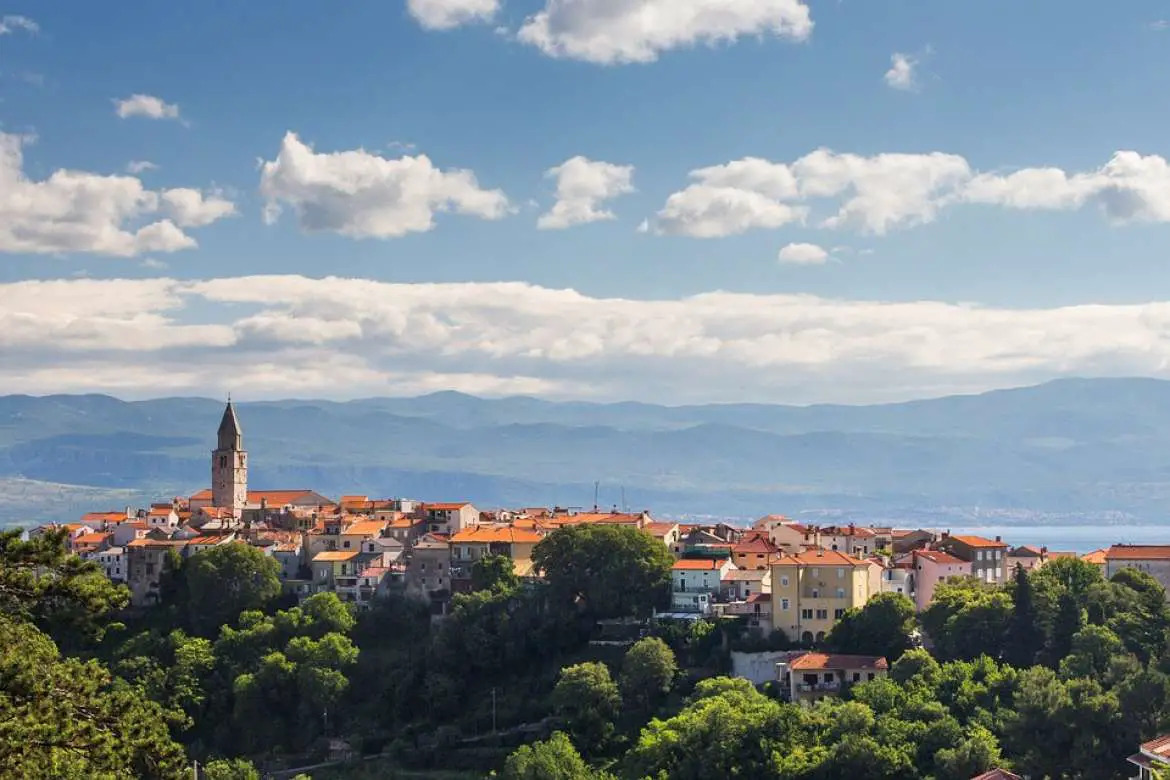
The Vegliot Dialect - The Krk Romance Language Extinct Since 1898
-
 Loading...
 - Jack Davis
- 26 Jan 2023
- 57 Views
- 0 Like
- 0 Comment
The Vegliot dialect, which is also often referred to as Vegliotic, is a now extinct Romance language once spoken on the island of Krk. The last speaker of the Vegliot dialect was Antonio Udina (Tuone Udaina), who passed away in June 1898. Little is known about the dialect named after the Italian name for Krk (Veglia).
We've explored many of the dialects, subdialects and indeed languages in their own right as some linguists consider them to be which are spoken across modern Croatia. From the Dubrovnik subdialect (Ragusan) in the extreme south of Dalmatia to Northwestern Kajkavian in areas like Zagorje, the ways in which people speak in this country deviate from what we know as standard Croatian language enormously. That goes without even mentioning much about old Dalmatian, Zaratin, once widely spoken in and around Zadar, Istriot, or Istro-Venetian.
A brief history of the Vegliot dialect
Of the now extinct languages once spoken on modern Croatian territory, we've looked into Istrian-Albanian, which became extinct in the nineteenth century after being introduced to parts of Istria by ethnic Albanians settled there by Venice who spoke in the Gheg (or Geg) variety of modern Albanian. Now we'll jump back into our linguistic time machine and head back into the island of Krk's past, during which the Vegliot dialect was spoken all the way until June 1898, when the last person to speak it died.
As mentioned above, the Vegliot dialect is named after the Italian name for Krk - Veglia, and its closest ''relative'' is believed to be Istro-Romanian, another Romance language once spoken more widely spoken across the Istrian peninsula, more precisely in the nothwestern parts near the Cicarija mountain range. There are two groups of speakers despite the fact that the language spoken by both is more or less absolutely identical, the Vlahi and the Cici, the former coming from the south side of the Ucka mountain, and the latter coming from the north side.
This language has been described as the smallest ethnolinguistic group in all of Europe, and without a lot more effort being put into preservation, the next few decades to come will almost certainly result in the complete extinction of the Istro-Romanians and their language. Read More…


