The Trial of a King: Ancient Royal Ritual in Cameroon Promotes Peace
-
 Loading...
 - Judith Sai
- 23 Dec 2024
- 50 Views
- 0 Like
- 0 Comment
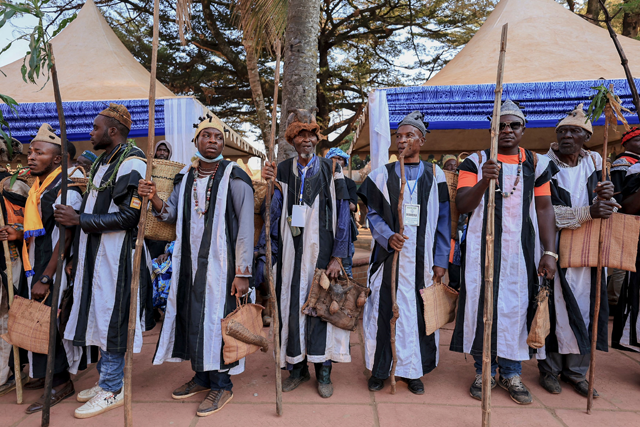
In the historic capital of Foumban, nestled in the hilly north-western region of Cameroon, an ancient royal ritual unfolded as members of a secret society, masked and dressed in honey-colored robes, entered the court. The 20th king of the Bamoun people, Mouhammad Nabil Mfourifoum Mbombo Njoya, rose from his ornate throne—a replica of the original, now housed in a German museum—to undergo a public trial regarding his governance.
This nearly 600-year-old tradition involves local chiefs reading out indictments that test the king's popularity and effectiveness. The ritual is part of a week-long series of ceremonies aimed at fostering dialogue, harmony, and peace within the community. For Mbombo Njoya, who ascended to the throne following his father's death in 2021, this was his first experience of the trial.
If the king is found wanting, he could face fines or even removal from office. Conversely, a successful trial would grant him a renewed mandate and allegiance from his subjects. The recent ceremonies attracted tourists and officials to the region, celebrating the Nguon rituals, which date back to the kingdom's founding in 1384. After a six-year hiatus due to the COVID-19 pandemic and other factors, these rites were recognized by UNESCO in December 2023 as an intangible cultural heritage.
As part of the trial, members of the brotherhood planted their spears into the ground, signaling the start of the proceedings. Constituents voiced their concerns, with one lawmaker addressing the king about the dilapidation of the kingdom's property assets. Another parliamentary member humorously noted the presence of only one queen by the king's side, prompting laughter from the crowd. Ultimately, the king emerged from the session with the approval of his people, celebrated by warriors and members of the royal guard firing rifles into the air.
Attendees, including tourists like Roly Allen from London, expressed their surprise at the seriousness of the judgment. "I really enjoyed how there is this role reversal and he is judged by his people," Allen remarked, highlighting the humor and affection evident in the interactions between the king and his subjects.
For many locals, the ritual serves as a vital connection to their cultural heritage. Amadou Njoya, a 21-year-old native of Foumban, expressed pride in being Bamoun, stating, "These are moments that allow us to learn about our culture and pass it on to our children."
Despite the celebration of tradition, the Bamoun kingdom still longs for its original throne, which was taken to Europe during the colonization of Cameroon. The colorful, pearl-inlaid wooden chair is currently displayed at the Humboldt Forum Museum in Berlin. The king visited the throne last year, sitting on the heirloom that once belonged to his great-grandfather.
The Bamoun people are actively seeking the return of this significant cultural artifact. Azize Mbouho, the communications advisor for the Bamoun palace, noted the community's efforts to lobby for its recovery. In April, the royal family inaugurated the Museum of the Bamoun Kings, designed to showcase the kingdom's rich heritage and shaped like its coat of arms—a two-headed snake and a furry spider.
Alexis Njivah Mouliom, general secretary of the Nguon foundation, expressed hope that the UNESCO recognition would bring greater visibility to the Bamoun community and strengthen their efforts to reclaim the throne.
The trial of King Mouhammad Nabil Mfourifoum Mbombo Njoya not only reinforces the cultural significance of the Nguon rituals but also highlights the ongoing connection between the Bamoun people and their heritage. As they navigate the challenges of modernity, these ancient traditions serve as a vital link to their past, fostering community cohesion and promoting peace in a region marked by historical complexities.