Straight Out of Camera is the Purest Form of Photography… or IS It?
-
 Loading...
 - Ketzia Neba
- 31 Aug 2022
- 70 Views
- 0 Like
- 0 Comment
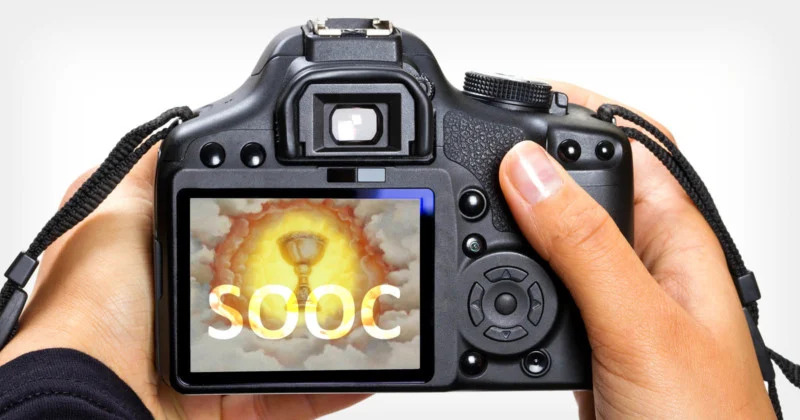
The ultimate skill of the photographer — of the artist — is to create the aesthetics of the scene in front of them “in the moment”. The Natural Landscape Photo Award is perhaps the epitome of this with minimal image manipulation allowed, while the World Press Photo has a Code of Ethics. So straight-out-of-camera (SOOC) has got to be the pinnacle of ability, hasn’t it? Or is there more to the notion of what an image is and where the skill lies in producing it?
Photography is simple. You record light (i.e. count photons) of the scene in front of you to create a permanent 2D image. Of course, this simplifies the conception that we duplicate the scene we see with our eyes, which we can never do, not least because the human eye has remarkable capabilities. Not only that, but it acts more like a video stream, our brains continuously processing what we “see”.
In fact, I’d go as far as saying that the static image is an inalienable violation of how we perceive the world. John Berger (in Another Way of Telling) recognized this with his concept of how long an image “speaks” for. We subconsciously imply time into any image we see and perceive what has just passed and what will come to pass.
Henri Cartier-Bresson implicitly understood this in his pursuit of the “decisive moment.” As much as this has become a cliched term, it says that if there is a temporal element to a scene, then there is a point in time that allows us to understand what has just happened but, more importantly, eloquently speaks to what is about to happen. It is the most aesthetically pleasing image that you could capture, but identifying that point – without the benefit perhaps of Panasonic’s 4K photo mode – requires some deft camera handling. Read More...