Sculptor Diana Sofia Lozano Challenges Classification with Fantastic Flora
-
 Loading...
 - Isabel Mejia
- 13 Sep 2022
- 67 Views
- 0 Like
- 0 Comment
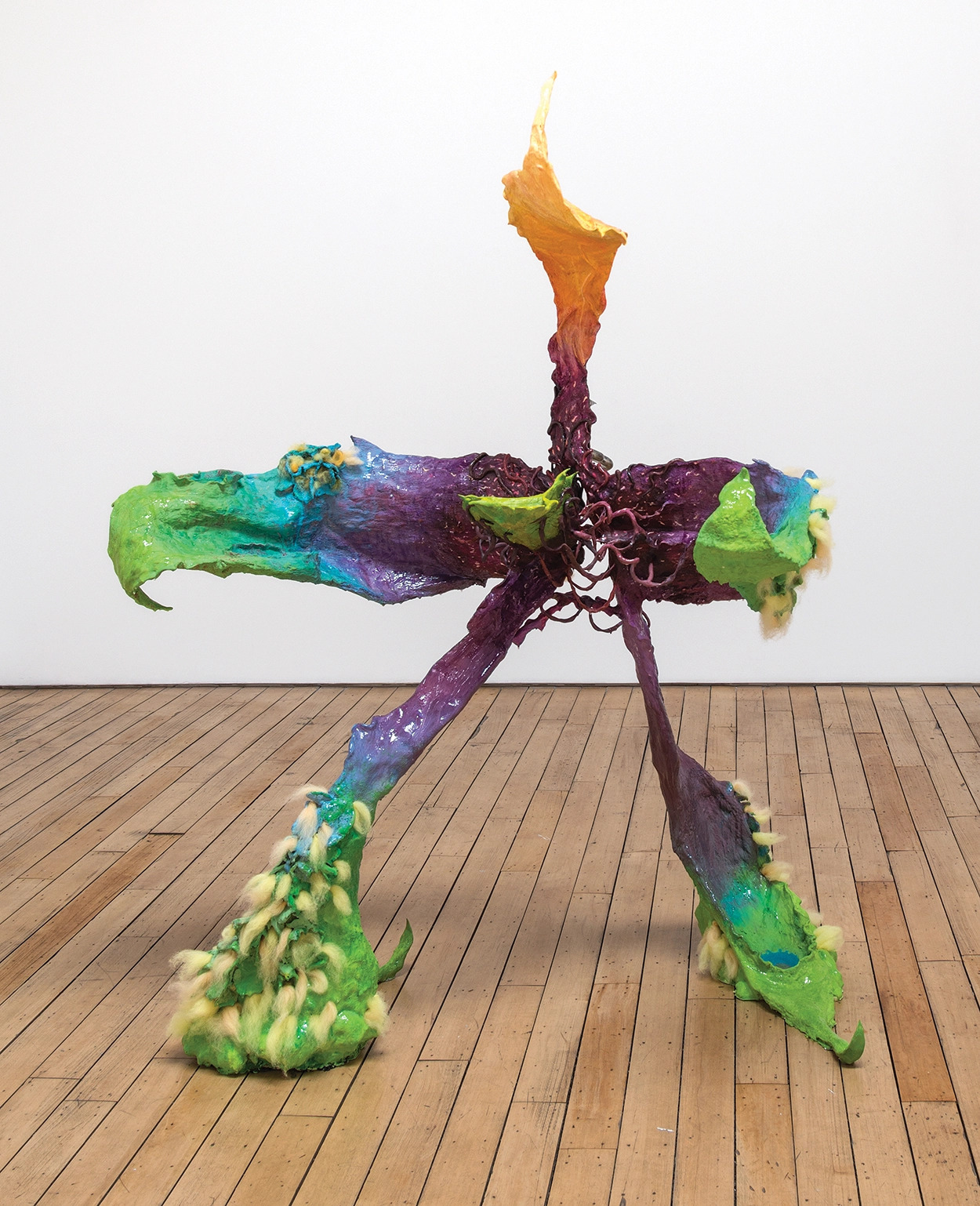
Diana Sofia Lozano’s floral sculptures often feature fluorescent blossoms and spiky petals that sprout from vines of braided steel. Monstrous in size, with prickly exteriors and severe steel armatures, the works—featuring tropical colors, bold textures, and reflective surfaces—seduce spectators. Often postured as if reaching, flailing, even beckoning, the sculptures appear almost animated; whether standing at eye level, wrapped around a ceiling beam, or dangling to meet your gaze, they seem to confront those who observe them. During our recent studio visit, Lozano described her specimens as “performing . . . like flowers in drag.”
While the sculptures are wild and fantastic, they also have a critical edge, challenging the Linnaean system of biological classification. Created in the eighteenth century by Swedish scientist Carl Linnaeus, this taxonomic system relies on numerous gendered and heteronormative characterizations. Many scientists have proposed alterations to Linnaeus’s taxonomy in the intervening centuries: though he classified plants according to their sexual characteristics, more recent research in the fields of botany and ecology show that some plants’ gender identities and propagation methods are not so straightforward, and might in fact be best characterized as queer. Lozano helps her viewers savor that botanical defiance and think deeply about the complicated relationship between perception and subjectivity.

Lozano is the daughter of two botanists, so she’s always looked intently at flowers. She grew up in Colombia, making weekly visits to her father’s farm, where he experimented with genetically modifying apple guavas. Read More...