Home Upload Photo Upload Videos Write a Blog Analytics Messaging Streaming Create Adverts Creators Program
Bebuzee Afghanistan Bebuzee Albania Bebuzee Algeria Bebuzee Andorra Bebuzee Angola Bebuzee Antigua and Barbuda Bebuzee Argentina Bebuzee Armenia Bebuzee Australia Bebuzee Austria Bebuzee Azerbaijan Bebuzee Bahamas Bebuzee Bahrain Bebuzee Bangladesh Bebuzee Barbados Bebuzee Belarus Bebuzee Belgium Bebuzee Belize Bebuzee Benin Bebuzee Bhutan Bebuzee Bolivia Bebuzee Bosnia and Herzegovina Bebuzee Botswana Bebuzee Brazil Bebuzee Brunei Bebuzee Bulgaria Bebuzee Burkina Faso Bebuzee Burundi Bebuzee Cabo Verde Bebuzee Cambodia Bebuzee Cameroon Bebuzee Canada Bebuzee Central African Republic Bebuzee Chad Bebuzee Chile Bebuzee China Bebuzee Colombia Bebuzee Comoros Bebuzee Costa Rica Bebuzee Côte d'Ivoire Bebuzee Croatia Bebuzee Cuba Bebuzee Cyprus Bebuzee Czech Republic Bebuzee Democratic Republic of the Congo Bebuzee Denmark Bebuzee Djibouti Bebuzee Dominica Bebuzee Dominican Republic Bebuzee Ecuador Bebuzee Egypt Bebuzee El Salvador Bebuzee Equatorial Guinea Bebuzee Eritrea Bebuzee Estonia Bebuzee Eswatini Bebuzee Ethiopia Bebuzee Fiji Bebuzee Finland Bebuzee France Bebuzee Gabon Bebuzee Gambia Bebuzee Georgia Bebuzee Germany Bebuzee Ghana Bebuzee Greece Bebuzee Grenada Bebuzee Guatemala Bebuzee Guinea Bebuzee Guinea-Bissau Bebuzee Guyana Bebuzee Haiti Bebuzee Honduras Bebuzee Hong Kong Bebuzee Hungary Bebuzee Iceland Bebuzee India Bebuzee Indonesia Bebuzee Iran Bebuzee Iraq Bebuzee Ireland Bebuzee Israel Bebuzee Italy Bebuzee Jamaica Bebuzee Japan Bebuzee Jordan Bebuzee Kazakhstan Bebuzee Kenya Bebuzee Kiribati Bebuzee Kuwait Bebuzee Kyrgyzstan Bebuzee Laos Bebuzee Latvia Bebuzee Lebanon Bebuzee Lesotho Bebuzee Liberia Bebuzee Libya Bebuzee Liechtenstein Bebuzee Lithuania Bebuzee Luxembourg Bebuzee Madagascar Bebuzee Malawi Bebuzee Malaysia Bebuzee Maldives Bebuzee Mali Bebuzee Malta Bebuzee Marshall Islands Bebuzee Mauritania Bebuzee Mauritius Bebuzee Mexico Bebuzee Micronesia Bebuzee Moldova Bebuzee Monaco Bebuzee Mongolia Bebuzee Montenegro Bebuzee Morocco Bebuzee Mozambique Bebuzee Myanmar Bebuzee Namibia Bebuzee Nauru Bebuzee Nepal Bebuzee Netherlands Bebuzee New Zealand Bebuzee Nicaragua Bebuzee Niger Bebuzee Nigeria Bebuzee North Korea Bebuzee North Macedonia Bebuzee Norway Bebuzee Oman Bebuzee Pakistan Bebuzee Palau Bebuzee Panama Bebuzee Papua New Guinea Bebuzee Paraguay Bebuzee Peru Bebuzee Philippines Bebuzee Poland Bebuzee Portugal Bebuzee Qatar Bebuzee Republic of the Congo Bebuzee Romania Bebuzee Russia Bebuzee Rwanda Bebuzee Saint Kitts and Nevis Bebuzee Saint Lucia Bebuzee Saint Vincent and the Grenadines Bebuzee Samoa Bebuzee San Marino Bebuzee São Tomé and Príncipe Bebuzee Saudi Arabia Bebuzee Senegal Bebuzee Serbia Bebuzee Seychelles Bebuzee Sierra Leone Bebuzee Singapore Bebuzee Slovakia Bebuzee Slovenia Bebuzee Solomon Islands Bebuzee Somalia Bebuzee South Africa Bebuzee South Korea Bebuzee South Sudan Bebuzee Spain Bebuzee Sri Lanka Bebuzee Sudan Bebuzee Suriname Bebuzee Sweden Bebuzee Switzerland Bebuzee Syria Bebuzee Taiwan Bebuzee Tajikistan Bebuzee Tanzania Bebuzee Thailand Bebuzee Timor-Leste Bebuzee Togo Bebuzee Tonga Bebuzee Trinidad and Tobago Bebuzee Tunisia Bebuzee Turkey Bebuzee Turkmenistan Bebuzee Tuvalu Bebuzee Uganda Bebuzee Ukraine Bebuzee United Arab Emirates Bebuzee United Kingdom Bebuzee Uruguay Bebuzee Uzbekistan Bebuzee Vanuatu Bebuzee Venezuela Bebuzee Vietnam Bebuzee World Wide Bebuzee Yemen Bebuzee Zambia Bebuzee Zimbabwe
Blog Image

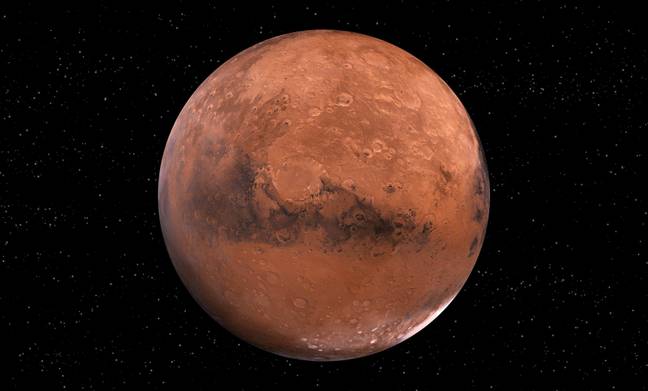
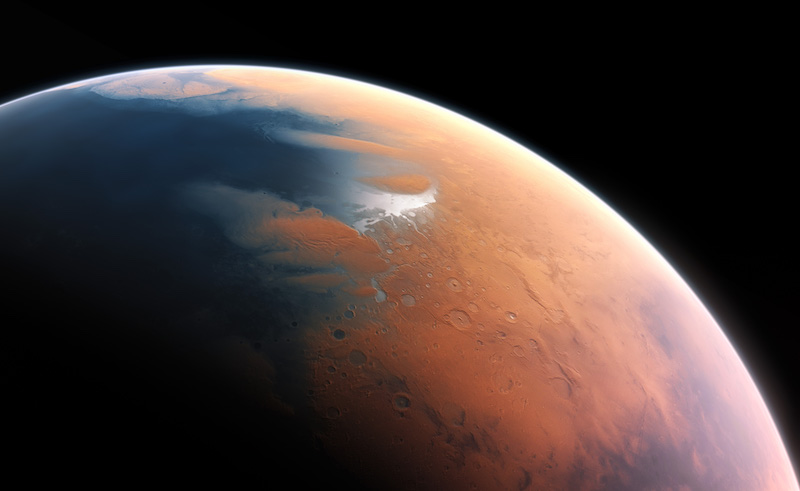
Research shows how Mars lost its oceans

It is a well-known fact that Mars once had oceans in part due to a protective magnetic field similar to Earth's. The layer of ice on the cap of the planet says it all. However, the magnetic field disappeared, and a new research may finally be able to exp

Researchers at the University of Tokyo recreated conditions expected in the core of Mars billions of years ago and found that the behaviour of the molten metal thought to be present likely gave rise to a brief magnetic field that was destined to fade away.

Whether it's due to science fiction or the fact that we can see it with our own eyes from Earth, Mars has captured the imagination of people for centuries. It's one of the closest planets to us and has been studied with all manner of scientific instruments aboard the various unmanned space probes that have explored it and continue to do so. Yet, despite this, there are some big unanswered questions about Mars -- the answers to which could even shed light on our own distant past and future, given that Earth, Mars and all our neighbouring planets were born of the same cosmic stuff.

Some big questions about Mars have already been answered. For example, we know that many visible features of Mars are proof it used to have oceans and a protective magnetic field. But one question in particular had been on the mind of Professor Kei Hirose from the University of Tokyo's Department of Earth and Planetary Science: There must have been a magnetic field around Mars, so why was it there at all, and why was it there so briefly?

Compelled to answer this question, a team led by PhD student Shunpei Yokoo in the Hirose lab explored a novel way to test something so distant from us in both time and space.

"Earth's magnetic field is driven by inconceivably huge convection currents of molten metals in its core. Magnetic fields on other planets are thought to work the same way," said Hirose. "Though the internal composition of Mars is not yet known, evidence from meteorites suggests it is molten iron enriched with sulphur. Furthermore, seismic readings from NASA's InSight probe on the surface tell us Mars' core is larger and less dense than previously thought. These things imply the presence of additional lighter elements such as hydrogen. With this detail, we prepare iron alloys that we expect constitute the core and subject them to experiments."

The experiment involved diamonds, lasers, and an unexpected surprise. Yokoo made a sample of material containing iron, sulphur and hydrogen, Fe-S-H, which is what he and his team expect the core of Mars was once made from. They placed this sample between two diamonds and compressed it while heating it with an infrared laser.

This was to simulate the estimated temperature and pressure at the core. Sample observations with X-ray and electron beams allowed the team to image what was going on during melting under pressure, and even map how the composition of the sample changed during that time.

"We were very surprised to see a particular behaviour that could explain a lot. The initially homogeneous Fe-S-H separated out into two distinct liquids with a level of complexity that has not been seen before under these kinds of pressures," said Hirose. "One of the iron liquids was rich in sulphur, the other rich in hydrogen, and this is key to explaining the birth and eventually death of the magnetic field around Mars." Read More…

Previous Post

Major breakthrough on nuclear fusion energy

Next Post

Rocket on collision course with the moon ‘built by China not SpaceX'

Comments