Home Upload Photo Upload Videos Write a Blog Analytics Messaging Streaming Create Adverts Creators Program
Bebuzee Afghanistan Bebuzee Albania Bebuzee Algeria Bebuzee Andorra Bebuzee Angola Bebuzee Antigua and Barbuda Bebuzee Argentina Bebuzee Armenia Bebuzee Australia Bebuzee Austria Bebuzee Azerbaijan Bebuzee Bahamas Bebuzee Bahrain Bebuzee Bangladesh Bebuzee Barbados Bebuzee Belarus Bebuzee Belgium Bebuzee Belize Bebuzee Benin Bebuzee Bhutan Bebuzee Bolivia Bebuzee Bosnia and Herzegovina Bebuzee Botswana Bebuzee Brazil Bebuzee Brunei Bebuzee Bulgaria Bebuzee Burkina Faso Bebuzee Burundi Bebuzee Cabo Verde Bebuzee Cambodia Bebuzee Cameroon Bebuzee Canada Bebuzee Central African Republic Bebuzee Chad Bebuzee Chile Bebuzee China Bebuzee Colombia Bebuzee Comoros Bebuzee Costa Rica Bebuzee Côte d'Ivoire Bebuzee Croatia Bebuzee Cuba Bebuzee Cyprus Bebuzee Czech Republic Bebuzee Democratic Republic of the Congo Bebuzee Denmark Bebuzee Djibouti Bebuzee Dominica Bebuzee Dominican Republic Bebuzee Ecuador Bebuzee Egypt Bebuzee El Salvador Bebuzee Equatorial Guinea Bebuzee Eritrea Bebuzee Estonia Bebuzee Eswatini Bebuzee Ethiopia Bebuzee Fiji Bebuzee Finland Bebuzee France Bebuzee Gabon Bebuzee Gambia Bebuzee Georgia Bebuzee Germany Bebuzee Ghana Bebuzee Greece Bebuzee Grenada Bebuzee Guatemala Bebuzee Guinea Bebuzee Guinea-Bissau Bebuzee Guyana Bebuzee Haiti Bebuzee Honduras Bebuzee Hong Kong Bebuzee Hungary Bebuzee Iceland Bebuzee India Bebuzee Indonesia Bebuzee Iran Bebuzee Iraq Bebuzee Ireland Bebuzee Israel Bebuzee Italy Bebuzee Jamaica Bebuzee Japan Bebuzee Jordan Bebuzee Kazakhstan Bebuzee Kenya Bebuzee Kiribati Bebuzee Kuwait Bebuzee Kyrgyzstan Bebuzee Laos Bebuzee Latvia Bebuzee Lebanon Bebuzee Lesotho Bebuzee Liberia Bebuzee Libya Bebuzee Liechtenstein Bebuzee Lithuania Bebuzee Luxembourg Bebuzee Madagascar Bebuzee Malawi Bebuzee Malaysia Bebuzee Maldives Bebuzee Mali Bebuzee Malta Bebuzee Marshall Islands Bebuzee Mauritania Bebuzee Mauritius Bebuzee Mexico Bebuzee Micronesia Bebuzee Moldova Bebuzee Monaco Bebuzee Mongolia Bebuzee Montenegro Bebuzee Morocco Bebuzee Mozambique Bebuzee Myanmar Bebuzee Namibia Bebuzee Nauru Bebuzee Nepal Bebuzee Netherlands Bebuzee New Zealand Bebuzee Nicaragua Bebuzee Niger Bebuzee Nigeria Bebuzee North Korea Bebuzee North Macedonia Bebuzee Norway Bebuzee Oman Bebuzee Pakistan Bebuzee Palau Bebuzee Panama Bebuzee Papua New Guinea Bebuzee Paraguay Bebuzee Peru Bebuzee Philippines Bebuzee Poland Bebuzee Portugal Bebuzee Qatar Bebuzee Republic of the Congo Bebuzee Romania Bebuzee Russia Bebuzee Rwanda Bebuzee Saint Kitts and Nevis Bebuzee Saint Lucia Bebuzee Saint Vincent and the Grenadines Bebuzee Samoa Bebuzee San Marino Bebuzee São Tomé and Príncipe Bebuzee Saudi Arabia Bebuzee Senegal Bebuzee Serbia Bebuzee Seychelles Bebuzee Sierra Leone Bebuzee Singapore Bebuzee Slovakia Bebuzee Slovenia Bebuzee Solomon Islands Bebuzee Somalia Bebuzee South Africa Bebuzee South Korea Bebuzee South Sudan Bebuzee Spain Bebuzee Sri Lanka Bebuzee Sudan Bebuzee Suriname Bebuzee Sweden Bebuzee Switzerland Bebuzee Syria Bebuzee Taiwan Bebuzee Tajikistan Bebuzee Tanzania Bebuzee Thailand Bebuzee Timor-Leste Bebuzee Togo Bebuzee Tonga Bebuzee Trinidad and Tobago Bebuzee Tunisia Bebuzee Turkey Bebuzee Turkmenistan Bebuzee Tuvalu Bebuzee Uganda Bebuzee Ukraine Bebuzee United Arab Emirates Bebuzee United Kingdom Bebuzee Uruguay Bebuzee Uzbekistan Bebuzee Vanuatu Bebuzee Venezuela Bebuzee Vietnam Bebuzee World Wide Bebuzee Yemen Bebuzee Zambia Bebuzee Zimbabwe
Blog Image

Piet Mondrian and the six lines that made a masterpiece

A 1922 painting by Piet Mondrian challenged art history, defining a new era, writes Deborah Nicholls-Lee, as two exhibitions celebrate the 150th anniversary of his birth.

Six lines and five colours was all it took to make a masterpiece. By 1922, the modernist mission appeared to be complete. In Piet Mondrian's Composition with Blue, Yellow, Red, Black and Grey, only primary colours prevail. The orange and cornflower blue that lingered the previous year had been banished from the grid, and a contemplative grey-white took centre stage. Western art had never seemed so simple or so accessible.
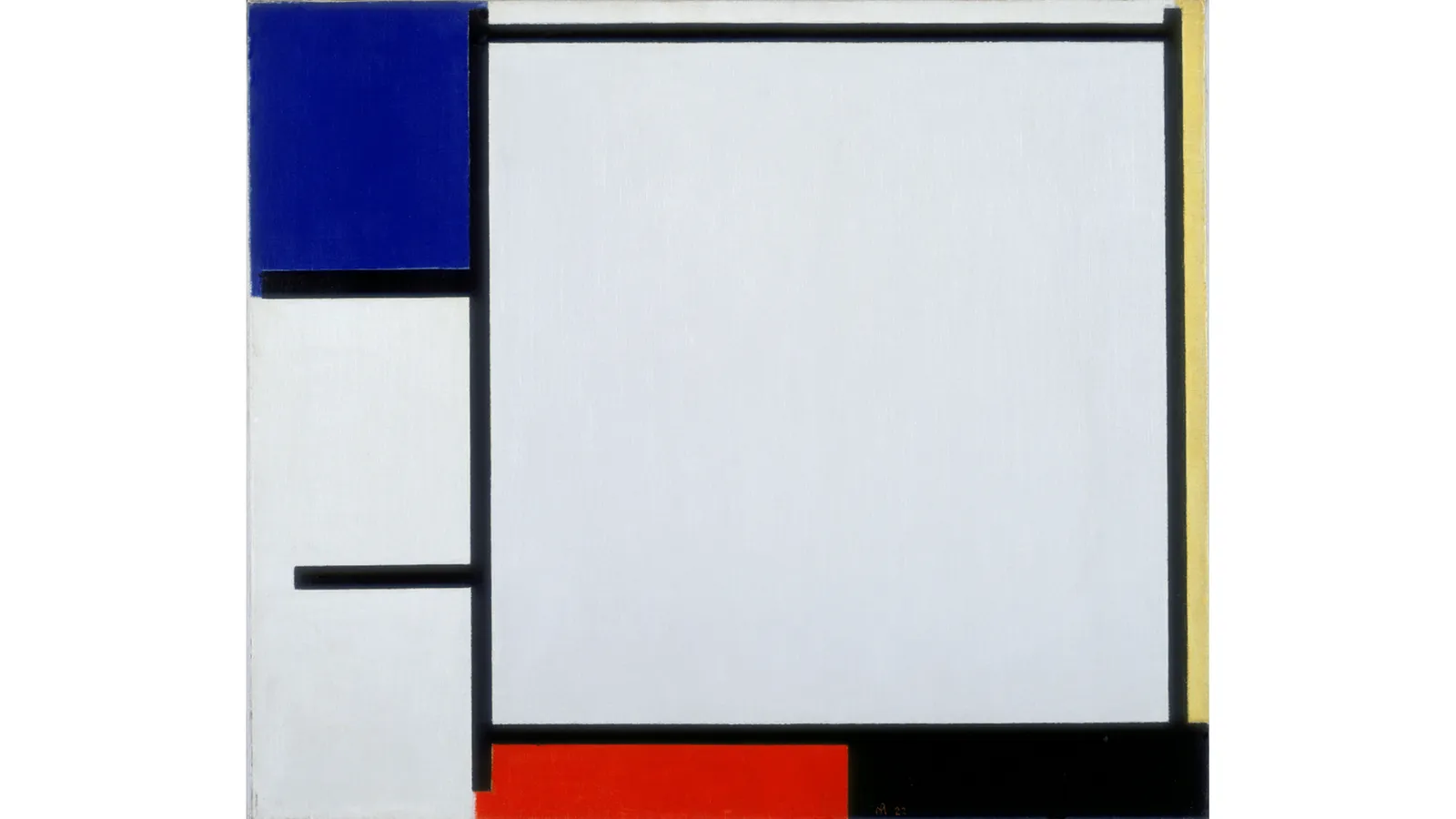
In the same year, the Dutch painter took leave from his Paris studio to celebrate his 50th birthday with a retrospective of his work at Amsterdam's Stedelijk Museum. Today, a century later, Mondrian's 56 x 63cm Composition with Blue, Yellow, Red, Black and Grey is on permanent display in the museum's basement, the characteristic "PM" monogram and "22" still visible in scratchy red paint.
 

Maurice Rummens, academic researcher at the Stedelijk Museum, describes the painting as  "one of the spearheads" of the museum's collection. It signalled a transformation in Mondrian's style – and in painting. Representations of real objects and the use of perspective, seen in the artist's landscapes at the turn of the century and continuing into his cubist period, were no longer modern enough for him. Instead, he turned to pure abstraction to communicate something more ambitious and intangible: the elementary and universal qualities of the cosmos.

"Vertical and horizontal lines are the expression of two opposing forces," Mondrian later explained in a 1937 essay. "They exist everywhere and dominate everything; their reciprocal action constitutes 'life'."

Mondrian was a trailblazer, in his concentration on the very essence of the image – he was one of the first who really did this, this totally non-representational work – Ulf Küster

Mondrian intended the combination of primary colours and bold geometric patterns to convey nature's inherent connectivity in the most distilled and direct way possible. In a letter to fellow Dutch artist Theo Van Doesburg in 1915, he writes: "I always confine myself to expressing the eternal (closest to the spirit) and I do so in the simplest of external forms, in order to be able to express the inner meaning as lightly veiled as possible."

"Mondrian was a trailblazer, in the sense that he was very radical, and in his concentration on the very essence of the image," says Ulf Küster, curator of Mondrian Evolution, an exploration of Mondrian's modernist journey currently showing at the Foundation Beyeler in Switzerland to mark the 150th anniversary of his birth.

"Minimalism is unthinkable without Mondrian," he told BBC Culture. "He was one of the first who really did this, this totally non-representational work… If you see modern as something which breaks with all traditions and defines everything new, then Mondrian's paintings of the 20s are very, very modern."
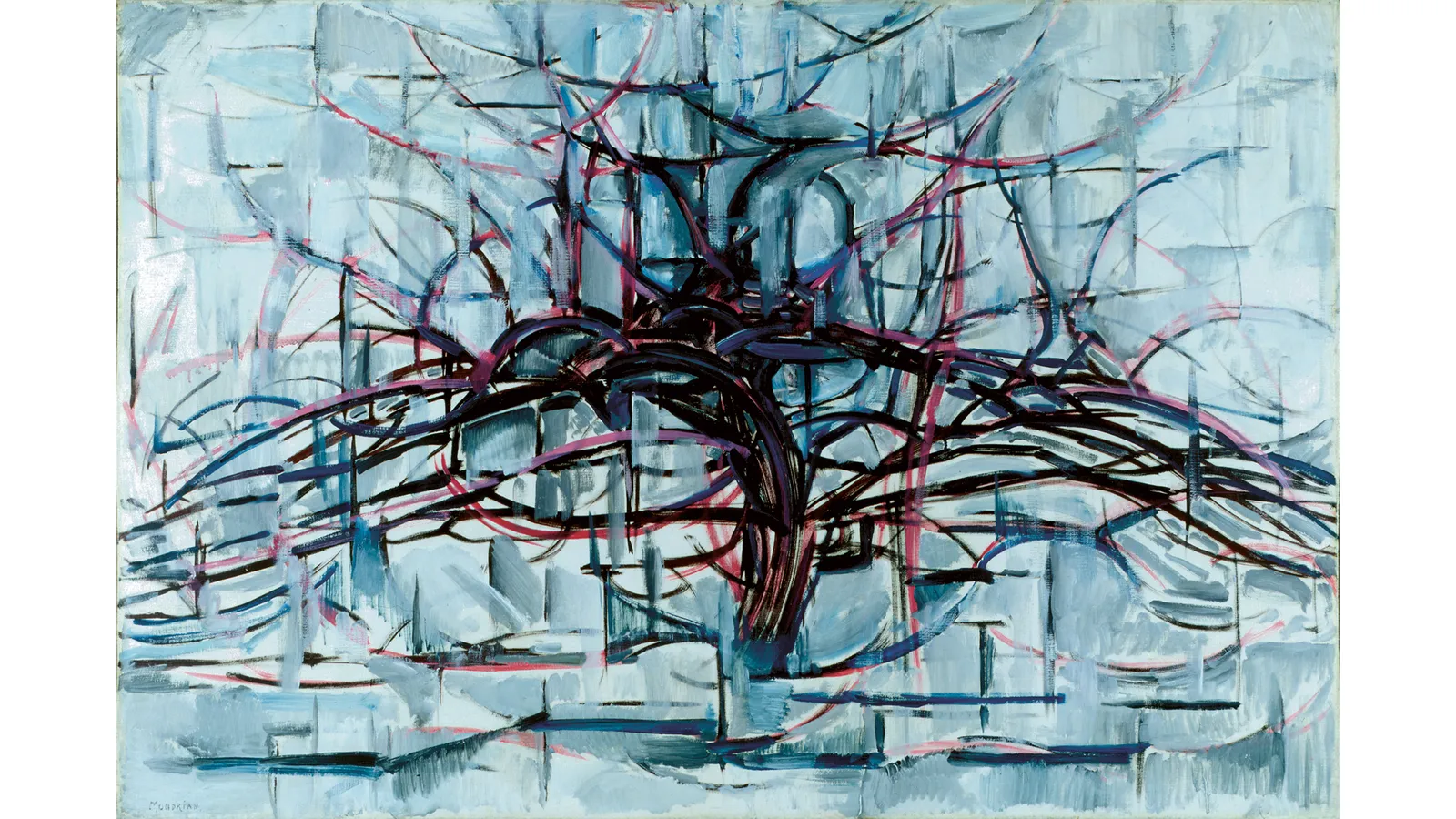
Hints of the revolutionary work that was to come nevertheless reveal themselves in Mondrian's earlier pieces. The artist's interest in grids, bold lines and right-angled compositions, for example, can be seen in landscapes where tree trunks slice the horizon (1902/3) or the numerous studies he made of a fenced meadow in 1905.

By 1922, Mondrian had adopted the principles of neoplasticism, an art movement also known as De Stijl which included Mondrian, Van Doesburg, Gerrit Rietveld, and Bart van der Leck among its leading members, and which advocated for pure, reductive compositions that were perfectly balanced. Mondrian disapproved of Van der Leck's use of background and foreground, and opposed Van Doesburg and Van der Leck's use of the diagonal – a determination to take the aesthetic all the way that created the iconic images he is known for today. Read More...
 

Previous Post

This VR gallery highlights famous stolen works of art by Rembrandt and Van Gogh

Next Post

Dutch artwork, including Rembrandt sketch, sell for €11.8 million at auction

Comments