Partridge eyes and stars: Traditional tattoos of Amazigh, Bedouin and Kurdish women
-
 Loading...
 - Aarfah Abed
- 25 Mar 2022
- 383 Views
- 0 Like
- 0 Comment
Throughout history, tattoos have been used to beautify the body, inscribe symbols onto the skin, mark out ethnic identity and express spirituality.
Despite widely respected religious taboos against tattoos among Muslims, the practice is millennia old and still in vogue in some communities.
As far back as Ancient Egypt, people in the region have been inking their bodies, using mixtures as exotic as soot mixed with breast milk or even the liquid found in sheep and goat bladders.
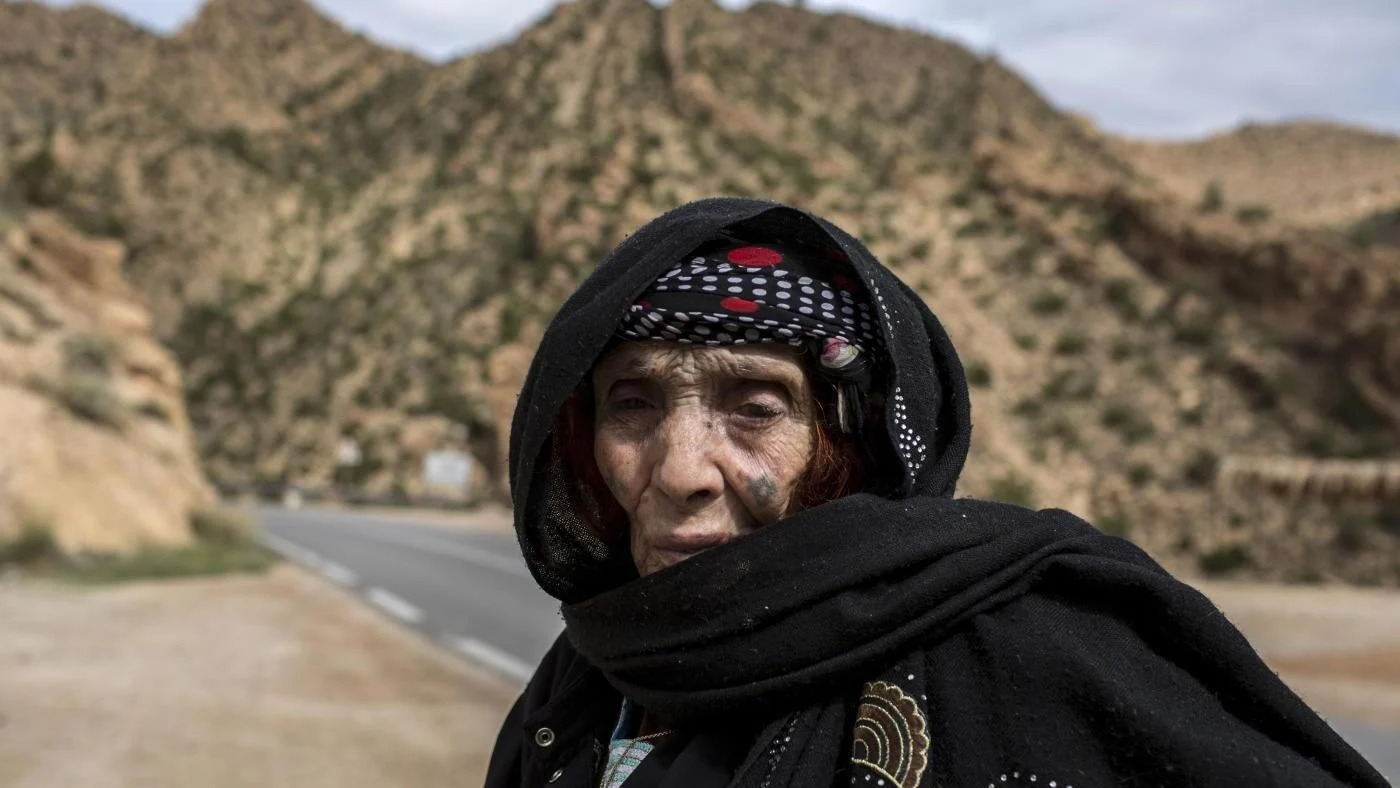
Today, facial tattooing is a custom practiced by the Amazigh tribes of Algeria, Kurdish communities in Mesopotamia and the Bedouins of the Arabian Peninsula.
The tattoos, which have a charcoal or dark green tinge to them, are usually done at home, drawn on to the skin by other women, who make an indentation in the skin and then rub in a smoke black or indigo mixture.
Symbolising personal milestones and community history, the tattoos can say a lot about a woman’s life.
Here, Middle East Eye explores the different tattoo designs of women across the region and the meanings behind them.
Amazigh
Tattooing in North Africa is an ancient practice that pre-dates Islam, and is still relatively common among the Amazigh women of Morocco, Tunisia, Algeria and Libya.
For these women, tattoos mark different phases in their lives, and consequently start at a young age.
The placement of the tattoos carries meaning; for example, a vertical line on the chin marks an engagement, whereas a mark at the tip of the nose could symbolise either a marriage or the death of a child.
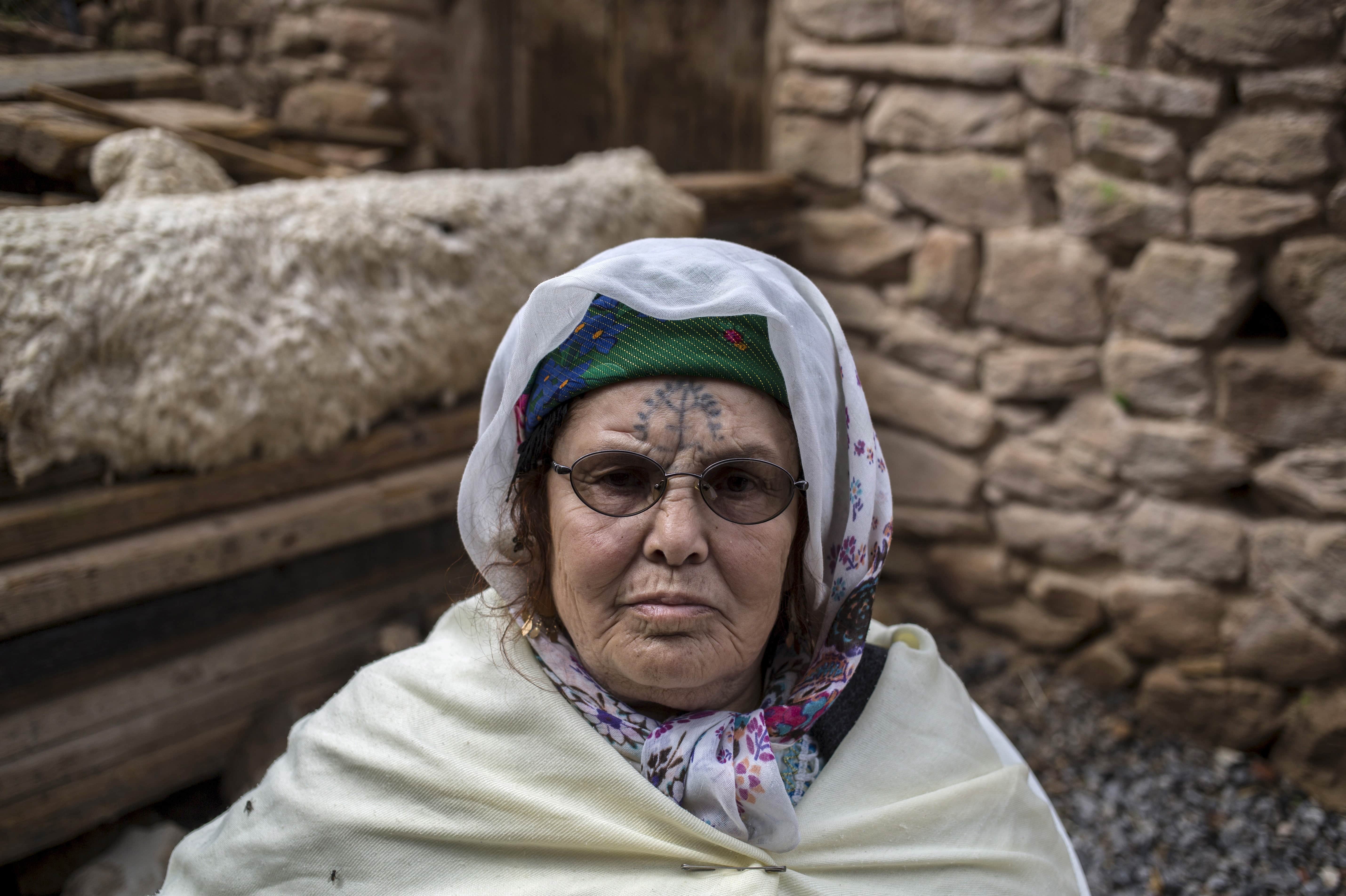
Some tattoos also signify a girl's transition into womanhood and, typically, a group of girls of a similar age get tattooed at the same time.
Besides symbolically chronicling major events, the patterns also serve to protect against evil spirits, as well as being a sign of beauty.
Tattoos on the hands and the body were mostly associated with health and healing, and some designs carry on to the neck and the abdomen area, symbolising fertility.
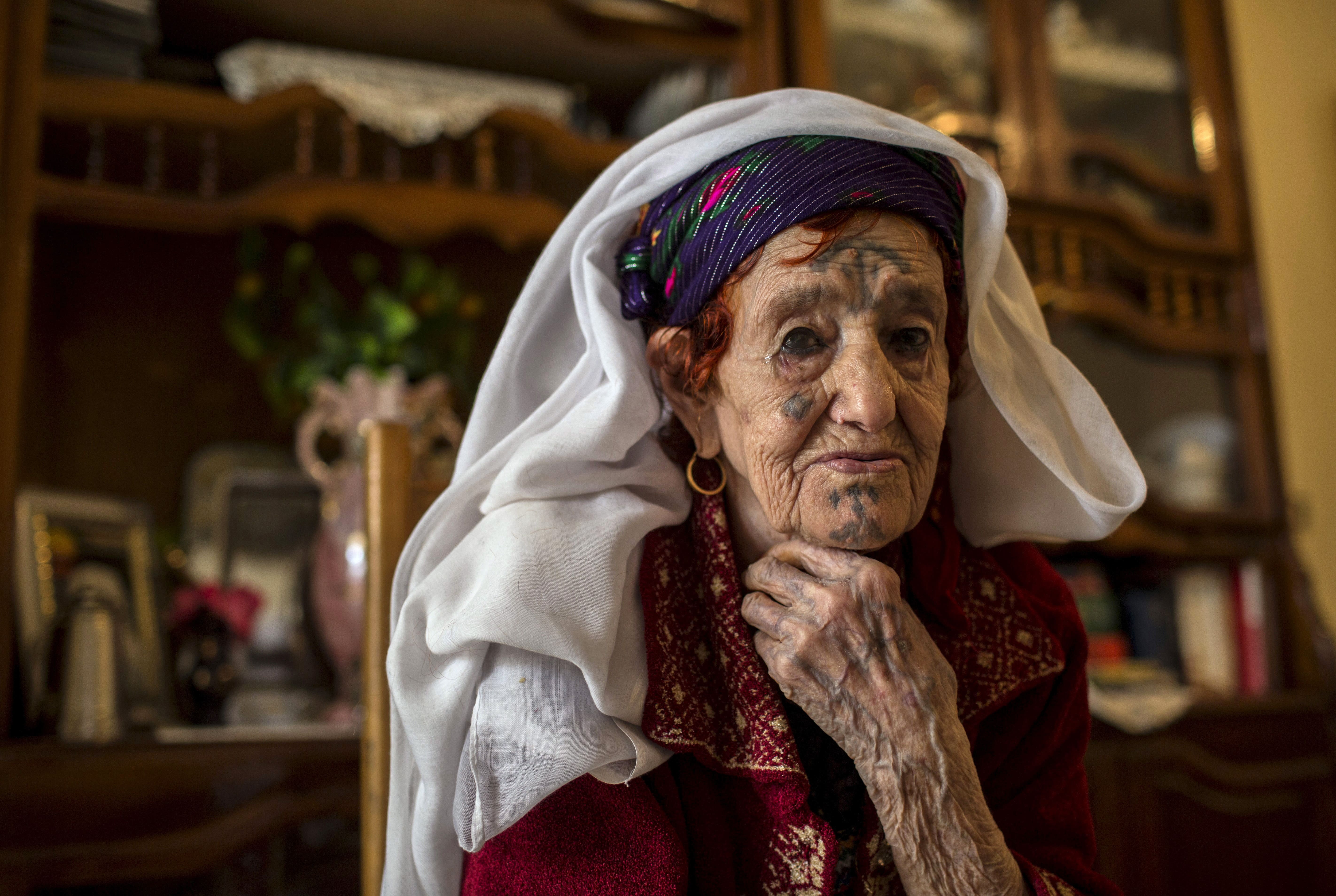
A number of motifs were common amongst Amazigh women’s tattoos, including symbols of the sun, an eye of a partridge, a chain and flies. In Berber culture, the partridge was associated with grace and beauty, and its eyes symbolise the omnipresence of danger.
As tattoos are a tradition reserved only for women, the Amazigh peoples also see them as a symbol of femininity.
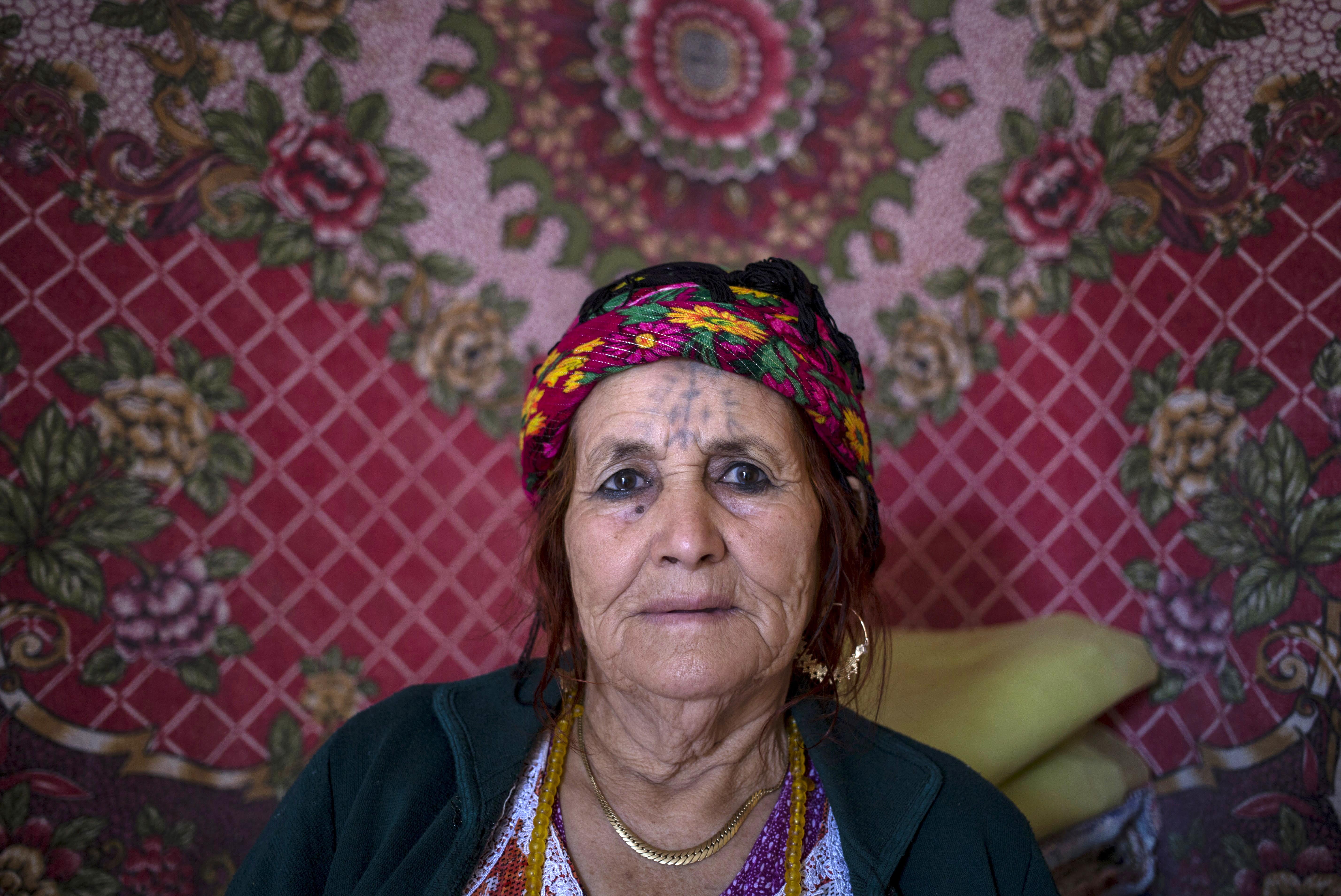
According to legend, Amazigh women would cover themselves with tattoos in the presence of French soldiers in a bid to deter their sexual interest.
Despite this deep-rooted history, the practice is dying out due to a mixture of increasing religiosity and the spread of western fashions.
Many women today choose to mark themselves with henna instead, a natural dye that fades away over the course of a week or two.
Bedouin
Tattooing among both men and women is an integral part of Bedouin culture, particularly among those living in the deserts of the Arabian Peninsula.
Despite the religious prohibition against tattoos, many tribal Arabs choose to inscribe themselves on their face, ankles, wrists and other body parts, in order to ward off evil forces, give the person wearing the tattoo strength, and to protect them in battle.
Markings on the wrist, for example, were said to strengthen the person’s hand, enabling them to milk their livestock more easily.
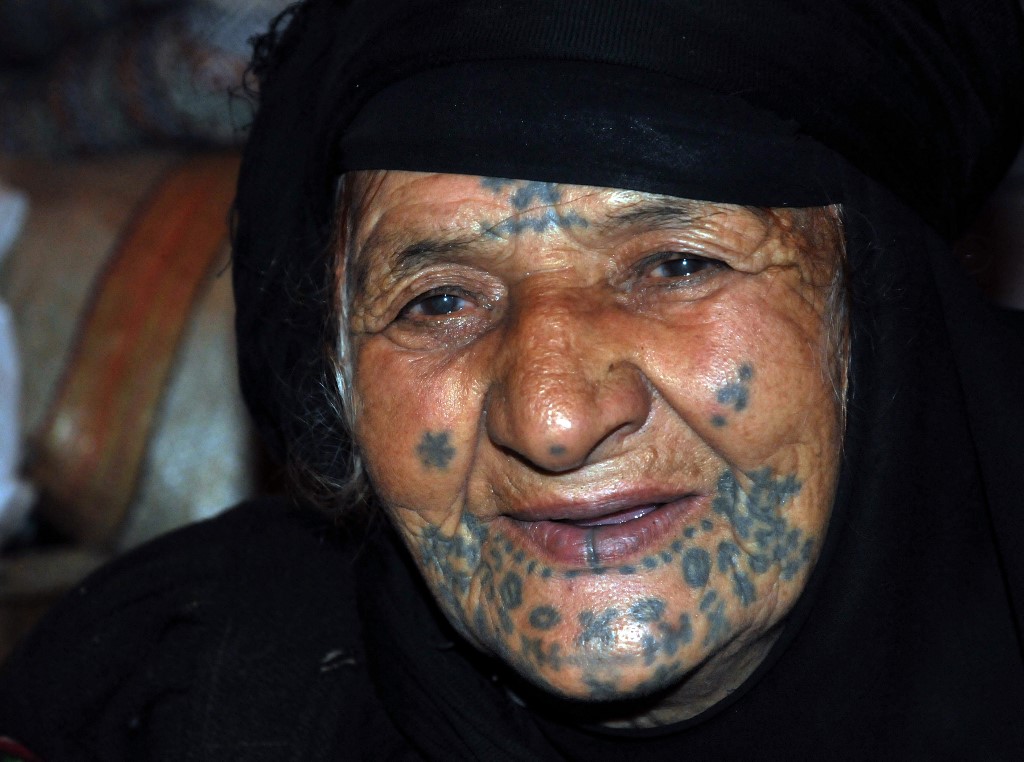
Some Bedouin tribes also believe that markings will cure them of ailments, and symbols such as dots on the side of the head or above their eyes are said to heal a person's aches and pains.
While traditions vary among tribes, in some communities, a Bedouin girl's tattoos are chosen by her mother and are selected on the basis of a trait the parent would like to see in their child. For example, a dot on the nose means the hope of a long life for the child.
The markings also serve as a system of tribal identification and it is possible for learned Bedouins to determine a person's tribe through the tattoos they have.
In some cases, animals were also depicted in tattoos, for instance, the image of a gazelle would demonstrate grace and beauty.
Kurdish 'deq'
Facial tattoos or deq are popular among the Kurdish people of Iraq, Turkey, Syria and Iran.
Focused mainly on the chin and resembling a beard, the dotted tattoos were viewed as a sign of beauty and are especially common among mature women, aged 60 and above.
For women under the age of 60, the tattoo designs were minimalist, forming a simple dot on the cheek or on the chin.
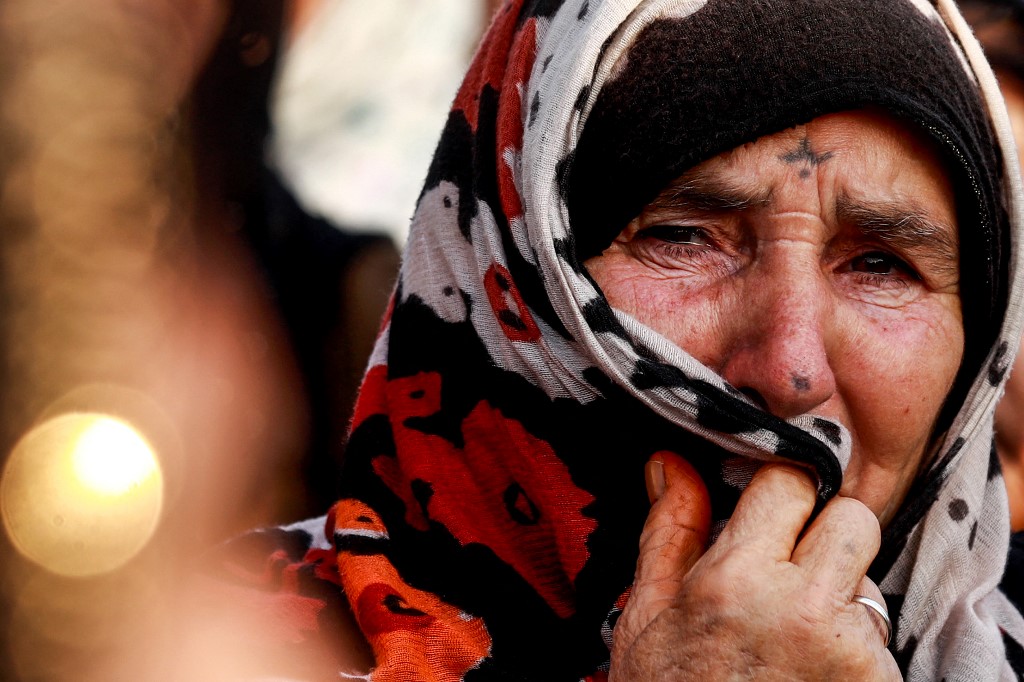
These tattoos are typically drawn on at home, using a sewing needle that punctures the skin. Soot is then used to fill the puncture, which after a period of scabbing, leaves a dark black colour in its place.
Many of the symbols depicted in deq tattoos are inspired by nature, with common designs including plants, stars and animals. The meaning behind them varies from strength to productivity and fertility.
Tattoos found between the eyes are aimed at warding away the "evil eye" and harm that can come about as a result of it. Some women, upon converting from Yazidism to Islam, tattooed a moon symbol on their face. Read More...