Panic 101: what to do during a panic attack – and how to prevent them
-
 Loading...
 - David Smith
- 25 May 2022
- 330 Views
- 0 Like
- 0 Comment
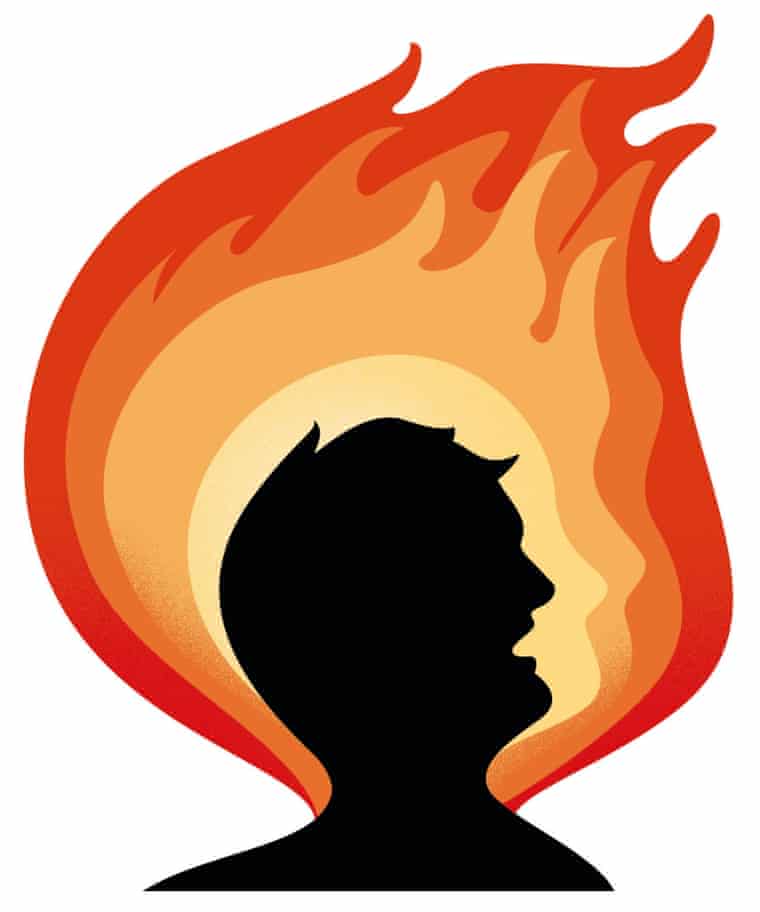
Panic is like a runaway train. A form of acute anxiety that quickly spirals out of control. As a psychiatrist, I try to help prevent anxiety from escalating into panic in the first place. There is so much we can do – from getting plenty of sleep to daily breathing exercises, to keeping blood sugar stable – to decrease overall anxiety and eliminate unnecessary stress responses that might otherwise drop us into a state of panic. But sometimes our anxiety passes the point of no return and we find ourselves in a full-blown panic attack – a sudden episode of intense fear, accompanied by physical reactions such as rapid heart rate and shortness of breath.
A panic attack is essentially a discrete stress response in the body with no real danger or apparent cause. In a survey of over 3,000 urban residents across the UK, more than half stated that they’d had at least one panic attack in their life, with 14% experiencing them at least once a month.
I approach panic from two angles: the various techniques we can use during an attack to help end them, and the myriad things we can do the rest of the time to prevent them in future. In the midst of panic, I try to help my patients do three things: allow the panic to cycle through them, rather than resist it; become grounded in their bodies; and act as scientists observing their own anxiety. When someone is not acutely panicking, I help them to reframe their anxious thoughts, challenge assumptions about the likelihood of panic and the notion of being “stuck”, and most of all, support their physiology to eliminate unnecessary stress responses.
When we begin to panic, our instinct is to resist it. This is understandable, since panic can be alarming and uncomfortable. Yet, when we strong-arm anxiety, rather than allow ourselves to feel it, we are actually giving it more power. In his book Dare, Barry McDonagh explains how to let anxiety flow rather than resist it. “The secret to recovery is that once you reach a point where you really allow and accept it, it begins to fall away and discharge naturally. It’s the paradox that is essential to healing anxiety.” McDonagh advises that we “run toward” anxiety, instead of attempting to run from it. “The request for more is the most empowering and paradoxical move you can make when facing a panic attack … It’s a request anxiety can’t deliver. Your fear quickly subsides because the fuel that powers it, the fear of fear, has been suddenly cut off.”
When it comes to supporting the people in our lives with panic, it is helpful to show up with an attitude of acceptance. When I see a patient panicking, I do my best to be calm in the face of it. Without invalidating how intense these sensations are, I attempt to show them that I can handle their anxiety, in order to help them see that they can too. This is a technique that any of us can provide for someone in our life who is experiencing intense anxiety.
In the absence of a trusted friend or therapist to help you through an acute moment of distress, another way to ride the wave and get to the other side with more ease is to physically ground yourself in the present – in essence, to remind yourself that you are still alive, still breathing. Splashing cold water on your face or opening a window for a blast of fresh air can help bring you back into your physical body and the present moment.
Certain yoga positions can also be helpful, such as child’s pose. Sit on your knees, and then fold forward to rest your forehead on the ground. Let your arms fall comfortably down by your sides. If you’re somewhere you can’t exactly drop to your knees (say in an office or airport security), simply sit and focus on feeling your body supported by the chair. Another effective grounding technique is to count five things you can see, four things you can hear, three things you can touch, two things you can smell, and one thing you can taste. This draws your attention to the present moment. Panic is often born out of “future tripping” or dwelling on the past, where we tangle with imagined problems or unchangeable grievances. Present moment awareness is like garlic to the panic vampire. Once you are back in your body, remind yourself that you are experiencing panic and that this is only a stress response. It is exquisitely uncomfortable, but you are safe.
I also urge my patients to explore their panic with the dispassionate curiosity of a researcher. Take an inventory of the sensations in your body: heart is pounding; breathing, rapid; hands, shaking. Think to yourself: “Isn’t that interesting? This is my body in a stress response. I know this now. That is all this is. Look how well my body works, doing what it is supposed to do when I am feeling anxious.” This shift in perspective – seeing panic as an indication that your body is functioning properly and that you’re not dying can be very helpful. It takes the emotional power out of the reaction, reframing it instead with curiosity, and even appreciation, rather than fear.
Preventing future panic attacks
So much of panic is built on thoughts about our uncomfortable sensations or the anxious thoughts themselves, which has a snowball effect. The emotion at the heart of a panic attack is not necessarily an insurmountable barrier; it is often relatively manageable and fleeting, capable of being reframed or challenged. This is where CBT excels. If we’ve had one panic attack at airport security, we come to fear airport security – not so much because we perceive danger, but because we come to associate airport security with panic, and panic is sufficiently uncomfortable that we become afraid of the panic itself. CBT encourages us to examine our automatic thoughts, such as: “I’m going to panic any time I’m standing at airport security”, and challenge them with the facts: out of the innumerable times I’ve stood at airport security, I’ve had a single panic attack. CBT also incorporates the insight that avoidance of the anxiety-evoking situation actually feeds the anxiety. Exposure and response prevention is a subset of CBT that helps us gradually and systematically re-approach situations that we’ve been avoiding due to anxiety, which, contrary to what we might expect, actually lessens anxiety. While therapy is not always affordable or accessible, it is encouraging to know that online CBT programs have been shown to be comparably effective to face-to-face CBT, so online CBT, such as at online-therapy.com, is one of my go-to recommendations for anybody struggling with panic disorder. Read More...