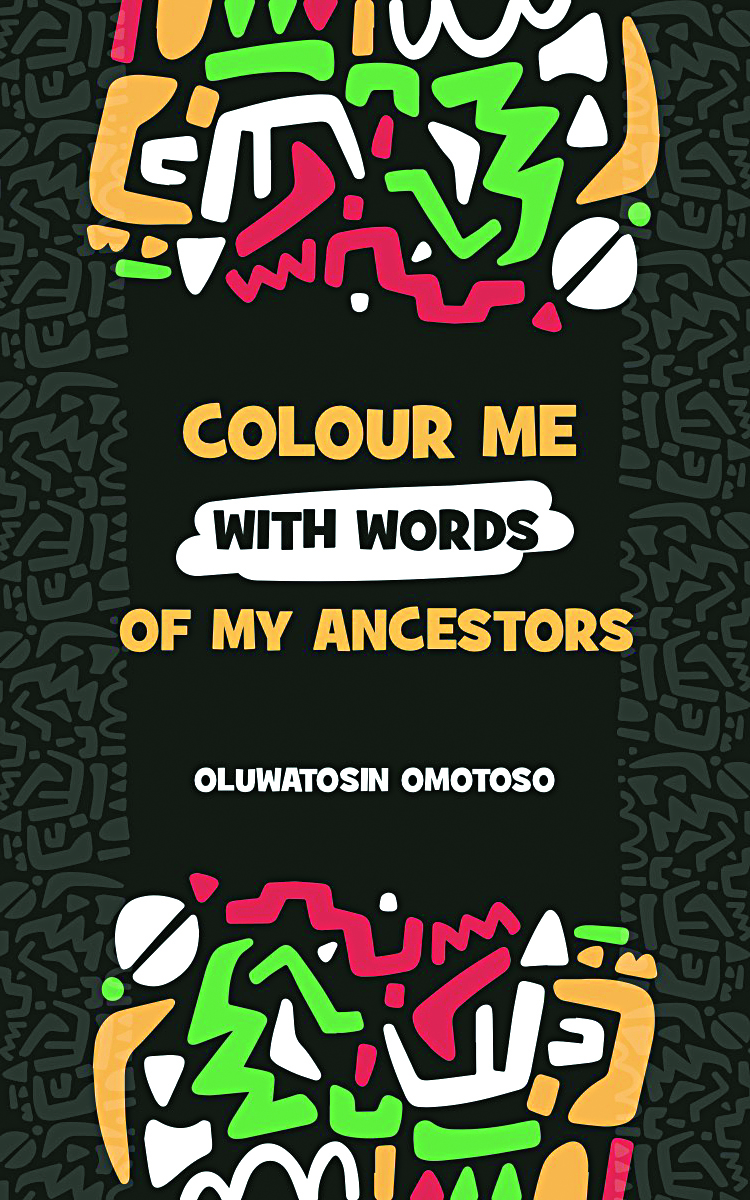
Omotoso in Color Me With Words Of My Ancestors
-
 Loading...
 - Uche Ezenwa
- 09 Jun 2022
- 267 Views
- 0 Like
- 0 Comment
Oluwatosin Omotoso is gradually making a name for herself in African poetry. Her interest in that genre started during her secondary school days.
Then, she was known for chanting the African oral poetry, ‘ewi’, to entertain guests at her school’s social gatherings. Over time, her work has been published on various digital platforms. She aspires to project African poetry to the rest of the world through her poems.
In her Color me with the words of my ancestors, she interrogates the pains and horrors of alienation. In fact, this title poem finds bearing in a range of issues local and global.
Color me with the words of my ancestors officially launched her career as a full-time poet.
It is a poetic conversation with the creative muse and she doesn’t disappoint her readers, as she weaves through the dialogues, the message and the silences of a versaic narrative.
The collection is rich, and dazzling and brings to life imageries that are concrete. It also explores silence and suppression, which is characteristic of African performance poetry.
The 26-page collection forms a good intro to the young woman, who is set on defying the movement of the country’s poetry. The collection, though slim, couldn’t have been timely, as it journeys through tradition, hope, betrayal and loss.
The poems, 24 in all, give the reader a bird’s eye-view of tradition and societal expectations. Each poem, with rich vein, brings to mind, losses emerging from the absence of history.
The collection, with a thematic focus on tradition, a style she adopted long ago, leaves her poetry in flight and motion like the spoken word.
In Tongue Speaks Languages, the poet laments her inability to speak her indigenous language perfectly. While looking at how forces behind her birth have made her unfit in a strange environment, she writes:
My English is perfect.
My pidgin, not so perfect.
My Yoruba feels like
Hot coal pressed upon my tongue
My Ekaro sounds like acre-ore.
And my baoni sounds like bow O’Neil.
It is one of the best poems in the collection and it depicts the thoughts of a typical African child. The poem is lucid and breathes energy. It captures childhood innocence and the thrills of growing up. Read More…