Nobody understands depth of field and it's all Apple's fault
-
 Loading...
 - Yvan Fotsing
- 03 Oct 2022
- 73 Views
- 0 Like
- 0 Comment
You’ve likely seen plenty of photos with soft, out-of-focus backgrounds. With the right setting, they can look rather dreamy with brightly colored circles (called bokeh) behind the subject. Perhaps most importantly, they immediately draw your attention to the subject in the image and can help hide distracting things in the background. This image style utilizes one end of the depth of field (DOF) photography spectrum, which spans from shallow to deep.
Apple’s Portrait Mode brought this look to the mainstream, putting shallow depth of field capabilities in the hands of smartphone users and not just those with expensive cameras and lenses. Unfortunately, how Apple and other smartphones accomplish this look isn’t a very accurate representation of what depth of field is or how you actually achieve it.
What is depth of field in photography?
Shallow depth of field

This is an example of an image with a shallow depth of field where neither the nearest (foreground) nor the furthest (background) subject are in focus. This image was shot at f/2.8. Had the photographer used an aperture like f/16, all three subjects would likely appear in, or close to in focus. Kelvin Murray/Getty
Depth of field can get highly complicated (there’s even a math formula involved), but it doesn’t have to be. It is defined as the distances between the nearest and the furthest subjects that are in acceptably sharp focus. Put in even simpler terms, it’s the amount (or depth) of a scene that is is in focus.
As mentioned, depth of field can span from shallow to deep. Shallow depth of field means that there is only a small—or narrow—area of the scene in focus. This is the type of image you see with portrait modes where the person is in focus, but the background is blurry. With smartphones, this look is generated using AI and artificial background blurring. However, there are ways to control depth of field in a more technical manner via the three factors that affect it: focal length, aperture, and distance.
Deep depth of field
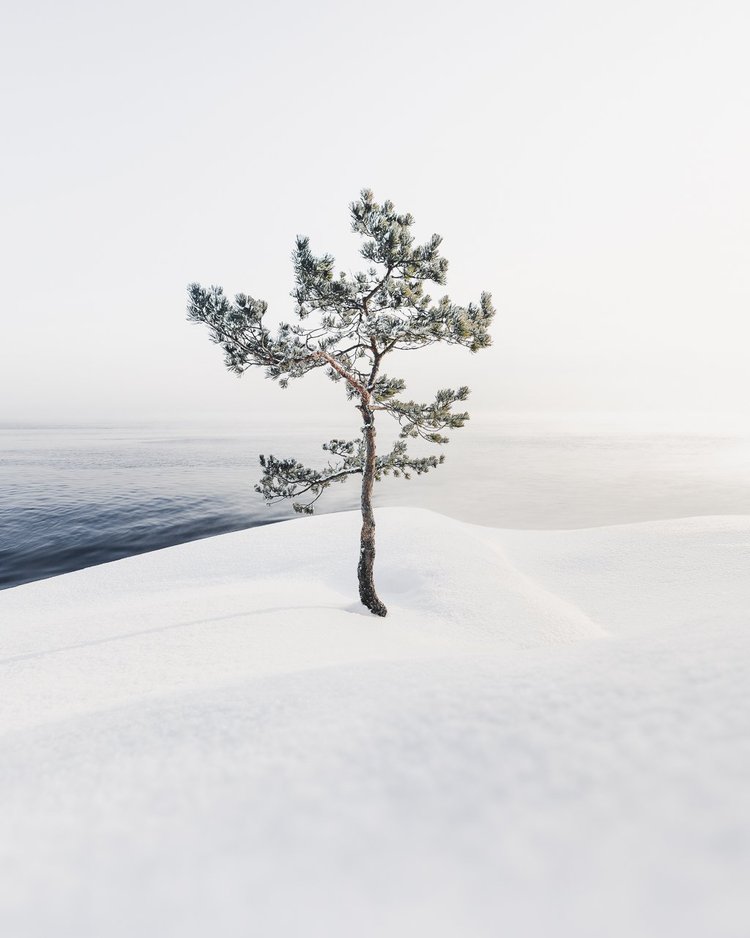
On the flip side, a deep depth of field generally means that most of the scene is in focus. Landscape photographers frequently employ a deep depth of field to show sweeping, dramatic views. You’ll also see the deep depth of field in many photojournalism images. Read More...