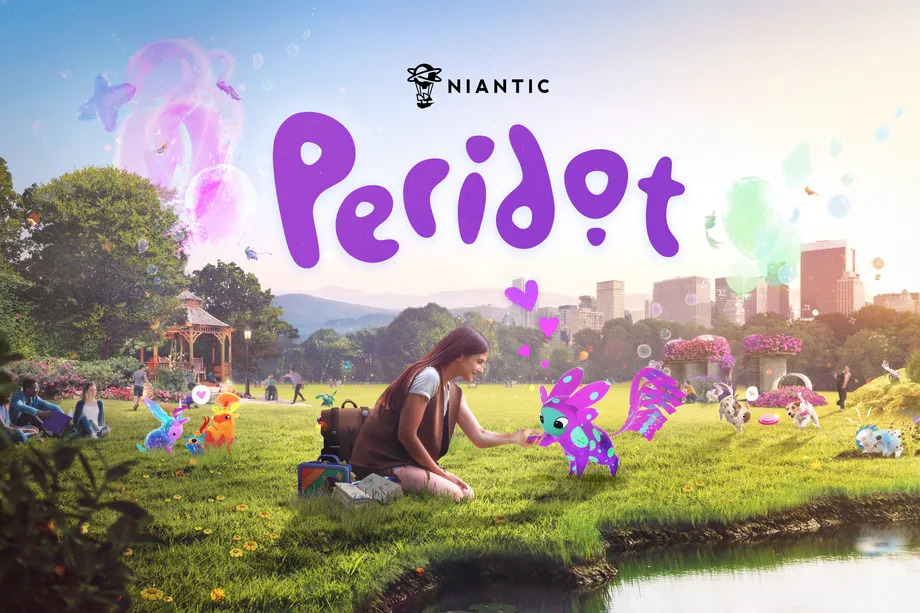
Niantic's pet game Peridot is too cute for words
-
 Loading...
 - Adella Rodriguez
- 20 Jun 2022
- 227 Views
- 0 Like
- 0 Comment
It’s hard to put into words how cute the little creatures in Peridot are. The virtual pets, which star in the next release from Pokémon Go developer Niantic, seem scientifically designed to make you say “awww.” They have big eyes and colorful bodies, and they really react when you give them some attention. I was only able to play a short amount of a pre-release version of the game, but I’m already smitten.
I had the chance to try a hands-on demo of Peridot with senior producer Ziah Fogel at Summer Game Fest. The game is essentially a cross between Pokémon Go and Nintendogs, with all of the augmented reality and location-based gameplay you’d expect from Niantic but with a greater focus on taking care of your virtual pet. You only have one peridot at a time (more on that later), and your main goal is simply keeping them happy, so they’ll mature into a well-adjusted adult, which can then breed to create even more cuties.
When you first start up the game, you’re presented with a baby creature — each peridot is unique — and tasked with giving it a name. I panicked and named my cute, pink buddy “NFT.” (See the correct pronunciation here.) From there, there’s a sort of quest system revolving around your pet’s desires. They might want to be petted or have a certain kind of food. My little NFT (again, I apologize for the name) really wanted to see some flowers, so we wandered over to a nearby restaurant that had a vase of roses on its hostess stand. My peridot saw them via AR and immediately perked up.
Niantic is quick to point out that there really isn’t a punitive element here. Your pets can get a little sad, but they never get hurt or (gasp) die. Peridot is a game built around positive reinforcement. Making them happy helps them grow. It’s also a game with a big focus on tactile interaction. You pet your little guy by rubbing its head (there’s even some nice haptic feedback) and can play with it by tossing a tennis ball, which will bounce off of walls and trees in realistic fashion. In order to forage for food and other items, you draw a circle on the screen, and your pet will dive in before coming back with whatever it managed to gather. And depending on what surface it’s foraging in — like, say, sand or water — you’ll get different kinds of items.
Peridot seems like it will be much more conducive to solo, sedentary play compared to Niantic games like Pokémon Go and Pikmin Bloom. “A lot of this game is about the nurturing side of things,” Fogel explains. “And you can do that alone in your home and get a lot of joy from playing fetch in your living room.”
But Peridot does have real-world points of interest (think the gyms in Pokémon Go), which come in the form of habitats. You can see these habitats up in trees and in buildings — there are streams of bubbles at ground level that let you know a habitat is nearby — and they play an important role, letting you breed your virtual pet with another player’s. Peridots can be bred once they reach adulthood (Fogel says that, in the current build, this takes one to three days, as peridots move from baby to teen to grown-up), and the idea is that you can try for specific types of creatures with distinct traits like unicorn or yeti. The baby will take on traits from both of its parents, and you can augment these by using an associated nest. It sounds a little complicated, especially if you’re trying for something very specific, but I’ll have to spend more time with the final version to get a better sense of it. Read More...