Newly Opened Museum of Modern Art in Warsaw Has Much to Say
-
 Loading...
 - Ervin Sera
- 25 Feb 2025
- 37 Views
- 0 Like
- 0 Comment
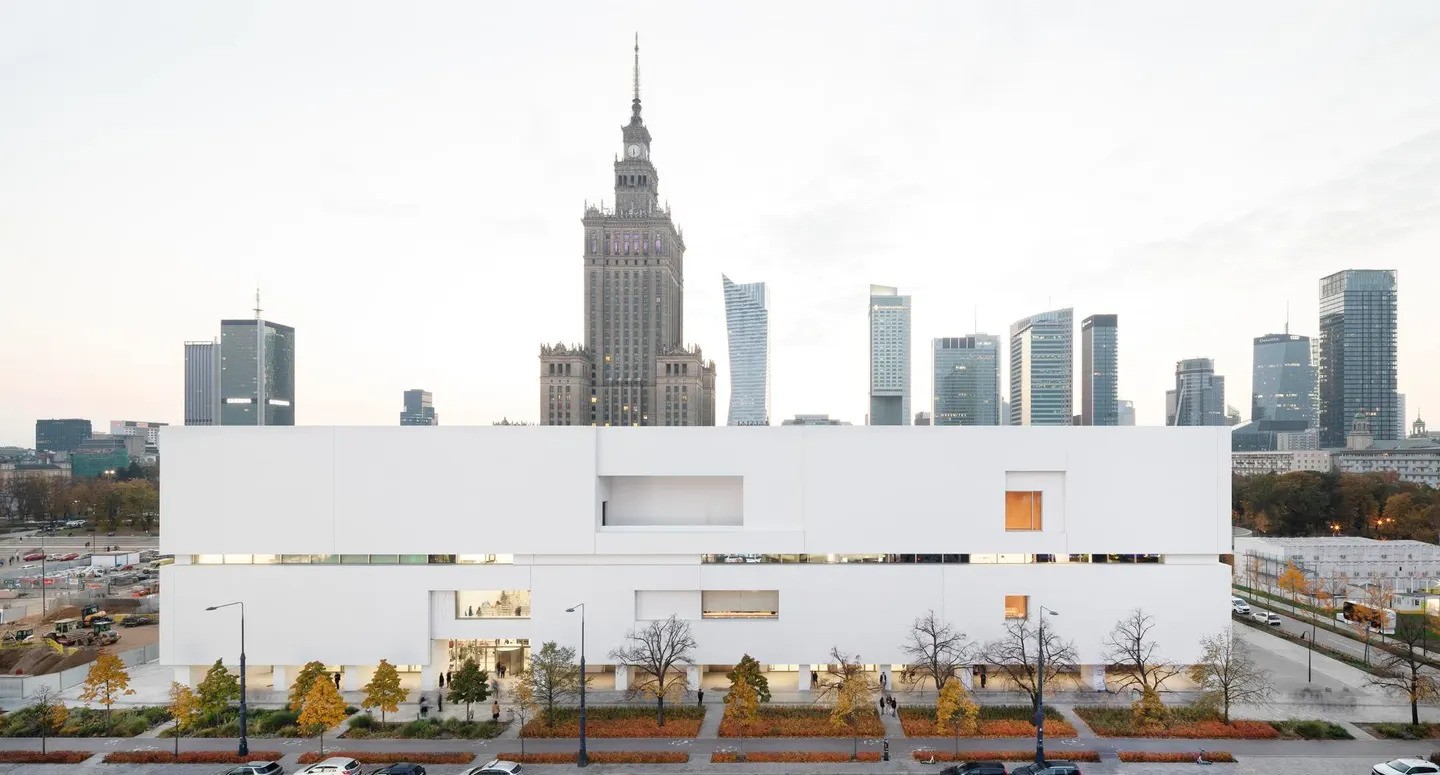
Standing in the shadow of Warsaw’s Soviet-era Palace of Culture and Science, the Museum of Modern Art in Warsaw (MSN Warsaw) emerges as the country’s first purpose-built contemporary art museum, raising its voice for progress and freedom.
On February 21, 2025, architect Thomas Phifer introduced MSN Warsaw to the media, describing the building as a “voice.” But what does that voice convey?
“I would like to have that voice be a voice that would speak to the inclusion of everyone,” Phifer stated. He emphasized the building’s whiteness as a metaphor for cleansing and illumination, symbolizing a commitment to honoring and framing art in a way that resonates with the spirit of Warsaw.
Joanna Mytkowska, the museum's director, offered an even bolder declaration: “Time for future. Enough of history.” This statement is particularly striking in Warsaw, where the past looms large, embodied by the imposing Palace of Culture and Science, a gift from Soviet dictator Joseph Stalin that symbolizes a painful history of oppression.
The Palace, completed in 1955, has long been a reminder of Poland's struggles under Soviet rule. In contrast, MSN Warsaw stands as a beacon of hope and a testament to the resilience of Polish culture. The museum features Alina Szapocznikow’s sculpture, Friendship (Monument to Polish-Soviet Friendship), which poignantly reflects the complexities of Poland's historical relationship with its past.

Phifer designed MSN Warsaw to confront the Palace directly, creating a dialogue between the two structures. “The city agreed that MSN Warsaw wouldn’t go in a park or next to the river; it was going to go at the base of the Palace,” he explained. This strategic placement imbues the museum with a sense of presence and permanence, symbolizing the enduring power of culture in the face of historical adversity.
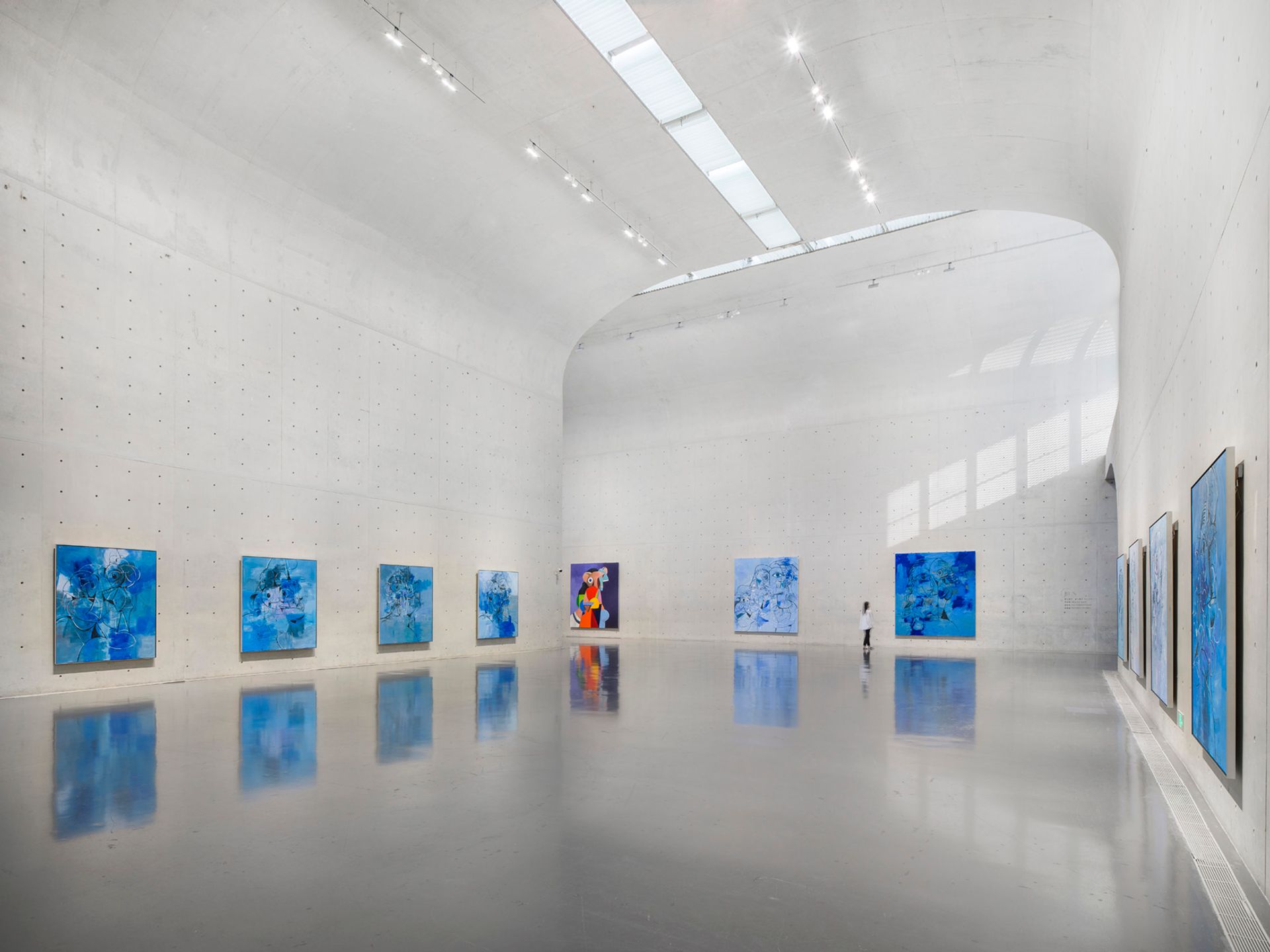
The architecture of MSN Warsaw is both formidable and elegant, featuring enormous steel doors and a boxy exterior that belies a light-filled, spacious interior. Phifer repeatedly emphasized concepts of “weight,” “presence,” and “permanence,” suggesting that the museum serves as a stronghold for culture and the arts, standing firm against the tides of tyranny.
As a contemporary art institution, MSN Warsaw aims to foster dialogue and debate, showcasing the voices of artists who reflect on current issues and societal challenges. “These rooms will offer this voice that will get debated, there'll be conversation,” Phifer noted, highlighting the museum's role as a platform for contemporary discourse.
Despite its robust architecture, MSN Warsaw is designed to be welcoming. The ground floor features open, light-filled spaces, including a café, bookstore, and event areas, all accessible to the public free of charge. “This place had to be a place for people, it had to be a place to encounter the art and encounter each other,” Phifer said.
In the coming years, Mytkowska believes that MSN Warsaw will become an integral part of the city’s identity. “In five, 10 years, inhabitants of Warsaw will find it impossible to imagine that this building is not here,” she asserted.
Made in Poland

While Thomas Phifer and Partners is based in New York, MSN Warsaw was crafted in Poland, showcasing extraordinary local craftsmanship. Phifer recounted how the concrete forms were made by skilled artisans, resulting in walls that resemble fine marble rather than rough concrete. The attention to detail and quality of materials reflect a deep pride in the project.
The museum features “City Rooms” lined with European ash, each offering unique views of the city. One room even debuts with a sound art installation that echoes the whistling from Scorpions’ “Wind of Change,” an anthem from the Cold War era.
With its abundance of windows and natural light, Phifer describes the building as “a vitrine of light; a container of light.” This design choice emphasizes the museum’s focus on contemporary art created since the fall of communism in 1989, marking a new era for Polish culture.
Phifer recalls a poignant moment with a local concrete worker who expressed pride in the project, underscoring the building's significance as a symbol of hope and resilience for the Polish people. “This building is a matter of pride for us,” the worker said, encapsulating the collective spirit behind MSN Warsaw.
In conclusion, the Museum of Modern Art in Warsaw stands not only as a contemporary art institution but also as a powerful voice for progress, equality, and cultural expression. It is a testament to the enduring strength of the arts in the face of history, inviting future generations to engage with and reflect on their shared experiences.