Most Japanese Schools Fall Short of English Proficiency Target

According to a survey conducted by Japan’s Ministry of Education Culture, Sports, Science, and Technology, only 47.0% of third-year junior high school students had an English proficiency level at least equivalent to CEFR A-1 level (or Grade 3 of the Eiken Test), while only 46.1% of third-year high school students were proficient in English to a level of at least CEFR A-2 (or Grade Pre-2 of the Eiken Test). The proficiency of the junior-high and high school students rose 3.0 and 2.5 points, respectively, compared to the 2019 survey, but neither reached the government’s benchmark of 50%.
The recent survey, conducted in December 2021, targeted third-year junior-high and high school students nationwide. The survey for fiscal 2020 was canceled due to the COVID-19 pandemic.
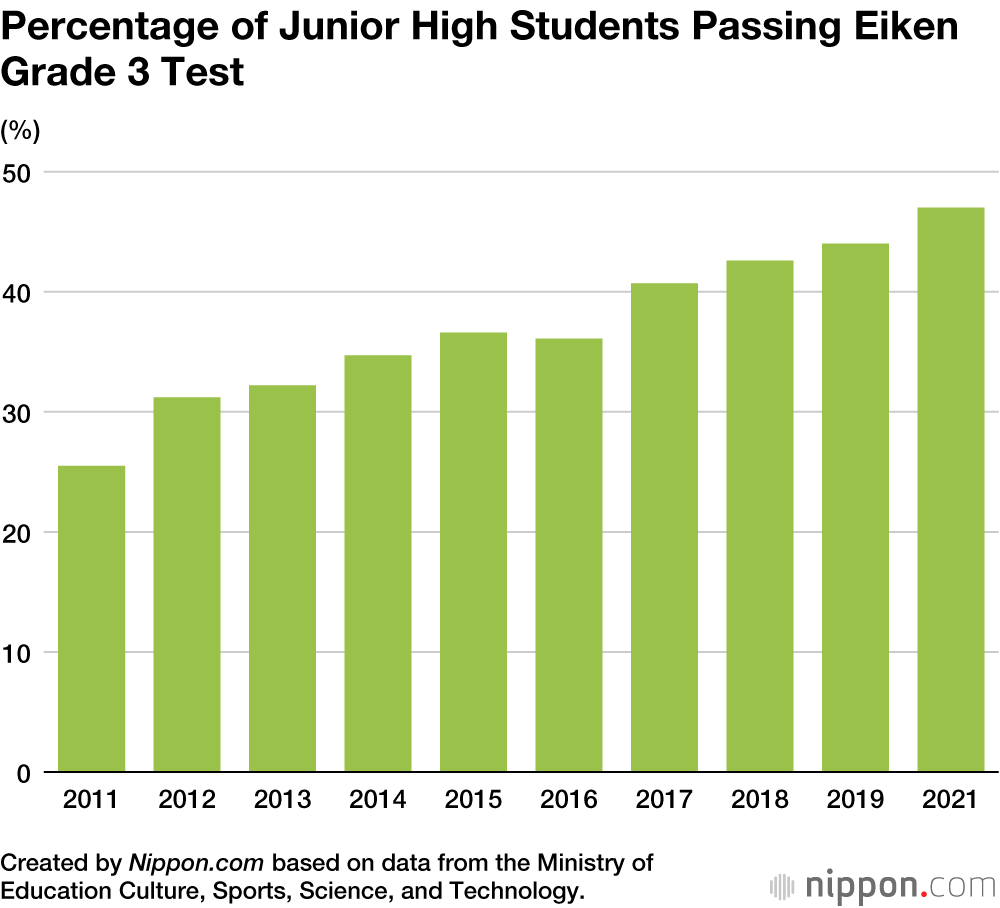
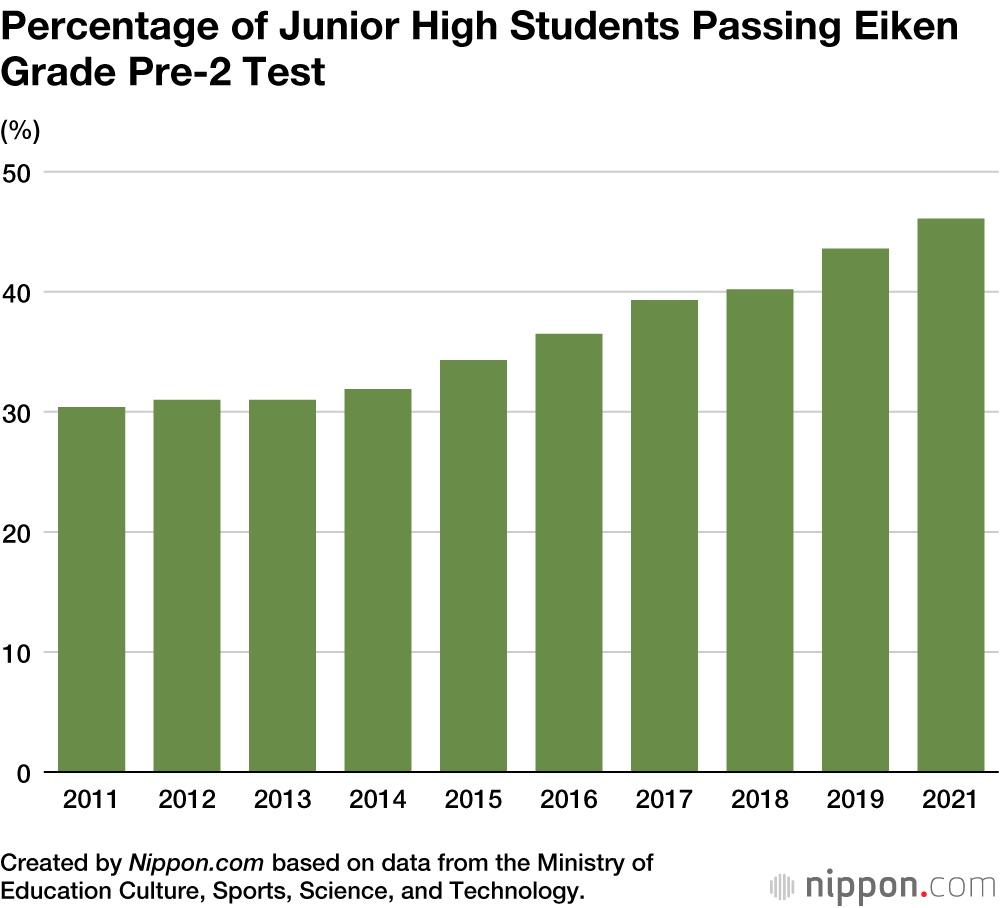
Ten “designated cities” (with a population exceeding 500,000) or prefectures cleared the 50% target set by the government for third-year junior high students, with Saitama City and Fukui Prefecture ranking the highest, at over 85%. Saga Prefecture ranked the lowest at 31.9%. For third-year high school students, eight prefectures exceeded the 50% goal: Akita, Tokyo, Kanagawa, Toyama, Fukui, Shizuoka, HyÅgo, and Nara. Meanwhile, Fukushima, Ibaraki, Miyazaki, and Kagoshima Prefectures were around the 30% level. Read More...