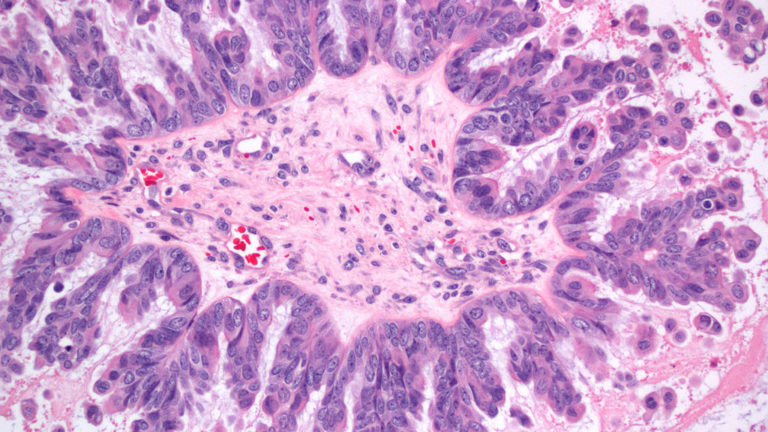
More physicians are calling for fallopian tube removal to prevent ovarian cancer
-
 Loading...
 - bogart johanna
- 27 Feb 2023
- 99 Views
- 0 Like
- 0 Comment
Ovarian cancer has long been one of the deadliest cancers to strike women.
No tests are available to detect it early, so most patients are diagnosed in later stages, when the cancer is more likely to have spread. Fewer than half of women survive 5 years past their diagnosis, and 80 percent have no known risk factors.
Now, a growing chorus of physicians is recommending a procedure that can significantly reduce the chances of developing ovarian cancer. The procedure is called a salpingectomy — or removal of the fallopian tubes, where the majority of ovarian cancer cases begin.
The operation, advocates say, is short, relatively simple, and safe.
Some surgeons already offer salpingectomies to women who are done with childbearing and are undergoing other procedures, such as tubal ligation for permanent birth control, the removal of cysts or fibroids, or a hysterectomy. Researchers are now exploring whether to offer the surgery more widely.
“Removing the fallopian tubes is proven to be a safe addition to a hysterectomy, because the amount of time it takes to do a removal of the fallopian tubes is really a couple of minutes,” said Dr. Michael Worley, director of ovarian cancer surgery at Brigham and Women’s Hospital and Dana-Farber Cancer Institute and an assistant professor at Harvard Medical School.
Worley is part of an initiative among five top cancer centers, including Dana-Farber, MIT’s Koch Institute for Integrative Cancer Research, and New York’s Memorial Sloan Kettering Cancer Center, to make more women and physicians aware of the procedure.
The initiative, called Break Through Cancer, focuses on finding new ways to prevent and treat four of the deadliest cancers, including ovarian.
The group is not alone in promoting the strategy. The Ovarian Cancer Research Alliance, a leading ovarian cancer research organization, released new guidance Jan. 30 “encouraging those who are undergoing pelvic surgeries for benign conditions … to consider having their fallopian tubes removed.”
A woman’s risk of developing the disease is 1 in 78, according to the American Cancer Society. Most cases occur in post-menopausal women, with half of all cases occurring in women 63 years or older. Women with breast cancer, family histories of ovarian cancer, or endometriosis are also at higher risk.
Research suggests that salpingectomies can significantly lower, if not eliminate, the risk of ovarian cancer. A 2022 Canadian study of nearly 26,000 women who had their fallopian tubes removed in place of tubal ligation or in addition to a hysterectomy found zero cases of the most deadly type of ovarian cancer among them.
The recovery time from a salpingectomy alone is estimated to range from a few days to two weeks. Although, coupled with another procedure, the recovery process would vary based on the primary surgery.
Worley recommended the procedure to his patient, Sandra, who came in complaining of irregular bleeding and was found to have several large fibroids in her uterus last year. She did not want her last name used to protect her privacy.
“He explained how, a lot of the times, keeping the tubes [can lead to] cancer so, I decided to go with the full procedure,” she said. Read More…