Meloni Under Investigation as Italy’s Deportation of ICC Suspect Takes New Turn
-
 Loading...
 - Bram Dixon
- 30 Jan 2025
- 207 Views
- 0 Like
- 0 Comment
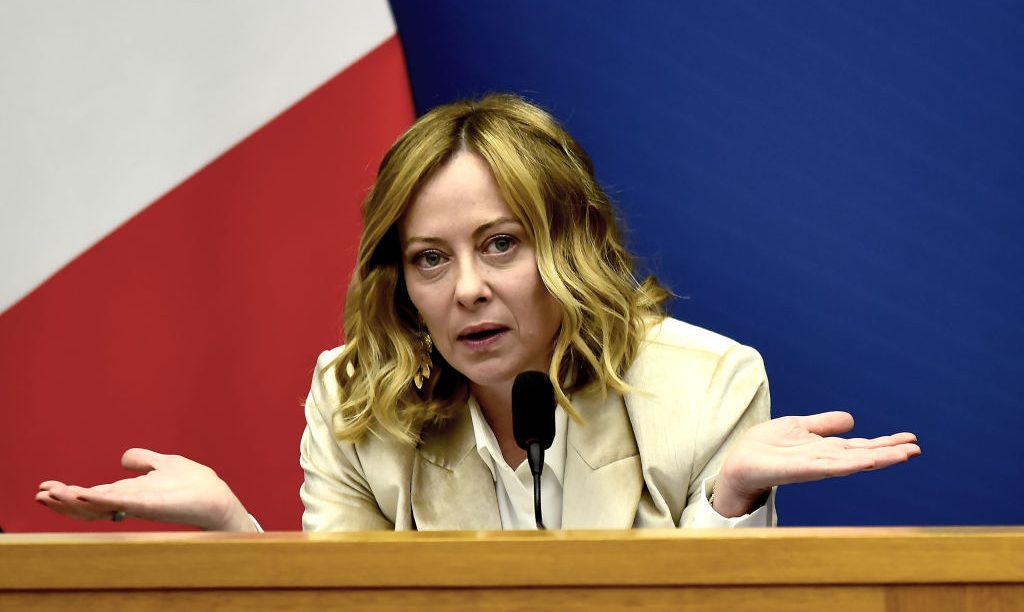
Italian Prime Minister Giorgia Meloni is facing an investigation by Rome prosecutors for complicity and breach of trust related to the deportation of Osama Njeem Almasri, the chief of the Libyan judicial police who is subject to an International Criminal Court (ICC) arrest warrant. This situation has created significant political turmoil for Meloni’s government.
Osama Njeem Almasri, who also serves as the commander of the Mitiga prison in Libya, has become a focal point of controversy following his deportation from Italy last week. Meloni announced the investigation against her in a video posted on social media, revealing that Justice Minister Carlo Nordio, Interior Minister Matteo Piantedosi, and Undersecretary to the Prime Minister Alfredo Mantovano are also under investigation.
The investigation notice was issued by prosecutor Francesco Lo Voi, who previously investigated former Interior Minister Matteo Salvini in the high-profile Open Arms case, which Meloni described as "disastrous." Almasri was arrested on January 19 under an international arrest warrant, but his arrest was invalidated by a judge after 96 hours on procedural grounds.
The Italian police opted to apply extradition rules rather than ICC cooperation laws, which require ministerial approval and a formal request from the Hague-based court. Meloni defended her government’s actions, arguing that the ICC's failure to properly notify the Ministry of Justice led to Almasri's arrest under standard extradition procedures. She expressed skepticism about the timing of the ICC's warrant, suggesting it was “conveniently” issued as Almasri entered Italy, despite his prior presence in three European countries over the preceding 12 days.
Following his release, the Italian government swiftly arranged for Almasri's deportation, labeling him a "dangerous individual." The ICC has accused Almasri of serious human rights violations, including personally beating, torturing, shooting, sexually assaulting, and killing detainees, as well as ordering guards to commit similar acts. Reports indicate that at least 34 prisoners were killed in the Mitiga prison under his oversight, and 22 others, including a five-year-old child, were sexually assaulted by prison guards.
Meloni received immediate support from her deputy premiers. Antonio Tajani characterized the investigation as an act of retaliation against the government's judicial reforms, while Matteo Salvini pledged to continue with those reforms. In contrast, the opposition has strongly criticized the government's handling of the Almasri case. Italia Viva leader and former Prime Minister Matteo Renzi remarked on social media that Meloni appears to be using the investigation notice to promote a narrative of victimhood, stating, “The handling of the Almasri affair isn’t criminal: it’s worse, it’s a mistake.”
The investigation will proceed with a review by the Ministerial Crime Panel, composed of three magistrates. This panel has 90 days to conduct its investigations and will then consult with the prosecutor to either dismiss the case or refer it to the relevant parliamentary committees for authorization to prosecute.
As the investigation unfolds, the political implications for Meloni’s government and its judicial reforms remain to be seen, with both support and criticism emerging from various factions within the Italian political landscape.