Literary enthusiasts on promoting reading culture in schools
-
 Loading...
 - Benson Nsengiyumva
- 14 Mar 2023
- 55 Views
- 0 Like
- 0 Comment
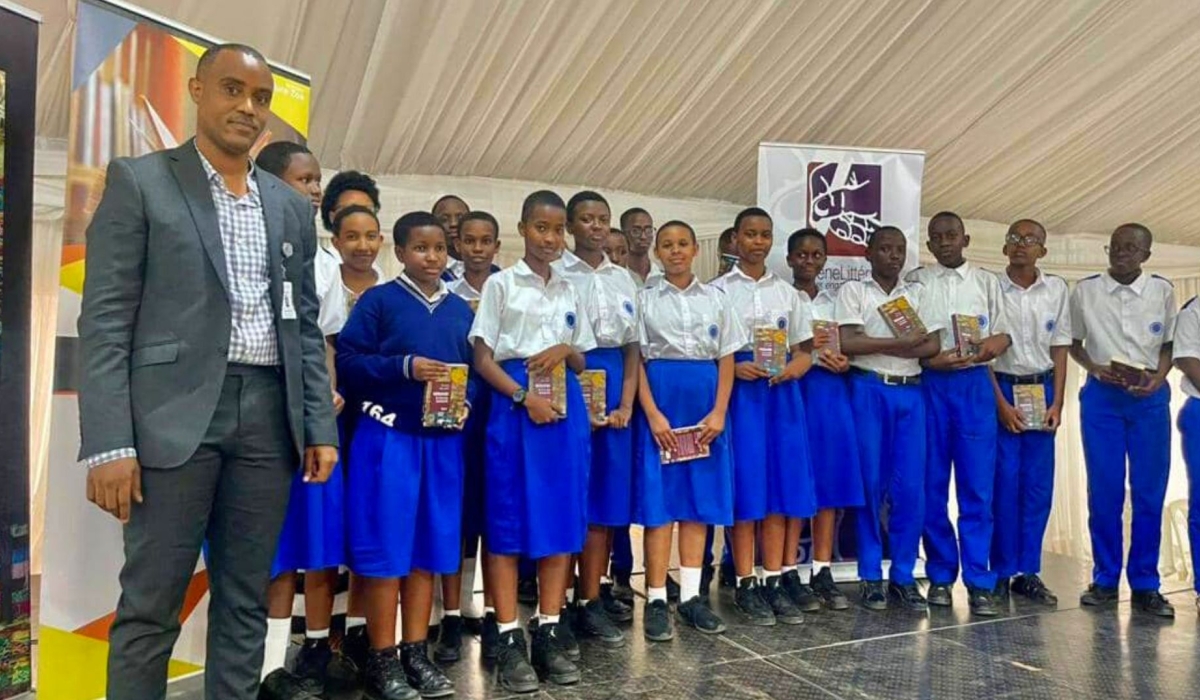
Alex Rudasingwa, the coordinator of La Cène Littéraire with some of the members of a reading club at Saint Ignatius High School. Courtesy photo
Creating a reading culture in a school requires commitment and collaboration between the school and different literary enthusiasts and organisations.
According to experts, this kind of culture matters because it helps to create well-rounded individuals who can think critically and analytically in the learning of all subjects, not just languages.
The evening of February 3 saw students at Saint Ignatius High School, Kibagabaga, feast on literature by reviewing Murambi, the book of bones by Senegalese author, Boubakar Boris Diop, and hearing from different Rwandan and international writers through La Cène Littéraire, an initiative whose literary events continue to engage young Rwandans as well as Africans in reading and writing.
Speaking during the literary event, Tom Ndahiro, an author and researcher at the Interdisciplinary Genocide Studies Center, urged students to read but also write. He noted that writing is an easy and trustable way to transmit knowledge and history.
He said that for someone to write well, they have to read, and that when they don’t, they don't write the truth because they still have to build on what happened.
“Don’t say that reading is boring because when you don’t read, there are things you never know," Ndahiro continued. "Why isn't reading part of the many things that make you busy? Have time to use social media platforms but also time to read on paper or on the screen.”
Ndahiro noted that the Interdisciplinary Genocide Studies Center believes in having literary events in schools because what happened to Rwanda, especially the Genocide against the Tutsi, has to be told through writing because what’s written can’t be forgotten. Read More…