LG Electronics Ventures into Smart Factory Market with Ambitious Sales Goal

LG Electronics has embarked on a significant venture into the smart factory solution market, aiming to achieve over 1 trillion South Korean won (approximately $725 million) in sales by 2030. This strategic move leverages the company's extensive manufacturing expertise and advanced artificial intelligence (AI) technologies, with the goal of revolutionizing traditional manufacturing facilities into highly efficient, digitized smart factories.
This year marks LG’s official entry into the smart factory sector, introducing a range of technologies and services designed to automate and optimize manufacturing processes. With a clear vision to establish a strong presence in the global smart factory market, LG Electronics is set to become a major player in this rapidly evolving industry.
LG’s Production Engineering Research Institute (PRI) has already secured orders from external clients totaling approximately 200 billion won this year. Building on this success, LG plans to shift towards a software-centric platform approach, expanding beyond its traditional hardware offerings.
The PRI lab, known for its expertise in production technology, has played a pivotal role in customizing manufacturing operations for LG subsidiaries such as LG Energy Solution and LG Display Co. This initiative is targeting a diverse range of industries, including semiconductors, pharmaceuticals, biotechnology, and food and beverage, showcasing LG’s broad market reach and technological prowess.
Jeong Dae-hwa, who heads LG PRI’s smart factory division, underscores a comprehensive approach to smart factory implementation. This includes factory diagnosis, establishing automation roadmaps, and providing specialized services such as production consulting and equipment development. With over 60 global production facilities and a portfolio of 1,000 patents in smart factory technologies, LG is well-positioned to enhance manufacturing efficiencies and operational excellence on a global scale.
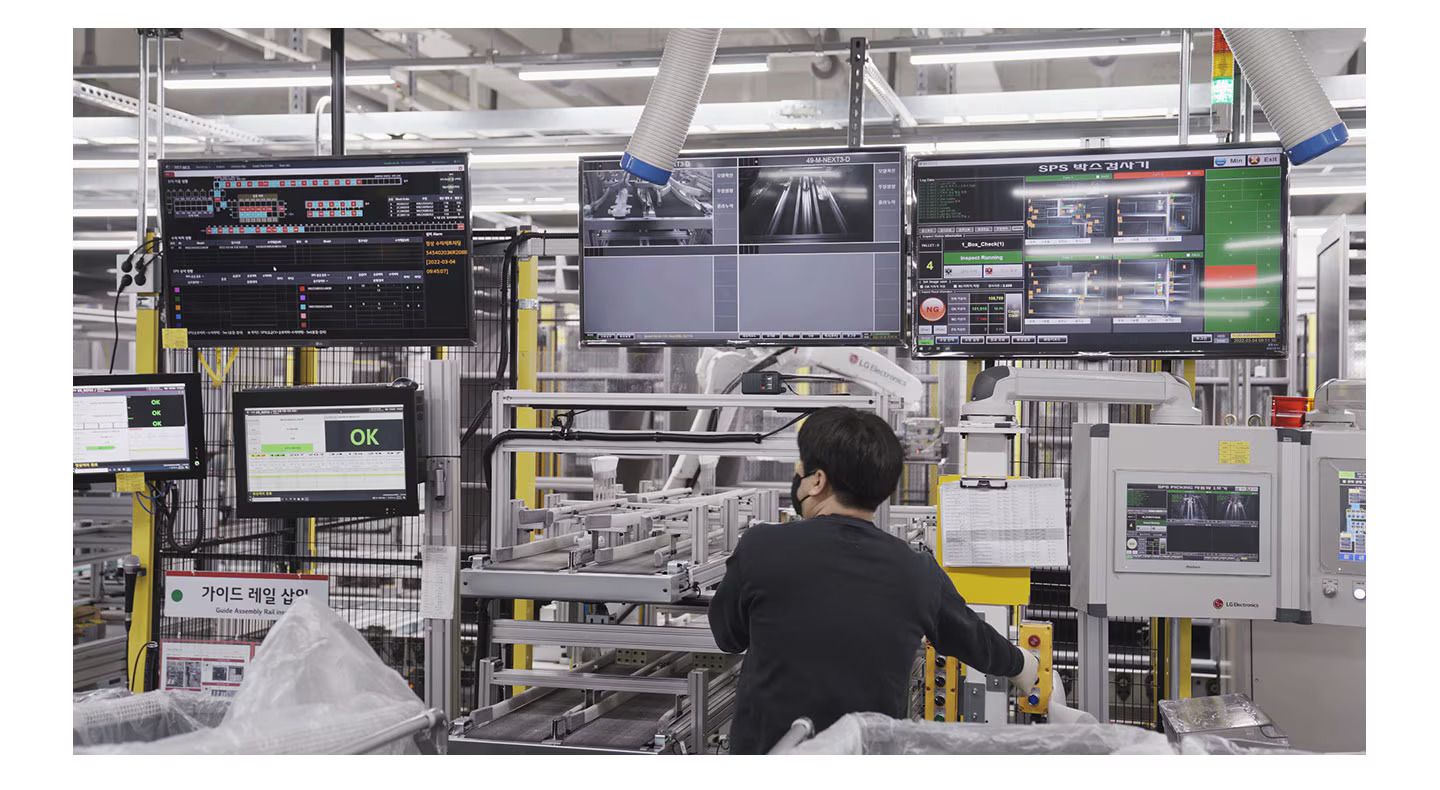
LG Electronics plans to leverage its intelligent autonomous factories in Changwon, South Korea, and Tennessee, USA, both recognized by the World Economic Forum as “Lighthouse Factories.” The implementation of smart factory systems at these facilities has led to significant improvements, including a 17% increase in productivity, a 30% boost in energy efficiency, and a 70% reduction in costs related to quality defects.
A key focus of LG’s smart factory systems is minimizing delays and errors in production processes to maximize operational efficiency and profitability. For example, a 10-minute delay on one of LG’s refrigerator production lines in Changwon could result in a shortfall of 50 units, equating to a potential loss of $72,322, based on each refrigerator’s cost of approximately $1,446.
With its ambitious sales goal and strategic initiatives, LG Electronics is poised to make a substantial impact on the smart factory market. By leveraging its manufacturing expertise, AI technologies, and comprehensive smart factory solutions, LG aims to drive significant advancements in manufacturing efficiency and establish itself as a leader in this transformative industry.