‘Legends are to be told': Colombian library goes beyond books to keep stories alive
-
 Loading...
 - Luciana Perez
- 24 Mar 2022
- 386 Views
- 0 Like
- 0 Comment
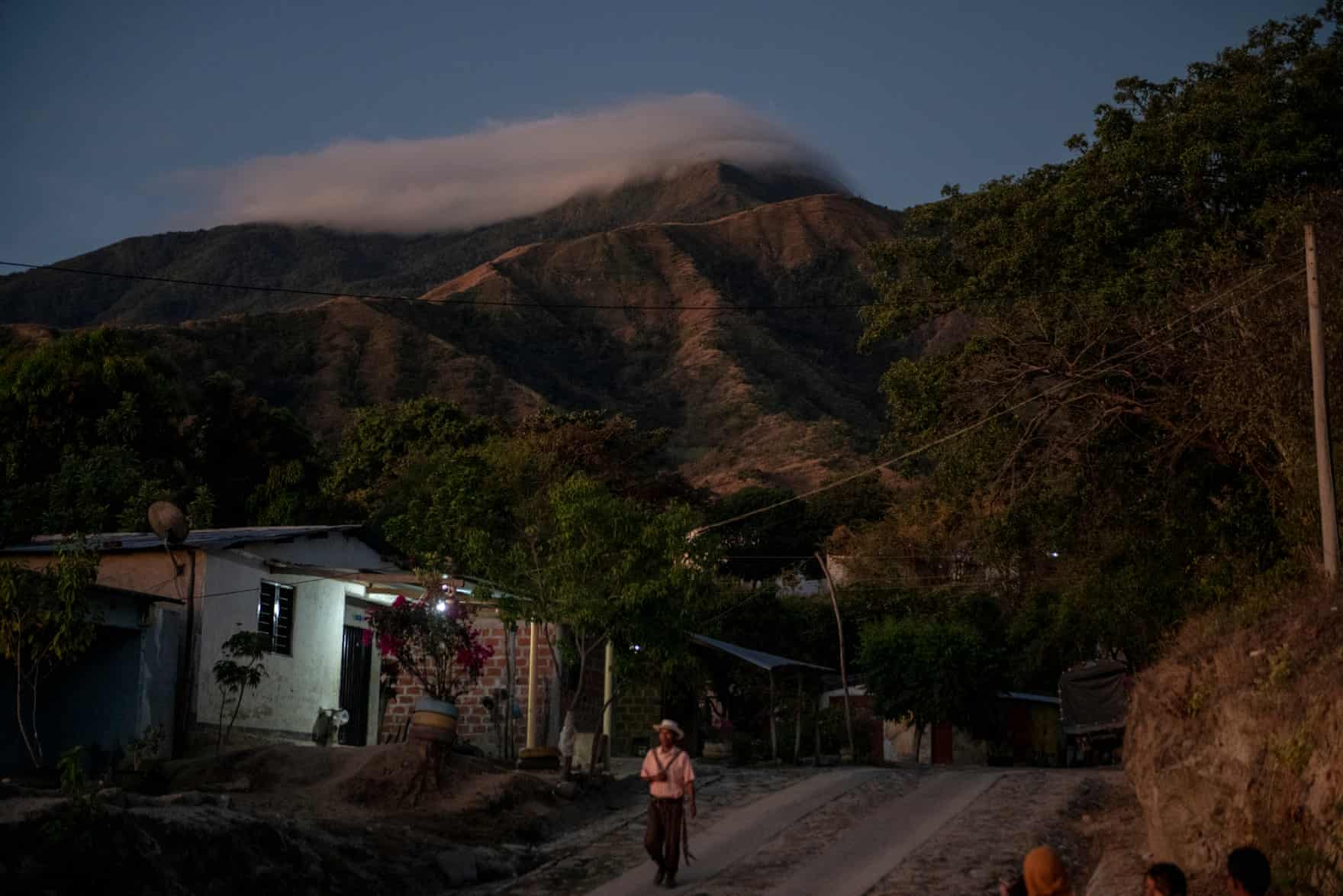
As dawn creeps over the Sierra Nevada de Santa Marta in northern Colombia, a small group of children trek downhill carrying cameras and sketch pads.
Each month, they come to an ancient site scattered with hundreds of petroglyphs – smooth stones etched with patterns – to create their own images of the art of their ancestors.
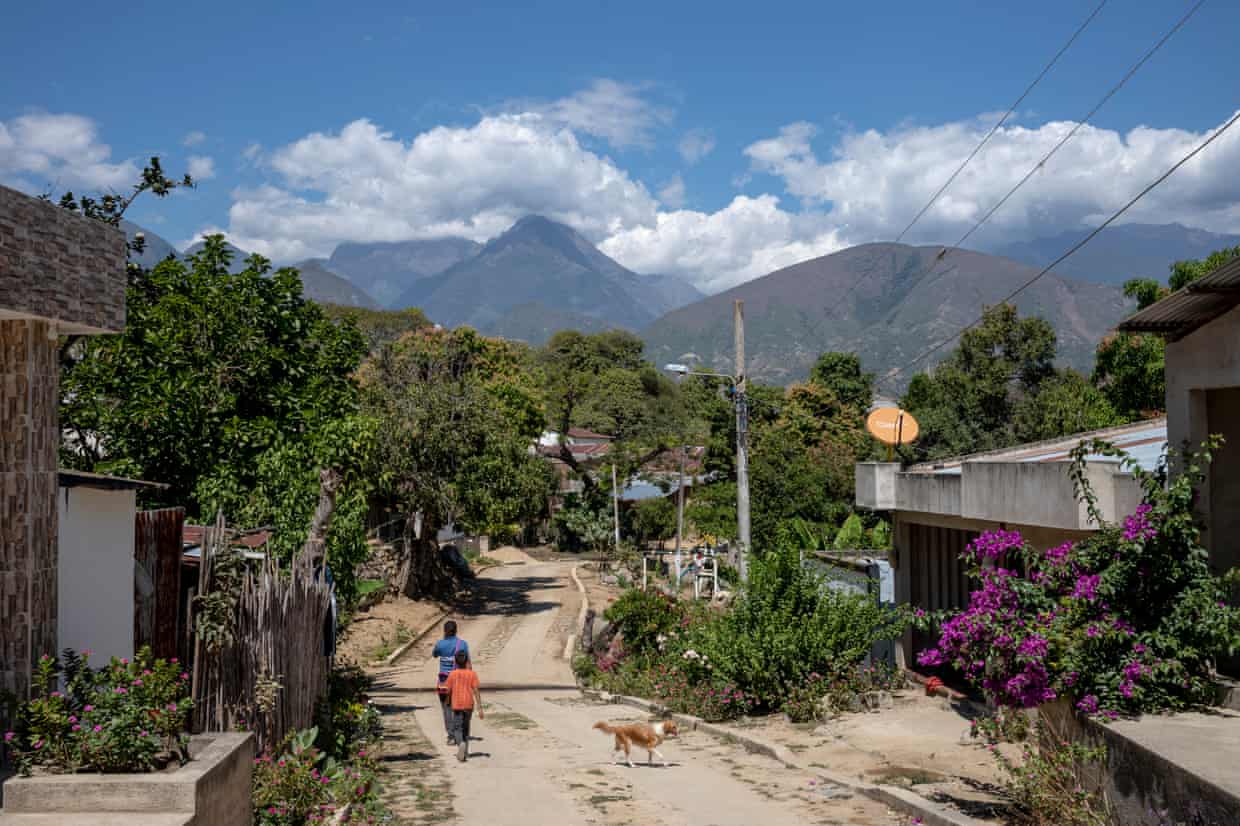
The project is run by the public library in Atánquez, a tranquil mountainside town of 10,000 people in the Kankuamo indigenous reserve.
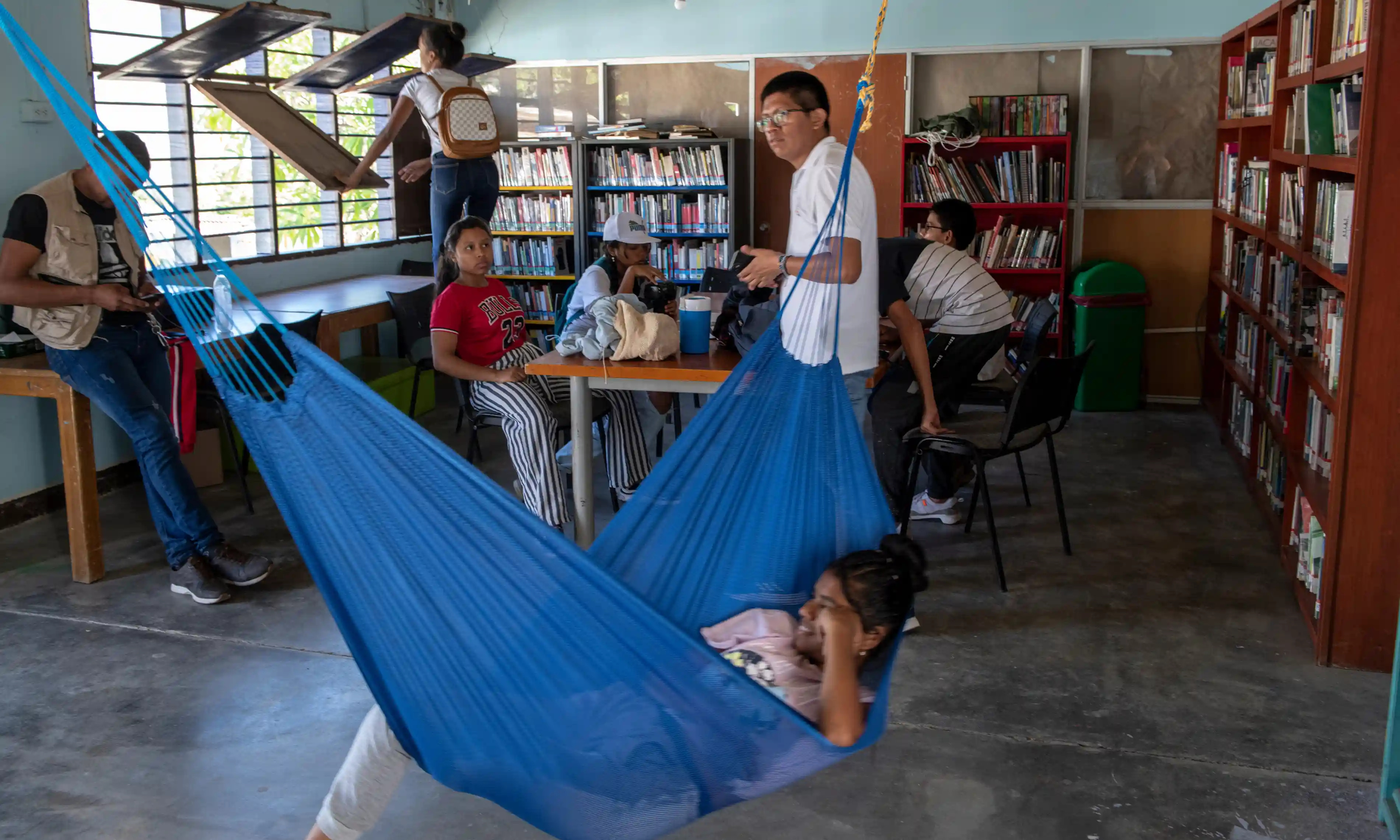
Atánquez’s Kankuaka library is more than just a space to house books, it is the centre of the indigenous people’s initiatives to preserve their history and strengthen their identity. A pavilion and mud-brick round houses behind the main building host community gatherings. Youth activities include the petroglyph outings, photography workshops and gatherings with tribal elders.
“[The rock carvings] are memories of the ancestors,” says Mariham Martinez Daza, seven, who is part of the programme. “They’re beautiful.”
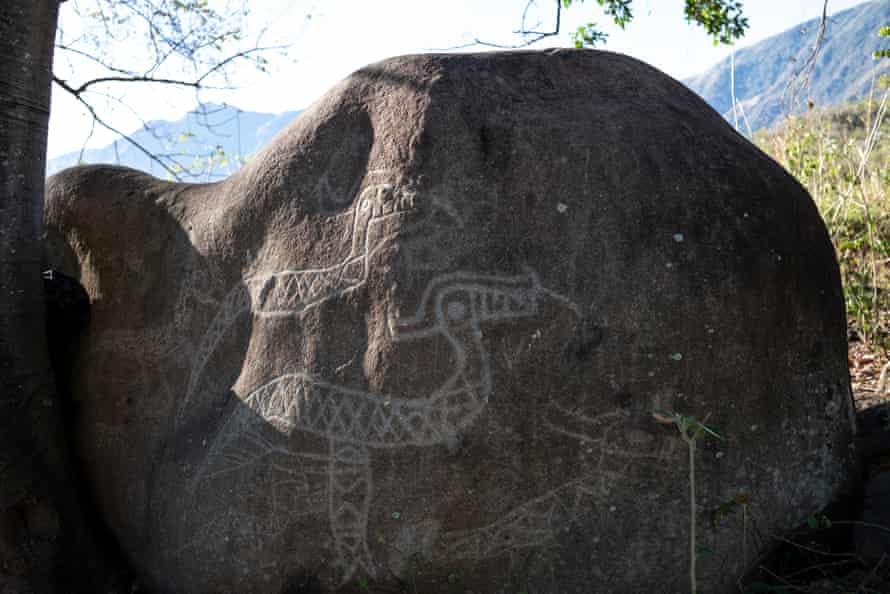
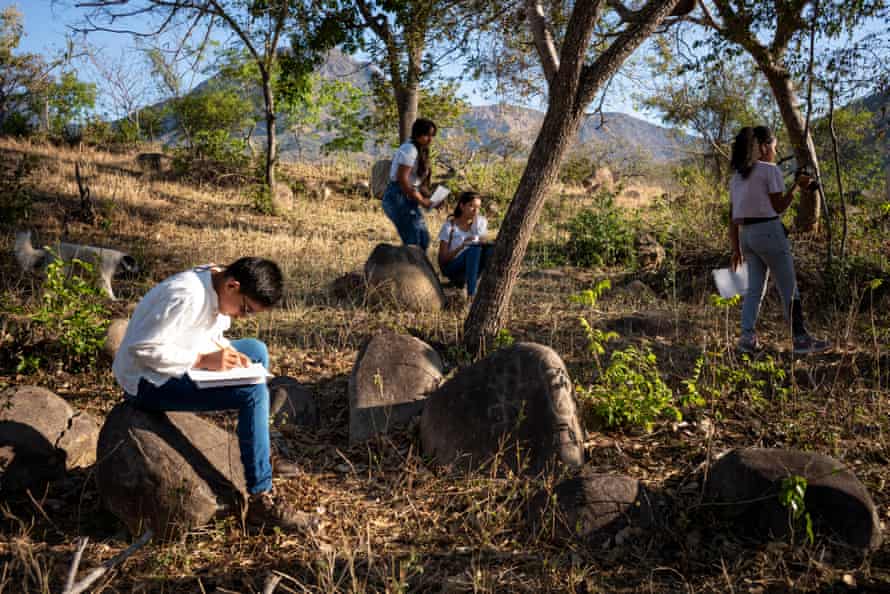
Sahian Maestre, 13, adds: “They show us as another part of who we are. They tell us about the past and explain how indigenous people saw things. It is also another way of seeing each other, and how our ancestors believed each one of us is connected.”
But her favourite trips are those to meet Kankuamo elders, to learn about traditional music, recipes and how people have changed over the years. One early project of the library had children collecting stories from their grandparents and adapting them into stop-motion videos.
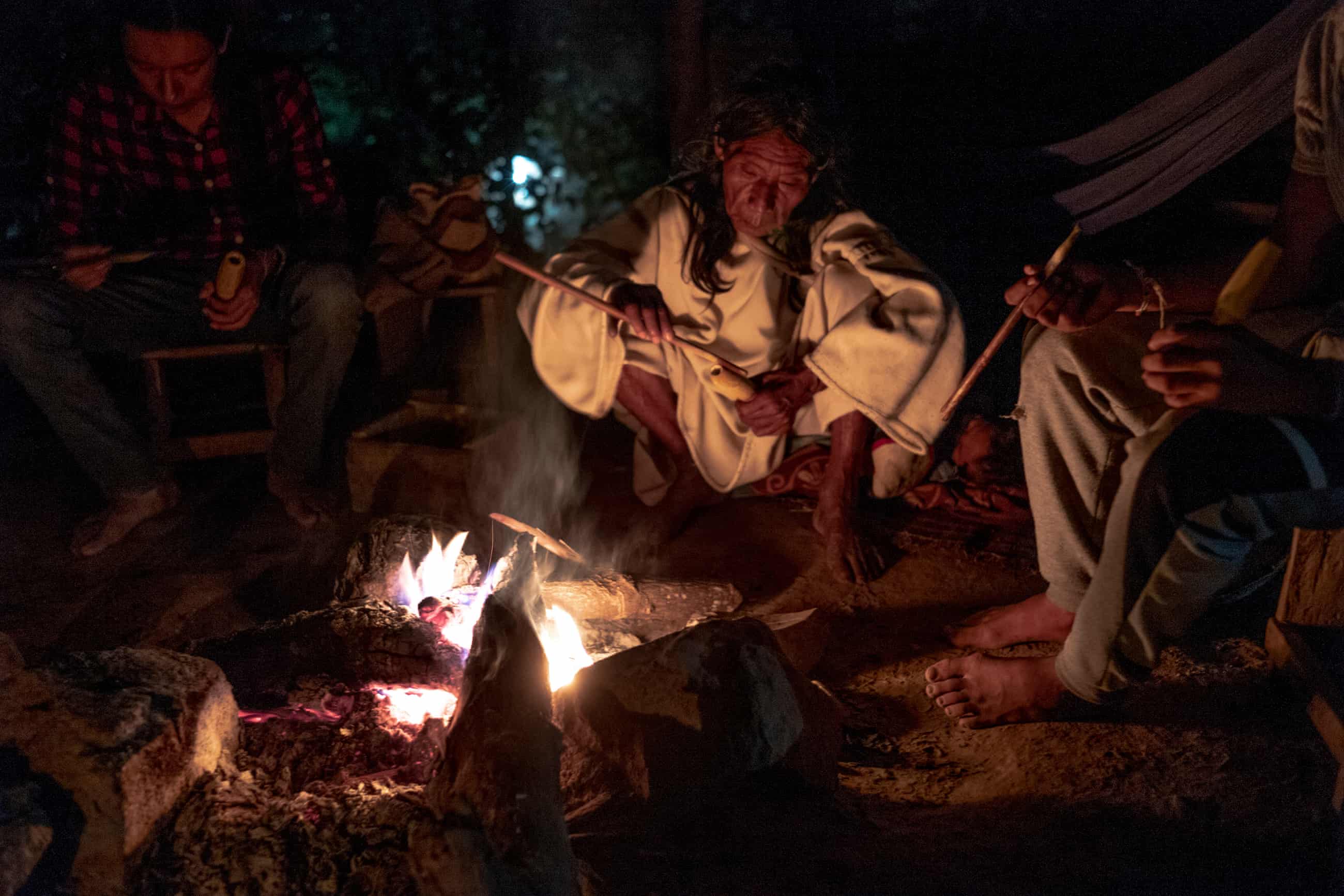
Souldes Maestre is the librarian and facilitator of the space.
Top: people sit around the fire in a kankurua, a Kankuamo ceremonial centre, where the community share their thoughts. Above: Souldes Maestre, who helped found the library in Atánquez
“For us, it is essential that certain memories cannot be transmitted if it is not orally,” says Souldes Maestre, the librarian and one of the library’s founders. Legends are meant to be told, not just read in books, he says. “We want the children to begin to create an interest in knowing, in asking questions.”
In February 2013, Atánquez had just a box of unopened books sent by the National Network of Public Libraries. When a group of young people found out that a government official was due to come and remove them because of disuse, they decided to act. They peeled off the plastic wrappings and hastily arranged the books in an abandoned community building. The official was sceptical of this “library”. But, Maestre says, they told her: “If we are capable of putting this together in one night, you cannot imagine what we are capable of in a year.”
The official gave them a year, as well as tables and chairs, and new books arrived. In 2015, Atánquez was a finalist for Colombia’s national library award, winning it in 2017.
Patrick Morales, coordinator of ethnic affairs at the National Centre for Historical Memory in Colombia, says the Kankuamo story is symbolic of Latin America’s indigenous people, many of whom attempted to assimilate in the 1950s and 1960s, and then returned to their roots. But the Kankuaka library is unique in its focus on audiovisual narratives and intergenerational exchanges.
“The Kankuamo are very committed to working with boys and girls, because for them they are the heirs of this fight for memory,” says Morales.
During the pandemic, they gave tape recorders to children to record interviews with family, handed out seeds and bought groceries for families in need. Vaccines were even administered at the library.
There are about 35,000 Kankuamo, 28,000 of whom live on the reserve, and they are one of the four indigenous groups of the Sierra Nevada de Santa Marta. Like many other indigenous people, their culture is threatened by modernisation and conflict. Violence from guerrilla and paramilitary groups in the 1980s and 1990s killed, orphaned and displaced hundreds, separated families, and targeted leaders and religious authorities.
For years, being Kankuamo was seen as shameful and many people tried to distance themselves from their culture, but the early 1990s saw a change.
“Little by little our people are falling in love and valuing what they are as indigenous peoples,” says Ener Crispin Cáceres, a Kankuamo elder.
The national and international recognition the library has gained has brought in prize money to keep it afloat, but organisers are trying to raise funds to buy computers.
John Robert Torres Maestre, the former cabildo, or chief of Atánquez, helped get the library off the ground. He says that 40 years ago, a generation went off to university never to return, which is why it is so important to cultivate a love of learning alongside a love of heritage, so that those who pursue higher education come back. Read More...