Landscape Photography: The Ultimate Guide
-
 Loading...
 - Aria Anderson
- 01 Jun 2022
- 294 Views
- 0 Like
- 0 Comment
Landscape photography is one of the most popular photographic genres. It’s easy to get started with the genre, but it can take a lifetime to master landscape photography skills. You don’t need a sophisticated camera or expensive lens, and the skills you learn when doing landscape photography translate to other types of photography.
This guide will cover the most important aspects of landscape photography, including its history, essential photography equipment, tips for capturing better images, basic photo editing, and more. Whether you’re an avid landscape photographer or a complete beginner, you’re in the right place.
What is Landscape Photography?
Landscape photography doesn’t fit neatly into a single box. However, a unifying thread that connects all landscape photographs is that the image features the natural world, although it may include wildlife, artificial objects, or people in it as well.
Many celebrated landscape photos have subjects like mountains, forests, lakes, rivers, and the ocean. However, many influential landscape photos also include a human touch. In an ever-changing world, landscape photos showing our impact on the environment may become even more important.
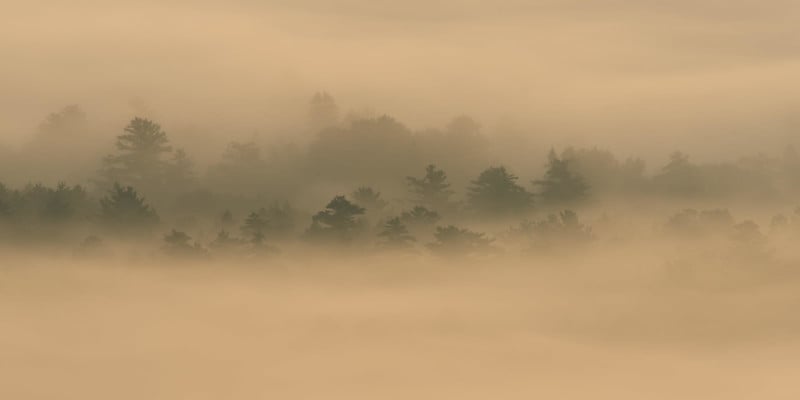
The line between landscape, nature, and wildlife photography is often blurry. A landscape photo could be all three at once. Landscape photography has a rich artistic history, and its definition has become suitably broad. Whether a landscape is depicted with hyper-realism, abstraction, or any style in between, it’s a landscape image if the photographer or the viewer says so.
A Brief History of Landscape Photography
While famous 20th-century landscape photographers such as Ansel Adams may be the first to come to mind when considering the origins of landscape photography, its history is traced back to the very earliest days of photography itself.
Of course, the history of photography is a bit murky. A widely accepted version is that Nicéphore Niépce was the first to use a camera to capture a photograph in the mid-1820s. The early results were crude and required hours of exposure time, so the first portrait was still a way off. However, static objects, such as landscapes, lent themselves well to the burgeoning medium.
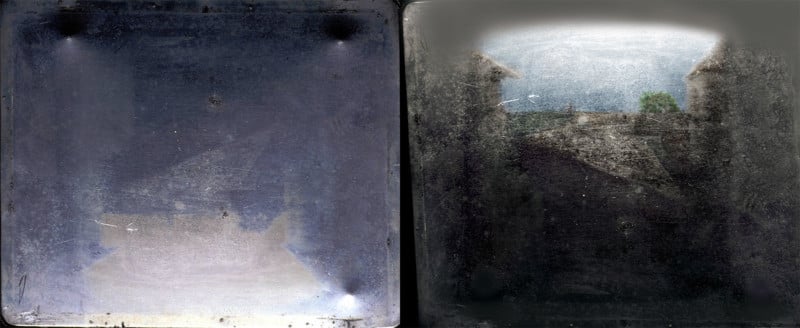
Niépce’s associate, Louis Daguerre, then developed the daguerreotype process. This process required only a few minutes and produced clearer results. In 1839, Daguerre released his method to the world at large.
Photography still wasn’t yet practical, but that same year, William Henry Fox Talbot demonstrated a different photographic process using a paper-based calotype negative and salt-printing. Improvements to materials and chemical processes eventually shortened exposure time to seconds and then fractions of a second, making photography more economical.
When you look at the earliest photographs, at least those that have stood the test of time, many of them are portraits. It’s not surprising, as portraiture remains ubiquitous to this day. However, cameras were nonetheless being pointed at beautiful landscapes. In the 1860s, photographer Carleton Watkins captured early photographs of Yosemite and its surrounding areas using 18 x 22-inch glass plate negatives and a stereoscopic camera. He returned from his 1861 expedition with 30 plates and dozens of negatives. His images helped influence the US Congress to protect the Yosemite Valley and ensured that generations to come would be able to enjoy its natural beauty.
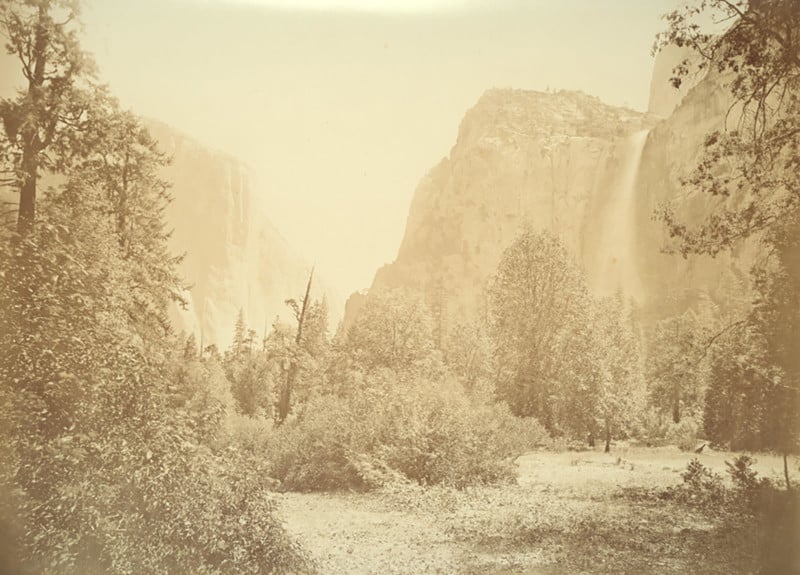
William Henry Jackson is considered the first person to have photographed Yellowstone in 1871 as part of the Hayden Geological Survey. In addition to capturing stunning and influential landscape photos of Yellowstone, Jackson later photographed incredible landscapes in the American West. Jackson, who lived to the old age of 99, is fondly remembered for his contributions as a soldier, explorer, author, painter, historian, and photographer.
By the late 1800s, despite the beautiful photographs by the likes of Watkins and Jackson, landscape photography – and photography at large – hadn’t yet earned the respect of the artistic community. However, photographers like Alfred Stieglitz, Peter Henry Emerson, and Edward Steichen utilized more painterly approaches in the darkroom, and photography began to cement its place as a legitimate art form. Steichen’s 1904 landscape image The Pond – Moonlight had an important role to play in photography achieving the respect it deserved. Read More...