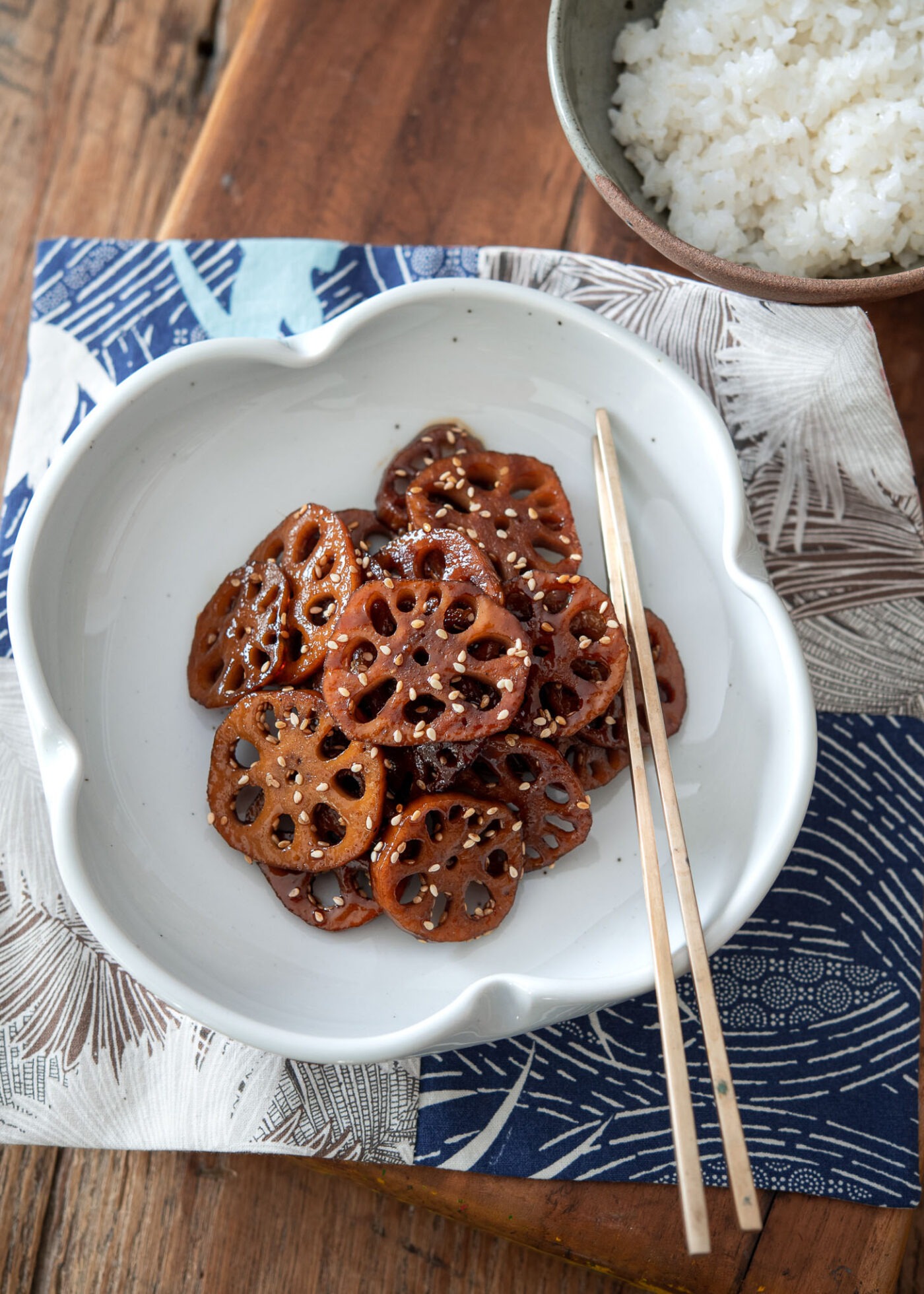
Korean Braised Lotus Root
-
 Loading...
 - Feng Huang
- 20 Jan 2023
- 68 Views
- 0 Like
- 0 Comment
Lotus root makes a delectable Korean side dish. Braising with soy sauce and rice syrup creates a charming sweet and salty flavor. The glazed lotus root also has a unique texture, soft and chewy yet a little crispy.
This Korean lotus root recipe, known as yeongeun jorim, is a delectable side dish braised in soy sauce with rice syrup. That combination creates a charming sweet and salty flavor. The glazed lotus root also has a unique texture, soft and chewy yet a little crispy.
Believe it or not, the very first time I ever tried this Korean lotus root side dish was as a young child at my friend’s house where I was having some sort of playdate. It was so delicious to even a young, unrefined taster like I was then.
When I came back home, I asked my mother immediately why she never cooked lotus roots for us. Her excuse was simple—it’s too time consuming for a single side dish. I don’t blame her–she was raising 5 kids, after all. Making a variety of banchan (Korean side dishes) for every meal is a tough job for home cook who also had to work. She preferred side dishes that could come together quickly.
Although it requires a bit of time to prepare the lotus root properly, the recipe itself is very straightforward. It is totally worth the effort. You will get a delectable dish that is crispy and crunchy and chewy texture all at the same time—-incredibly delicious.
The shiny, glistening appearance makes them perhaps the prettiest side dish of all Korean banchan. That alone gives you a good reason to try it out, don’t you think?
So what is Korean braised lotus root?
Korean braised lotus root is a plant-based side dish braised with soy sauce, dark brown sugar, rice syrup, and sesame oil–perfect candidate for vegetarian/vegan menu.
The braising process allows the lotus root to absorb the salty and sweet flavor. It’s unique texture and shiny appearance makes it perfectly suited for special occasion meals in Korea.
WHAT IS LOTUS ROOT?
The lotus root is a type of aquatic vegetation indigenous to Asia and widely used in Korean, Chinese, and Japanese cuisines. The plant itself has large, beautiful flowers and green ‘lily pad’ leaves, and the roots will have 3-4 segments like sausage links. The root has a yellow-brown skin and a creamy white flesh with a texture like a raw potato.
At first glance, lotus root looks like a huge, overripe banana and may not look appetizing. But once you slice into it, the distinctive lacy holes inside the root make it really stand out among other vegetables.
It’s a versatile ingredient whether you are stir-frying or deep-frying because it always keeps its crisp-tender texture. Its mild, fresh flavor makes it a great addition to salads, side dishes, and soups.
INGREDIENTS
- 1 lb lotus root
- 1 cup cold water
- 1 tbsp white vinegar
- 1 piece dried sea kelp (dashima), use 2 pieces if small
- 3 tbsp soy sauce
- 1 tbsp dark brown sugar
- 2 tbsp sweet rice wine (mirim)
- 3 tbsp Korean rice syrup, or corn syrup
- 1 tbsp oil
- 1 tbsp sesame oil
- 1 tbsp toasted sesame seeds
INSTRUCTIONS
- 1.Peel lotus root skin with a potato peeler and cut the tough ends off. Thinly slice the lotus root, about 1/4-inch thick.
- 2.Add the lotus root slices to a pot, and add enough water to cover them. Add a tablespoon of vinegar. Bring it to a boil and cook, uncovered, for about 20 minutes (cooking time can be adjustable depending on the texture you desire). Drain, and rinse with cold water. Read More…