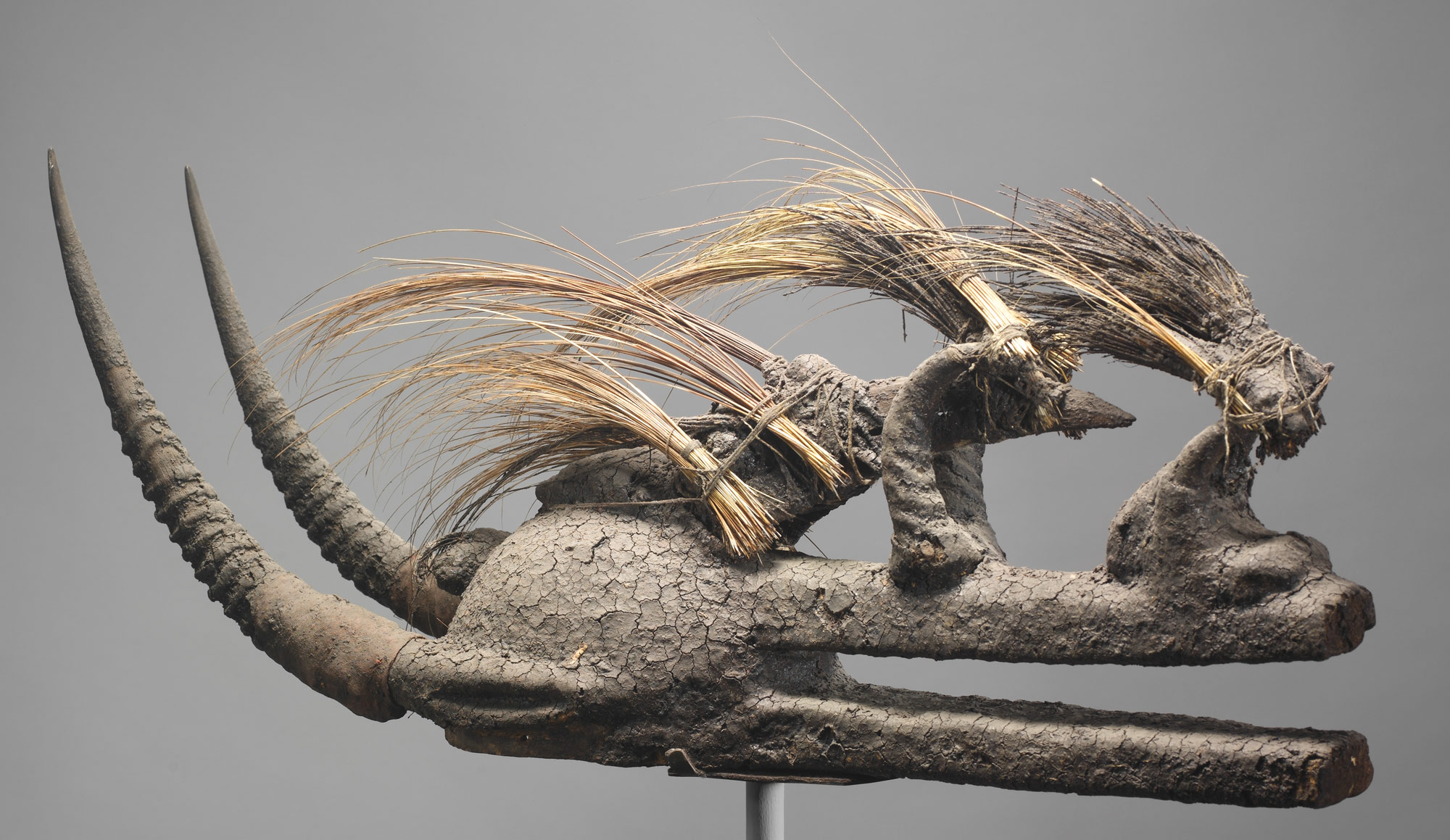
Kòmò Helmet Mask (Kòmòkunw) (Bamana peoples)
-
 Loading...
 - Diarra Kadida
- 02 Feb 2023
- 73 Views
- 0 Like
- 0 Comment
This headdress (above) was made and used by a member of the Komo society, an association of blacksmiths found among the Bamana and other Mande-speaking communities in the region. Komo association members enforce community laws, make judicial decisions, and offer protection from illness, misfortune, and malevolent forces. The headdress embodies the secret knowledge and awesome power of the society; its rough and unattractive form is therefore intended to be visually intimidating. While works like the Bamana maternity figure (left) depict a human ideal, this headdress is explicitly about harnessing the forces of untamed nature, a concept expressed visually in its form and material.
The wooden structure of the headdress has a domed head, gaping mouth, and long horns. Attached are antelope horns, a bird skull with a sharp beak, and porcupine quills, elements chosen for their metaphorical associations since they provide animals with power and protection. The animals themselves hold symbolic value in Bamana culture. Birds, for example, are associated with wisdom and divinatory powers, while porcupines signify the importance of preserving knowledge. The mask was further enhanced by the application of ritual substances formed from a mixture of earth, sacrificial animal blood, and medicinal plants. This material was replenished on a regular basis, endowing the mask with the critical life force, or nyama, that is the source of its extraordinary power. Read More…