Italy Says Libya War Crimes Suspect Was Sent Home Due to ‘Social Dangerousness’
-
 Loading...
 - Atlas Stavros
- 24 Jan 2025
- 48 Views
- 0 Like
- 0 Comment
Italy's interior minister has stated that Osama Najim, a Libyan man detained under an international war crimes arrest warrant, was repatriated due to concerns over his "social dangerousness." Najim, also known as Almasri, was arrested on Sunday in Turin under a warrant issued by the International Criminal Court (ICC) based in The Hague.
Najim, who serves as the chief of Libya’s judicial police and presides over Mitiga prison near Tripoli, is wanted by the ICC for alleged war crimes, crimes against humanity, and specific charges including rape and murder. Mitiga prison has been condemned by human rights organizations for its treatment of political dissidents, migrants, and refugees, including reports of arbitrary detention and torture.
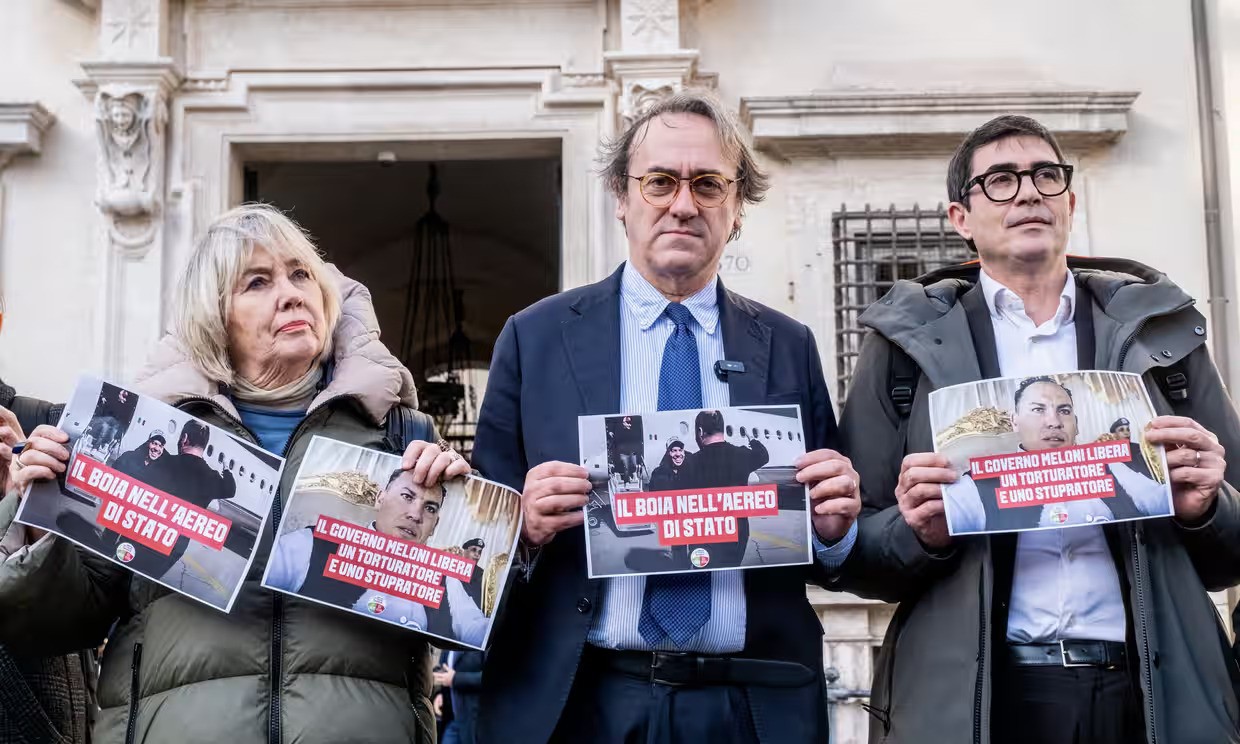
Despite the serious allegations against him, Najim was released on Tuesday due to a procedural technicality and was subsequently flown back to Tripoli on an official state aircraft. The ICC expressed its concern over his unexpected release, stating that it occurred without prior notice or consultation with the court.
Interior Minister Matteo Piantedosi explained that the decision to repatriate Najim was made after the arrest was deemed non-compliant with legal procedures. He cited Najim's profile as a "social danger" as a reason for issuing an expulsion order for state security reasons.
Italian Foreign Minister Antonio Tajani dismissed the ICC's objections, asserting that Italy is a sovereign nation and has the right to make its own decisions. "The international court is not the word of God; it’s not the font of all truth," he remarked.
Najim's release has sparked outrage among opposition parties in Italy, who have criticized the government's handling of the situation. They argue that the explanations provided by Piantedosi are insufficient and have called for Prime Minister Giorgia Meloni to address Parliament to clarify the government's actions. Senator Giuseppe De Cristofaro from the Green-Left Alliance party condemned the situation, stating, "You are plunging our country into utter shame... you have made a precise political choice."
The incident highlights the complex relationship between Italy and Libyan security forces, particularly in the context of managing migration from North Africa to Europe. Meloni's government relies heavily on these forces to prevent migrants from departing Libya for Italy, raising questions about the implications of Najim's release on both domestic and international fronts.