Italian Christmas traditions
-
 Loading...
 - Benjamin Rogers
- 14 Dec 2021
- 455 Views
- 0 Like
- 0 Comment
There are many things that Italians take very seriously, and three that spring to mind are food, family, and faith. It should be no surprise then that Christmas, a holiday based on all three, is an incredibly important time in Italy. Each family of course has its own customs and traditions that they respect, which can differ greatly depending on where in Italy they live. But there are also common threads, and while last Christmas might have been dampened by the pandemic, it would take worse than that to pry the Italians away from their holiday and dampen their festive cheer. So let's discover some of the best-known Italian Christmas and New Year traditions so you too can celebrate Christmas like a local.
How do they celebrate Christmas in Italy?
Let's start with possibly the most traditional and well known Christmas symbol, and the one that is never lacking in any Italian home: the Christmas tree. In Italy, Christmas trees arrived in the second half of the nineteenth century thanks to Queen Margherita of Savoy who decorated one in the Palazzo del Quirinale in Rome, launching a trend that spread rapidly throughout the peninsula.
Tradition now has it that Christmas trees are put up in Italy on 8th December and taken down on 6th January each year, like clockwork.

Another important part of Italian Christmas is the nativity scene. Displaying a manger and the birth scene of the baby Jesus is said to be the work of St. Francis of Assisi and dates back to the year 1223. On the night of Christmas Eve in 1223 in Greccio, Umbria, St. Francis of Assisi is said to have set up the first nativity scene in history, representing the birth of Jesus in his cradle in Bethlehem.
From that moment on, many artists have experimented with the creation of wooden or terracotta figurines for this purpose. The Tuscans started the trend, but it soon spread to the ancient Kingdom of Naples too. To this day, the masters of the nativity scene are the Neapolitans, and the symbol of this Neapolitan tradition are the shops of Via San Gregorio Armeno.
Not only can beautiful nativity scenes be seen in public places, shops, and churches across Italy, but having a nativity scene at home is also popular in this traditionally Catholic country. Nativity scenes are traditionally put out on the 8th December along with the tree, but take note that the figure of the baby Jesus mustn't be added to the manger until the evening of 24th December as the tradition states!
Christmas gifts in Italy
And what about the gifts? Is it Santa Claus, Santa Lucia or Jesus who brings the Christmas presents in Italy?
Nowadays in Italy it’s Father Christmas that brings the presents, although in some areas of Northern Italy such as Brescia, Bergamo and Verona the tradition of St. Lucy is still holding on, a Saint who delivers the gifts to children at Christmas. At one time, in a less consumerist era, with less global influences, it was even Jesus Christ himself who traditionally brought presents to children in Italy.
What is a traditional Christmas dinner in Italy?
Now we come to one of the most important moments: Christmas Eve dinner or Christmas day lunch.
Here, Italy is divided between those who put more importance on the dinner of Vigilia, an evening meal on the 24th December, and those who prefer lunch on Christmas Day.
While the typical Christmas dishes of the various Italian regions are many, it’s worth giving special mention to polenta with cod and lesso with sauces in Veneto; agnolotti boiled and seasoned with sauces in Piedmont; the carbonade (beef cooked in red wine) in Valle d'Aosta; canederli and roe in Trentino; tortellini and passatelli in Emilia-Romagna; livers and roast guinea fowl or the stuffed capon in Tuscany; spaghetti with clams, capon broth or stuffed capon in Campania; colurgiones (stuffed ravioli) and malloreddus (gnocchetti) in Sardinia and pasta with sarde in Sicily.
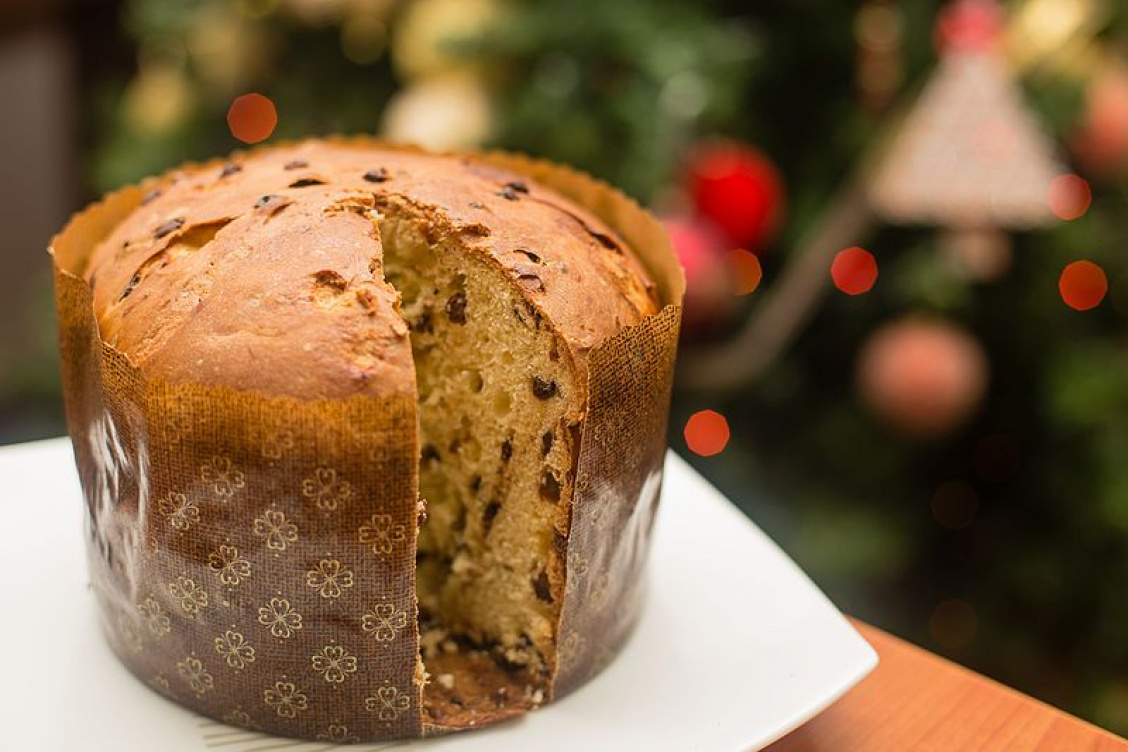
That said, one constant of all Italian Christmas meals is the dried fruit and desserts like panettone, torrone and pandoro that are enjoyed up and down the country. In addition to these classic Italian Christmas sweets, each region also has its own typical Christmas sweets.
How do they celebrate New Years in Italy?
The Christmas and New Year parties are perhaps among the most delicious occasions of the year in Italy. It is a well-established tradition to bring families together not only to exchange gifts, but to rediscover the joy of meeting at the table together, even though celebrations in recent times have been somewhat smaller than usual.
The New Year's Eve Gala Dinner is traditionally full all kinds of delicious treats, which differ depending on the regions, but two of them will almost always be present on every table, from Aosta to Trapani: the zampone and the cotechino accompanied by lentils. The lentils represent the money that will accumulate during the year: the more you eat, the more money you’ll make! Read More…