Irish study makes remarkable discovery about flying reptiles and their color-changing feathers
-
 Loading...
 - Liam Burton
- 27 May 2022
- 296 Views
- 0 Like
- 0 Comment
A group of researchers at University College Cork have made a “remarkable” discovery about pterosaurs, the flying relatives of dinosaurs.
The international team of paleontologists discovered that pterosaurs were able to control the color of their feathers using melanin pigments.

The team’s research, entitled “Pterosaur melanosomes support signalling functions for early feathers,” was published in the prestigious journal Nature on April 20.
The study was led by University College Cork (UCC) paleontologists Dr. Aude Cincotta (UCC & Royal Belgian Institute of Natural Sciences) and Prof. Maria McNamara and Dr. Pascal Godefroit from the Royal Belgian Institute of Natural Sciences, with an international team of scientists from Brazil and Belgium.
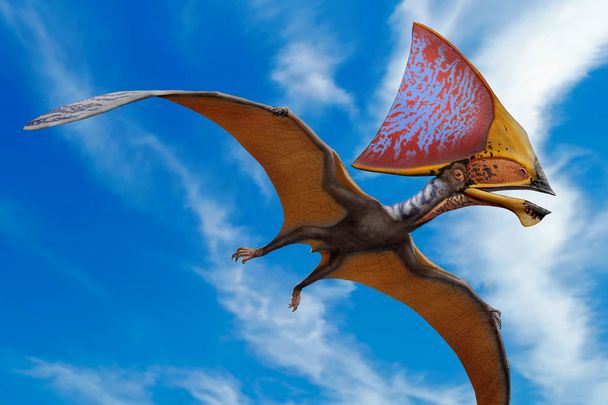
The new study is based on analyses of a new 115 million-year-old fossilized headcrest of the pterosaur Tupandactylus imperator from north-eastern Brazil. Pterosaurs lived side by side with dinosaurs, 230 to 66 million years ago.
This species of pterosaur is famous for its bizarre huge headcrest. The team discovered that the bottom of the crest had a fuzzy rim of feathers, with short wiry hair-like feathers and fluffy branched feathers.
“We didn’t expect to see this at all”, said Dr. Cincotta. “For decades, paleontologists have argued about whether pterosaurs had feathers. The feathers in our specimen close off that debate for good as they are very clearly branched all the way along their length, just like birds today."
The team then studied the feathers with high-powered electron microscopes and found preserved melanosomes – granules of the pigment melanin.
Unexpectedly, the new study shows that the melanosomes in different feather types have different shapes. Read More…