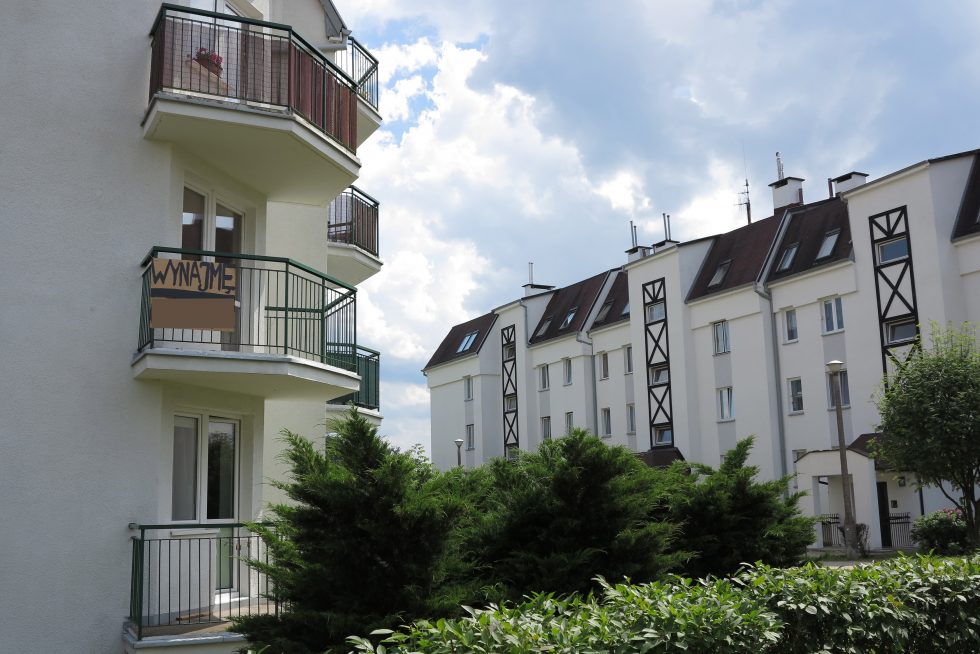
Influx of Ukrainian refugees stokes housing shortage in Poland
-
 Loading...
 - Mason Owen
- 27 Apr 2022
- 323 Views
- 0 Like
- 0 Comment
Since Russia’s invasion of Ukraine, almost 3 million people have fled across the border in Poland, and it is estimated that the majority remain in the country.
As many of them seek a place to stay temporarily or long term, the demand for apartments for rent has spiked in the large Polish cities that have been the refugees’ main destination. This has further pushed up already record-high rental prices, fuelled by inflation and high energy bills.
Over the first month of the war, the number of flats being offered as available for rent in Warsaw, GdaÅ„sk, and PoznaÅ„ dropped by 34-40%, according to data from Gethome, a real estate service. In Kraków, WrocÅ‚aw and Åódź, it plummeted by more than 60%.
Federica Crepaz, who moved to GdaÅ„sk from Italy for work in February, spent the first weeks in an Airbnb apartment, searching for a room for the long term. After arranging to visit one, “some landlords told me after a few hours that it was already rented”, she says. “I had the feeling that if I found a room I’d have to take it immediately.”
Her colleagues had similar struggles, and Federica said finding a separate apartment was even more difficult compared to a room in a shared flat.
About two weeks after the start of the war, the number of views of ads on Otodom – another popular real estate service in Poland – had surged by 166%.
“With the outbreak of the war, we could see an increase in the number of responses to rental ads. They were three to four times higher than at the end of February, which reflects the strong need for the refugees coming to Poland to find a roof over their head,” Karolina Klimaszewska from Otodom told Notes from Poland.
The surge in demand had an impact on rental prices, with Otodom seeing the monthly average for apartments listed on its service rise 5% from 2,721 zloty in February to 2,863 zloty in March. In Warsaw and Wroclaw, the averages rose 7% and 8.6% respectively.
A spike in demand makes flat-hunting especially hard for people with a tight budget, such as students. There is a risk of returning to the situation of 15 years ago, when owners held “castings” for tenants and universities in Kraków issued an appeal for landlords to rent to students “at fair prices”, says Marek Wielgo, an analyst at Gethome.
The situation has also had a negative impact on not only the quantity but also the quality of flats offered for rent. The practice of splitting an apartment into small sections to rent separately has already become common and may become even more widespread in the future, says Wielgo.
Students, who normally leave flats for the summer to go for holidays, may now decide to keep their accommodation as it might be hard to find new digs when they return in September, adds Klimaszewska. This may lead to a smaller supply in the market and even higher prices. One thing is certain: there will be no shortage of potential tenants. Read More…