Inflation dims Venezuelans' holiday season
-
 Loading...
 - Audrey Davis
- 22 Dec 2021
- 431 Views
- 0 Like
- 0 Comment
Tradition dictates that Venezuelans, children and adults alike, wear brand new clothes on Christmas and New Year’s day. Shirts, pants, dresses, stilettos and sneakers – all with that new smell and perfect, first-time fit. No wrinkles, stains or scratches allowed.
But the dollar bills circulating all across the country might as well show the Grinch instead of Washington this year. The government’s loosening of controls on dollars may have made them easier to get, but it has also made them less valuable in Venezuelan shops, with dollar prices overall about 40 per cent above those last year.
And that has threatened the tradition known as estrenos, or ‘premieres’ — a practice already badly eroded by Venezuela’s sharp, years-long economic decline.
People have been hunting for Christmas bargains, but often walk away from stores and market stalls empty-handed.
Marelvy Mallarino lives in Maracaibo, once the heart of the country’s oil boom and now a victim of its bust. She had not stepped into a mall for years, but decided to visit one in Caracas, the capital, while visiting her sister.
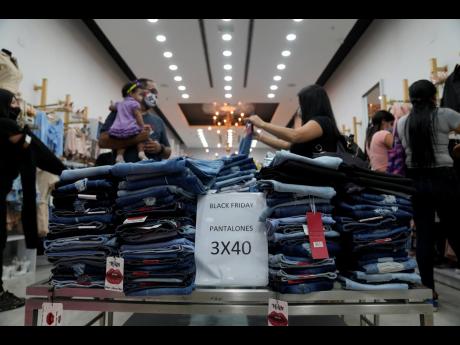
“Will it be enough? Won’t it be enough? We are counting the coins,” Mallarino said, while waiting in an enormous line outside a store offering discounts on women’s shirts, shoes and denim on Black Friday. Venezuelans call it that in English, too.
One store offered fast-fashion heels, boots, wedges and sneakers discounted to US$20 instead of US$60. Headbands and other accessories were on sale for US$1. At another store, cropped jeans for women were priced at US$30, down from US$100.
Those may sound like bargains abroad, but the dollar prices were much higher than even a year ago, and largely out of reach for people like Mallarino, who lost her business when the country’s oil industry collapsed and now lives off of remittances sent by her children in Peru.
After about an hour in line, she entered a store and grabbed a white short-sleeve top from a rack, flipping the hanger from one side to the other to inspect the shirt. She hung it back, looked around the store for less than 10 minutes and walked out, looking down and shaking her head.
When Venezuelan companies and the public sector were thriving more than a decade ago, employees would get hefty Christmas bonuses — often three times their monthly salary, all at once. That allowed families to buy new outfits for all, an imported Christmas tree, and enough food for the traditional holiday spread.
The smell of fresh paint signalled the arrival of Christmas, because so many put a new coat on their walls.
But the economy has shrunk by 75 per cent since 2014, and the minimum wage for public employees and retirement payments has fallen to the equivalent of US$2 a month. Monthly salaries in the private sector average US$75. That has pushed many to find side jobs, rely on remittances or leave the country. Read More…