Human Ancestor Fossils in the “Cradle of Humankind†May Be More Than a Million Years Older Than Thought
-
 Loading...
 - Vicente Gonzalez
- 29 Jun 2022
- 133 Views
- 0 Like
- 0 Comment
The earth doesn’t give up its ancient secrets easily – not even in the “Cradle of Humankind”, where a wealth of fossils relating to human evolution have been discovered.
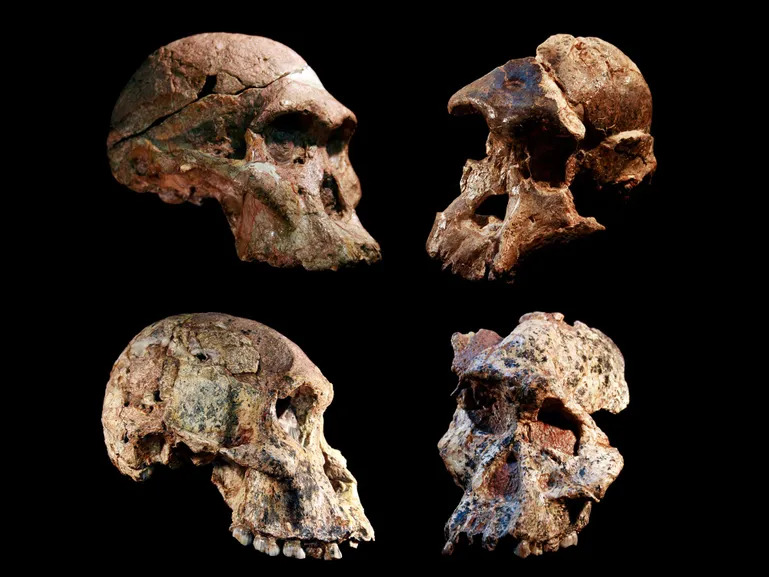
Scientists have studied these fossils of early human ancestors and their long-lost relatives for decades. Now, a dating method developed by a Purdue University geologist just pushed the age of some of these fossils found at the site of Sterkfontein Caves back more than a million years. This would make them even older than Dinkinesh, also called Lucy, the world’s most famous Australopithecus fossil.
The “Cradle of Humankind” is a UNESCO World Heritage Site that comprises a variety of fossil-bearing cave deposits, including those at Sterkfontein Caves. Sterkfontein was made famous by the discovery in 1936 of the first adult Australopithecus, an ancient hominin. Hominins include humans and our ancestral relatives, but not the other great apes. Since then, hundreds of Australopithecus fossils have been found there, including the well-known Mrs. Ples, and the nearly complete skeleton known as Little Foot. Paleoanthropologists and other scientists have studied Sterkfontein and other cave sites in the Cradle of Humankind for decades to shed light on human and environmental evolution over the past 4 million years.
Darryl Granger, a professor of earth, atmospheric, and planetary sciences in Purdue University’s College of Science, is one of those researchers, working as part of an international team. Granger specializes in dating geologic deposits, including those in caves. As a doctoral student, he devised a method for dating buried cave sediments that is now used by scientists all over the world. His previous work at Sterkfontein dated the Little Foot skeleton to about 3.7 million years old, but scientists are still debating the age of other fossils at the site.
Sterkfontein is a deep and complex cave system that preserves a long history of hominin occupation of the area. Understanding the dates of the fossils here can be tricky, as rocks and bones tumbled to the bottom of a deep hole in the ground, and there are few ways to date cave sediments.
In the East, where many hominin fossils have been found, the Great Rift Valley volcanoes lay down layers of ash that can be dated. Researchers use those layers to estimate how old a fossil is. In the South– especially in a cave – the scientists don’t have that luxury. They typically use other animal fossils found around the bones to estimate their age or calcite flowstone deposited in the cave. But bones can shift in the cave, and young flowstone can be deposited in old sediment, making those methods potentially incorrect. A more accurate method is to date the actual rocks in which the fossils were found. The concrete-like matrix that embeds the fossil, called breccia, is the material Granger and his team analyzed.
“Sterkfontein has more Australopithecus fossils than anywhere else in the world,” Granger said. “But it’s hard to get a good date on them. People have looked at the animal fossils found near them and compared the ages of cave features like flowstones and gotten a range of different dates. What our data does is resolve these controversies. It shows that these fossils are old – much older than we originally thought.”
Granger and the team used accelerator mass spectrometry to measure radioactive nuclides in the rocks, as well as geologic mapping and an intimate understanding of how cave sediments accumulate to determine the age of the Australopithecus-bearing sediments at Sterkfontein.
Granger and the research group at the Purdue Rare Isotope Measurement Laboratory (PRIME Lab) study so-called cosmogenic nuclides and what they can reveal about the history of fossils, geological features and rock. Cosmogenic nuclides are extremely rare isotopes produced by cosmic rays —high-energy particles that constantly bombard the earth. These incoming cosmic rays have enough energy to cause nuclear reactions inside rocks at the ground surface, creating new, radioactive isotopes within the mineral crystals. An example is aluminum-26: aluminum that is missing a neutron and slowly decays to turn into magnesium over a period of millions of years. Since aluminum-26 is formed when a rock is exposed at the surface, but not after it has been deeply buried in a cave, PRIME lab researchers can date cave sediments (and the fossils within them) by measuring levels of aluminum-26 in tandem with another cosmogenic nuclide, beryllium-10. Read More...