How we remodelled our 1950s semi in Kent into a bright and breezy beach house
-
 Loading...
 - Nathan Anderson
- 24 May 2022
- 276 Views
- 0 Like
- 0 Comment
In 2018, architects Sonya Flynn and Mark Baker had just finished remodelling a large, 1970s house on a north Kent seafront for a client when a smaller house down the road came on the market. During the project, they had fallen in love with the location: the shingle beach, the uninterrupted sea views and spectacular, year-round sunsets.
The unprepossessing 1950s semi in Tankerton, Whitstable, hadn’t been touched for 25 years. The couple, who run architecture studio Meme, thought they could create a similar home for their own family, only on a smaller budget.
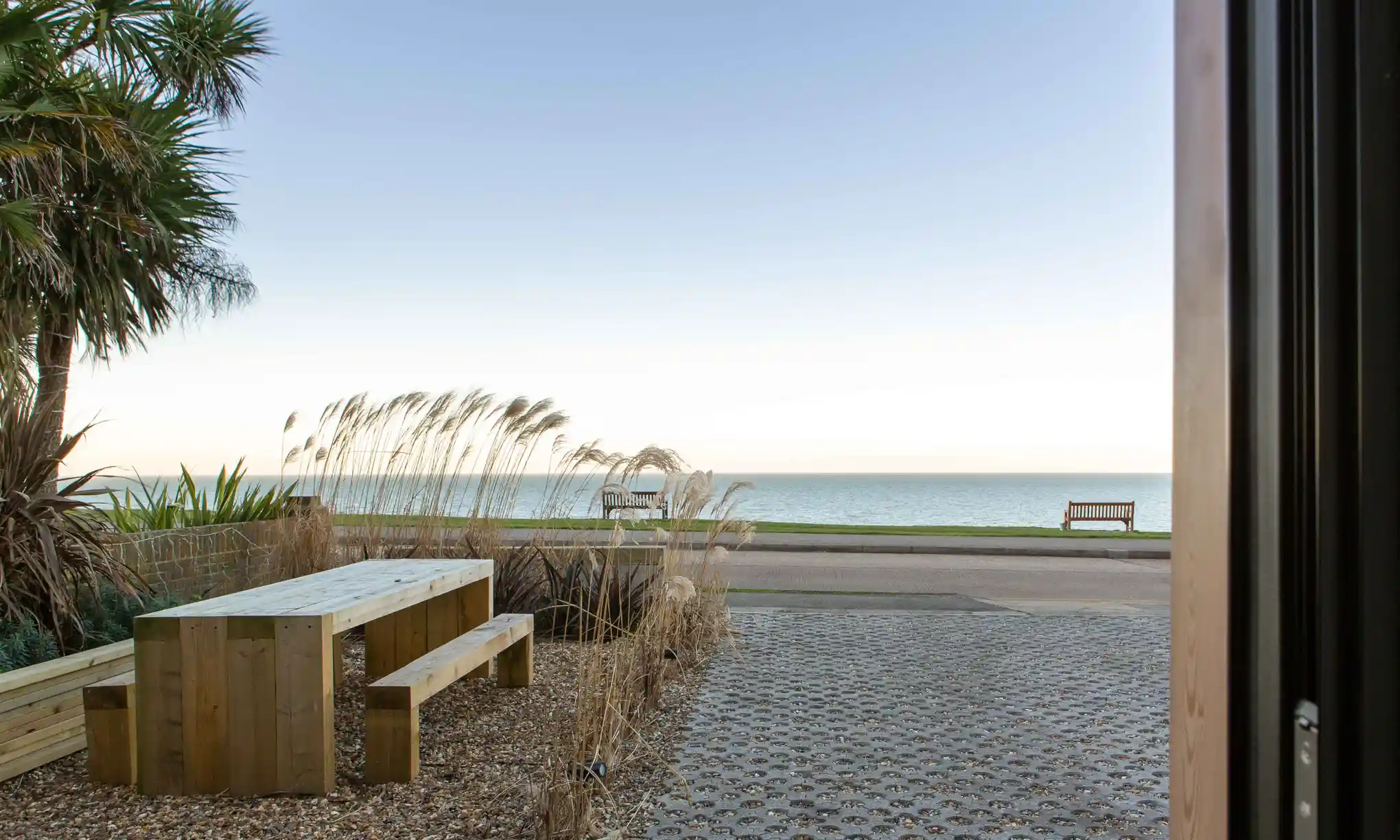
But Red Sands (the house is named after a cluster of sea forts built at the mouth of the Thames estuary during the second world war but now abandoned) went to a higher bidder. A few months later, Flynn and Baker were about to exchange on a similar property further from the sea when the agents called and offered them a second chance. The deal went through and the young family moved in.
The house is now unrecognisable from the dilapidated two-bed they bought four years ago. Partly inspired by beach houses in Melbourne, it is clad in a combination of larch and shou sugi ban (charred timber), with generous glazing to make the most of its relationship with the sea.
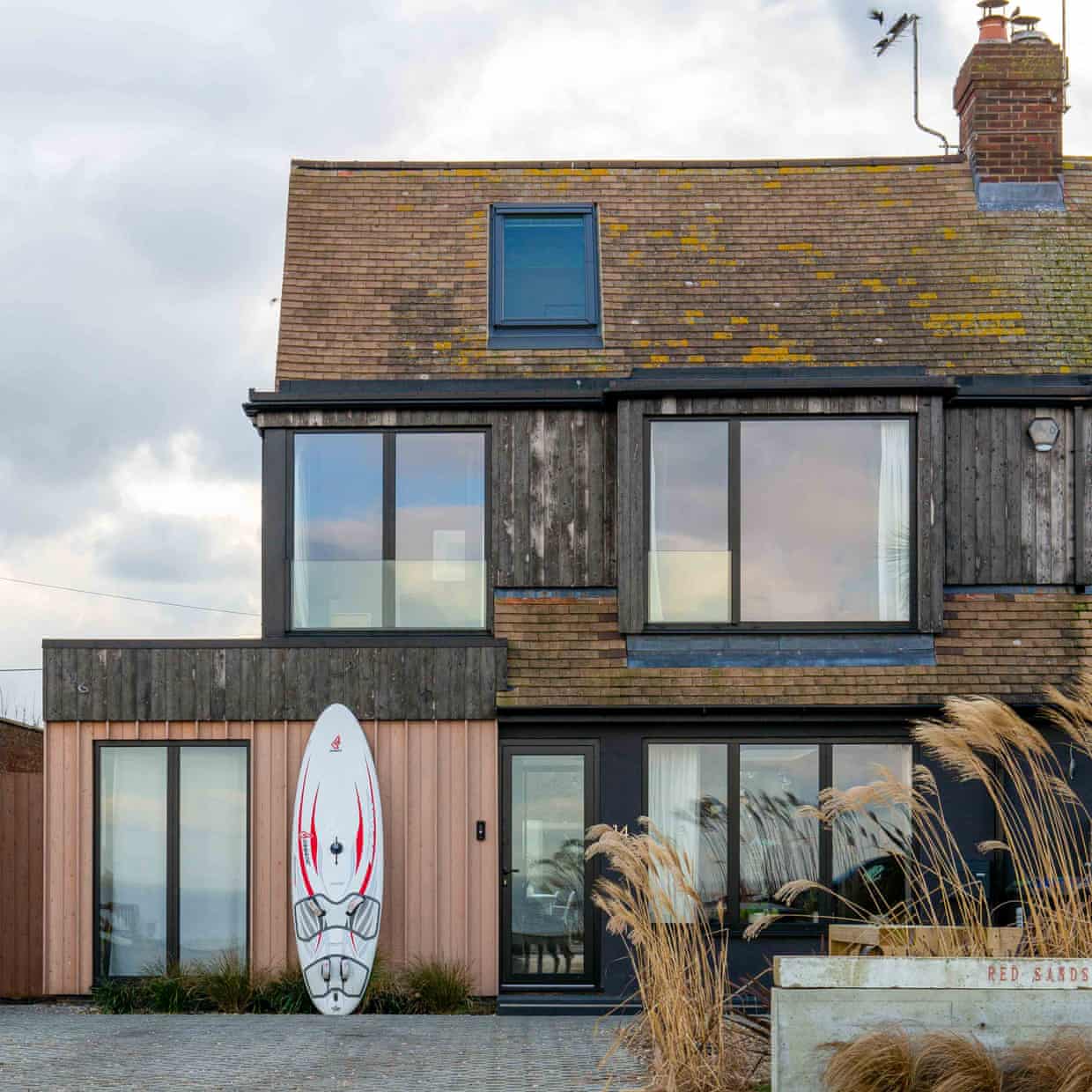
“We follow the work of a few Melbourne and Sydney practices,” Flynn says. “We were inspired by their use of material and texture, as well as how their houses relate to the beach. We wanted the frontage and landscaping to feel open and relaxed. In the past, houses on this coast would not have been quite so open to the sea views because of the weather, but we are better equipped for that technically these days, so it felt important to make the most of them.”
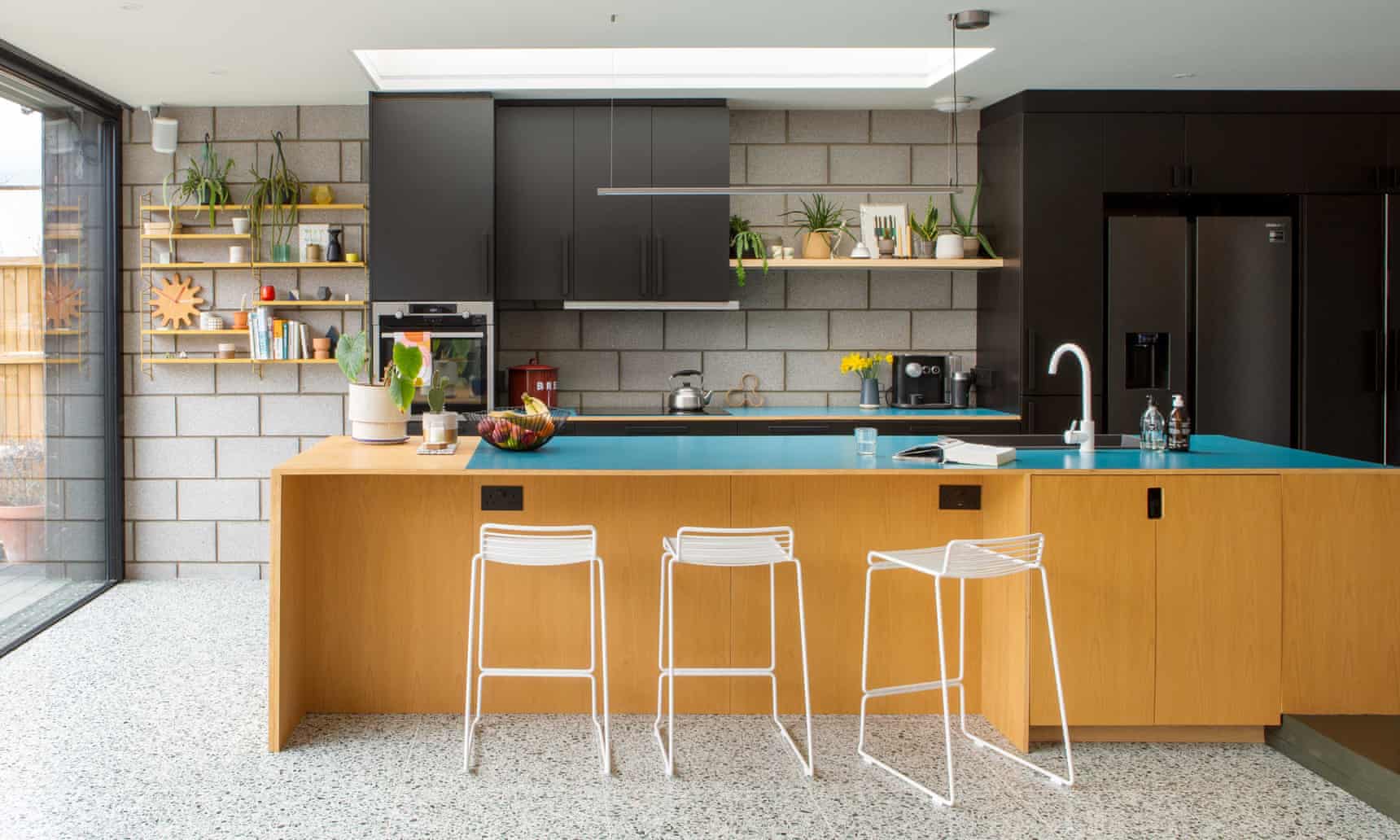
As well as keeping vestiges of the old house (a deep-green snug at the front, for example), the couple have created bright and bold new spaces from exposed concrete blocks and jumbo terrazzo tiles. Bespoke, oak-veneered joinery sits alongside contemporary artwork. Every inch has been made into something either fun or functional.
As soon as they moved in, Flynn, who grew up in Sligo, took the couple’s two children, Hannah, 10, and Hugo, eight, to Ireland for a couple of weeks so Baker could make the house habitable. In that time he installed an air source heat pump, knocked down walls and made a temporary kitchen.
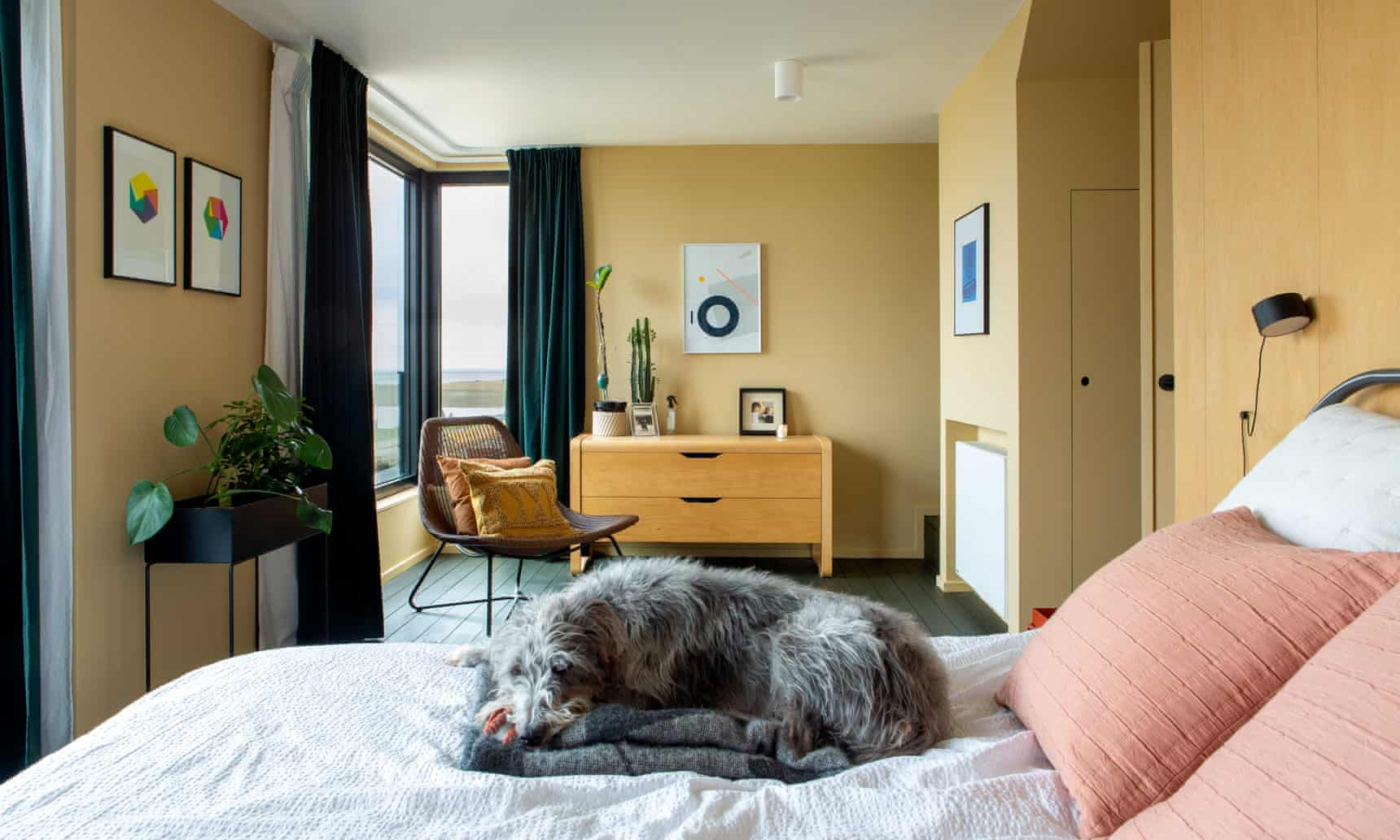
Rather than move the living space upstairs as they had done for the clients down the road, they decided to retain the small living room at the front of the house. The 70s extension (white-painted bricks and a timber-clad ceiling) inspired the materials for the new extension (concrete blocks and oak-veneered birch ply).
On the ground floor, the garages to one side of the plot were transformed into a guest bedroom behind a wide sliding door off the hallway. A yellow wet room is behind another sliding door. Further down the hallway is a roomy cupboard for coats/bags/shoes, and a utility room with side access to the garden and an outdoor shower for use after a dip in the sea.
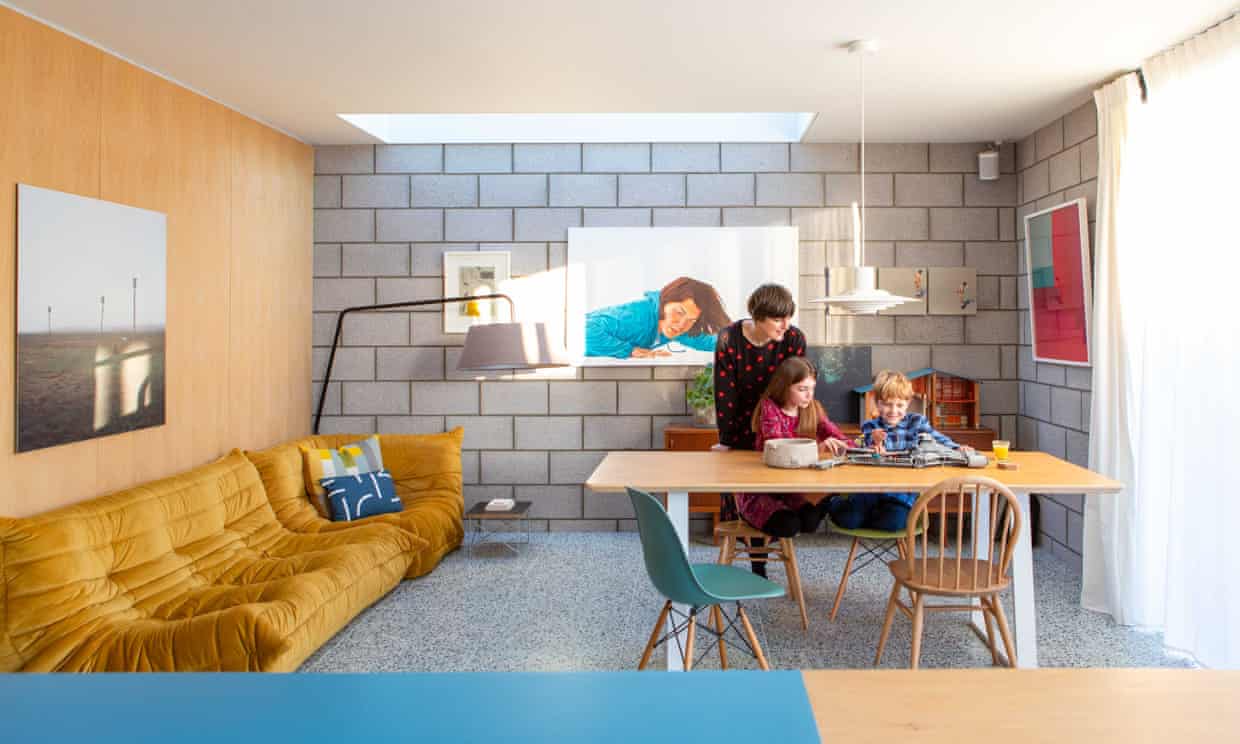
At the front of the house, the snug, with wood-burner, leads to a wide corridor with built-in cabinets and a desk. From here, steps lead down into the new rear extension, which is furnished with a vintage Ligne Roset sofa, a mid-century sideboard and a dining table with mismatched chairs. The dark kitchen units are a canny combination of Ikea cabinets and bespoke joinery, and the worktop is ply, covered in electric-blue Formica. Six-metre-wide sliding doors open on to a well-organised and productive garden (Eglu chicken coop included). Read More...